Precision rolled to the nanometer scale, from cornerstone to intelligence: The evolution of the marble linear motor
Введение
Semiconductor lithography, laser micro-nano machining, high-precision optical inspection, third-generation semiconductor metrology… High-end manufacturing is continuously advancing toward the micro and nano scales. When equipment positioning requirements break through the micrometer threshold, the shortcomings of traditional metal machine beds and screw transmission systems—such as thermal expansion, vibration resonance, and transmission backlash—are completely exposed.
The marble (granite) linear motor platform was born: Using dense granite as a stable reference cornerstone, it integrates non-contact linear direct-drive technology, evolving step by step from a simple “stone base motor” combination into an intelligent ultra-precision motion system integrating sensing, compensation, and adaptive control, becoming the core carrier for achieving nanometer-scale positioning.
Phase 1: Static Cornerstone — The Revolution of Reference Materials (Before 2000, the Micrometer Precision Era)
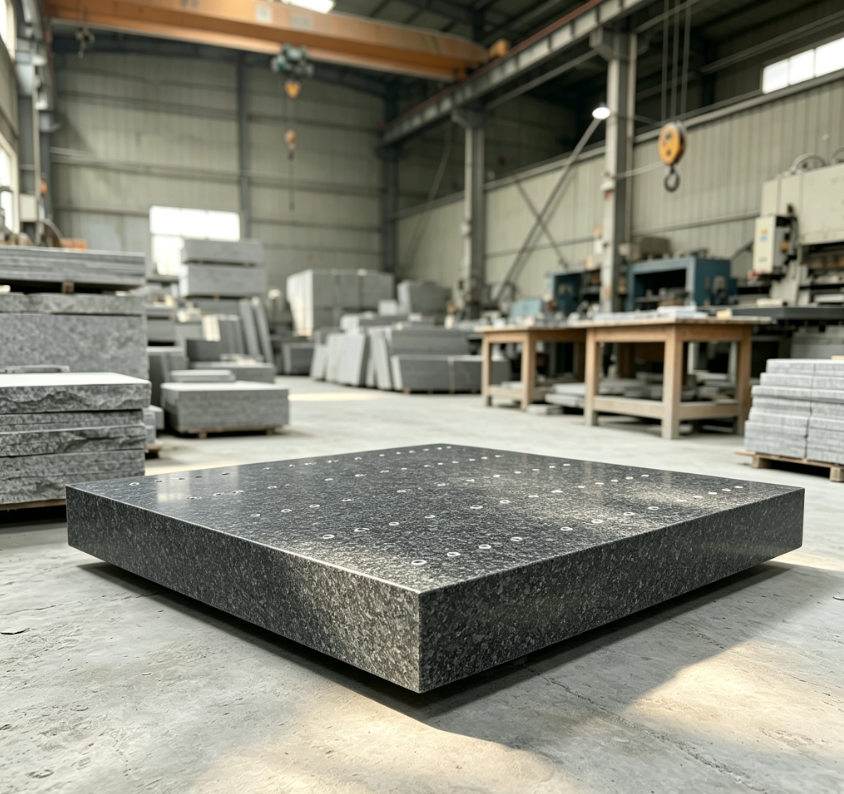
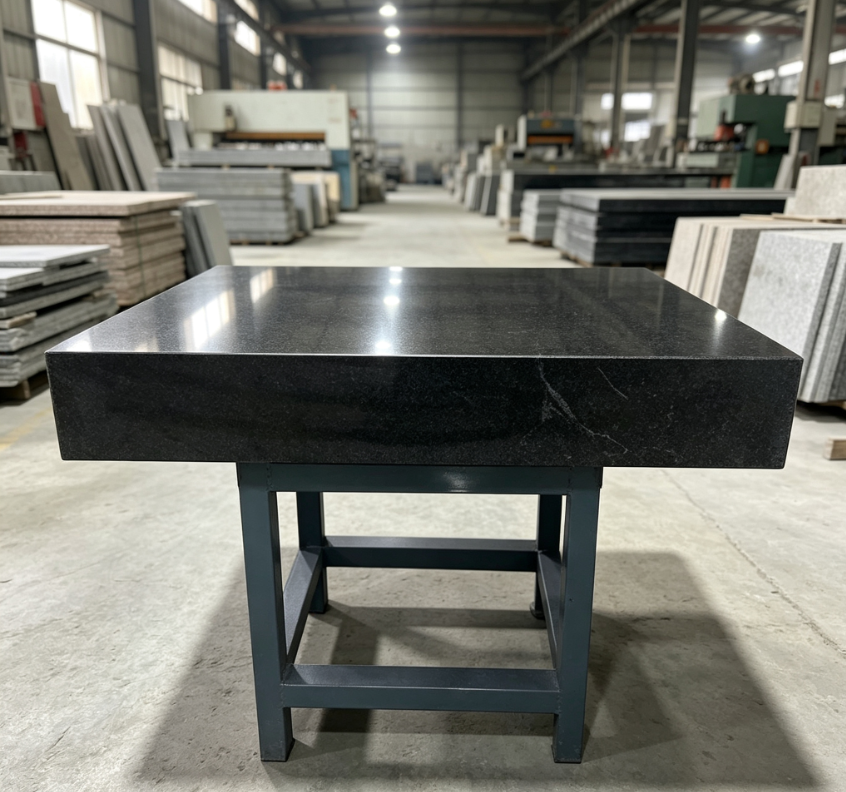
Long before the large-scale popularization of linear motors, natural granite (commonly known as marble) was already the standard reference in the field of precision metrology.
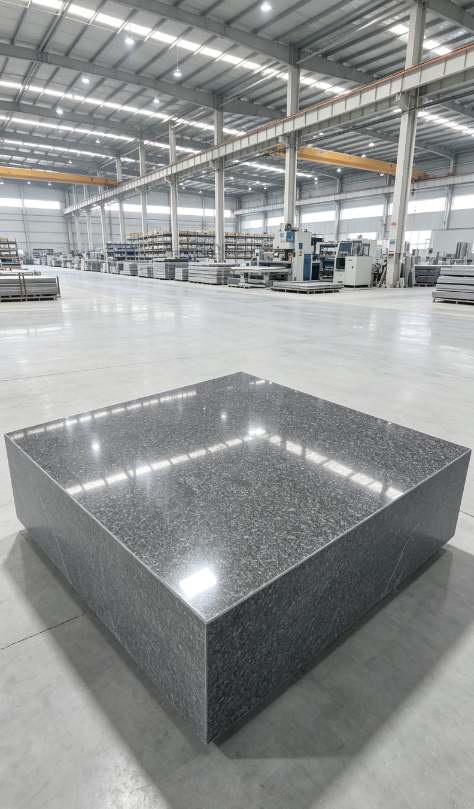
Billions of years of natural geological aging have left granite almost free of internal stress; its extremely low coefficient of thermal expansion, excellent vibration damping, and high wear resistance make it the preferred material for coordinate measuring machine platforms and precision straightedges.
At this time, granite only played a passive load-bearing role: serving merely as a stable workbench paired with screw servo drives.
Pain points: Screws bring backlash, friction, and elastic deformation; the heat source from the drive is directly conducted to the stone; the base and the drive are independent, only simply assembled, making it impossible to achieve high-speed dynamic high precision.
Upper limit: The system’s repeatable positioning accuracy generally remained at the micrometer level, unable to meet the dynamic motion requirements of new-generation semiconductor equipment.
Phase 2: Initial Integration — Simple Integration of Stone Base Linear Motor (2000–2010)
With the commercialization of linear motors, engineers found a path to break through the bottleneck: eliminating the intermediate transmission pair and using linear motors for direct drive to eliminate screw backlash.
The industry initiated the simplest integration mode: directly installing the linear motor stator and guide rails on the surface of the marble platform.
Core breakthroughs:
Zero transmission chain: The linear motor directly drives the load, significantly reducing transmission errors;
Relying on granite to suppress vibration and mitigate temperature drift, its dynamic stability far exceeds that of cast iron machine tools;
Equipped with mechanical linear guide rails, it initially achieved high-speed reciprocating motion.
Limitations: It belongs to “physical superposition” and lacks integrated design. Heat generated by the motor continuously conducts to the marble, causing uneven thermal deformation; the magnetic rail layout and base structure were not coupled in simulation, making it prone to resonance at high speeds.
Precision level: Stable repeatable positioning could reach ±0.5~1μm, entering the sub-micrometer threshold, and was widely used in PCB exposure and ordinary optical inspection equipment.
Phase 3: Integrated Collaborative Design — From “Patchwork” to System Coupling (2010–2020, Towards Sub-nanometer)
A qualitative shift in industry perception: Marble is no longer just a load-bearing stone, but an inseparable core component of the entire motion system’s dynamics and thermodynamics. Engineers no longer simply assemble parts, but conduct collaborative optimization of the base – magnetic circuit – guide rail – thermal management.
Key Technology Evolution:
Granite Structural Topology Optimization
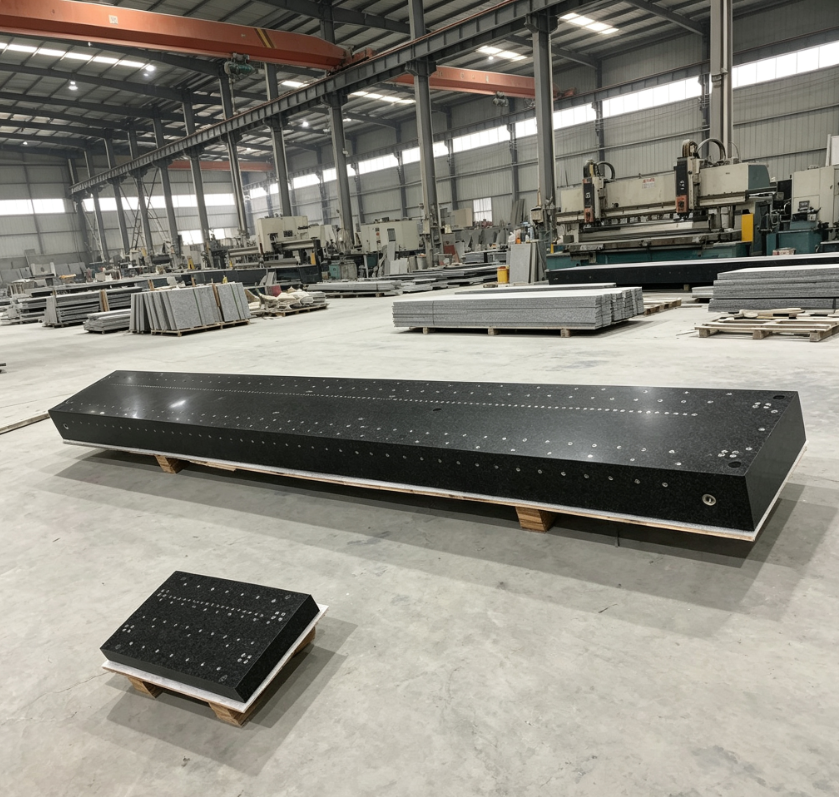
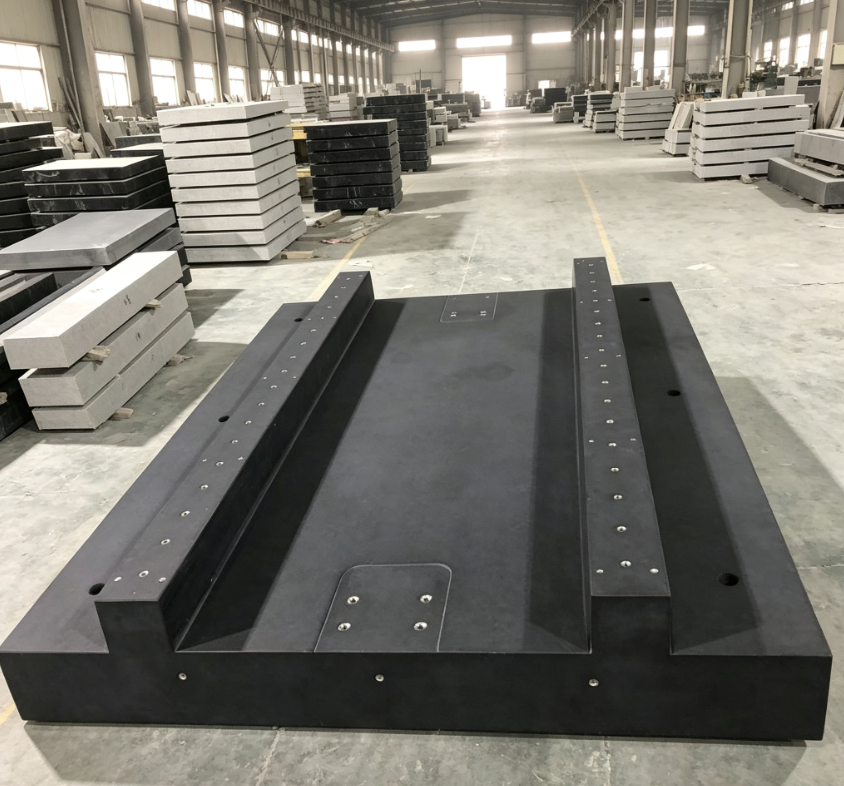
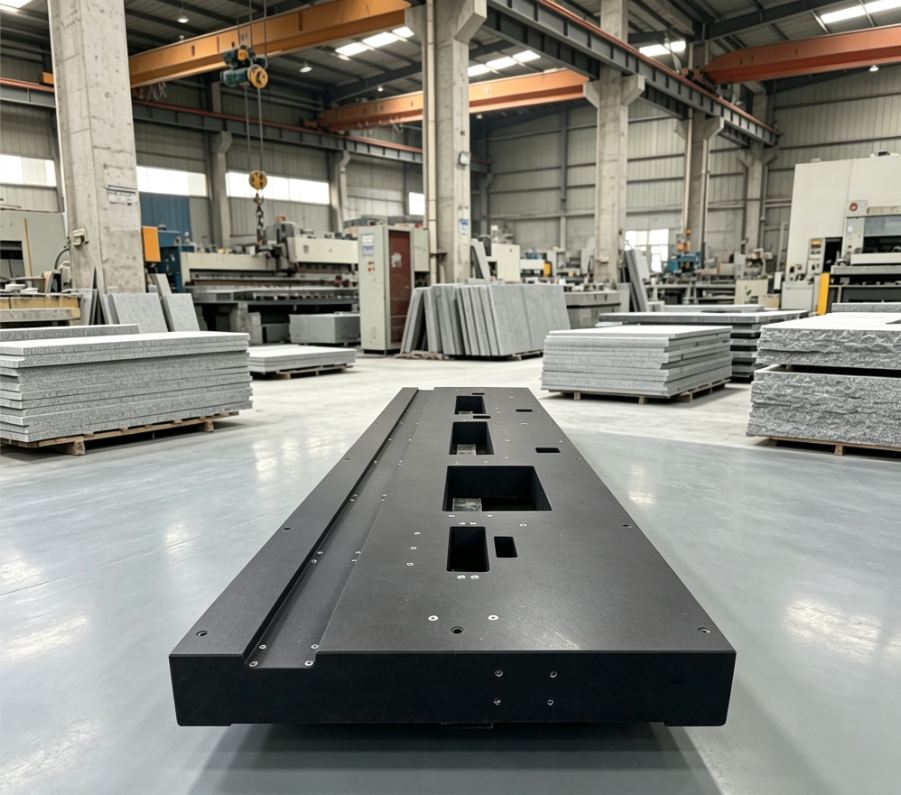
Utilizing finite element simulation for grooving, hollowing, and pre-embedded structures to achieve lightweighting while ensuring rigidity; reserving positions for motor installation, cooling pipelines, and sensor pre-embedding, i.e., customized marble beams and marble machine bases.
Thermal Isolation and Built-in Temperature Control Solutions
Adding insulation layers between the motor heat source and the stone; high-end models embed liquid cooling channels inside the granite to control platform temperature fluctuations within ±0.01°C, suppressing thermal drift.
Guide Rail Solution Upgrades
Extensive adoption of air-bearing hydrostatic guide rails to achieve frictionless motion, paired with ultra-precision ground granite reference surfaces to eliminate disturbances caused by mechanical friction.
Dynamic Matching
Adjusting the modal frequency of the base to avoid the excitation frequency of the linear motor’s thrust ripple, eliminating resonance and achieving stable motion during high-speed operation.
Results: Platform repeatability accuracy stably reaches 50–200nm, entering large-scale applications in panel inspection, semiconductor packaging and testing, and laser micromachining equipment.
Phase 4: Intelligent Era — Sensing Compensation, Locking in Nanometer Precision (2020 to Present)
As process requirements advance to the tens-of-nanometers level, relying solely on hardware structures has reached its limit. Marble linear motor platforms have officially entered the integrated software-hardware intelligent system stage.
Three Major Intelligent Upgrade Directions:
Full-Domain State Sensing Network
Embedding distributed temperature and vibration sensors inside the granite base to collect real-time temperature gradient and micro-vibration data across the entire stone; no longer monitoring only single-point temperatures.
AI Dynamic Error Compensation
Establishing a mathematical model for granite thermal deformation, combining real-time sensor data, the controller provides feedforward compensation for temperature-induced deformation; simultaneously actively suppressing foundation vibration and motor start-stop disturbances. The macro-micro composite drive (linear motor piezoelectric ceramic) combination solution further pushes positioning resolution to 1–10nm.
Full Life-Cycle Digital Operation and Maintenance
The platform integrates edge acquisition modules to long-term record reference surface deformation, operating loads, and accuracy drift trends, achieving periodic accuracy early warnings and remote calibration guidance, solving the accuracy control problem of granite platforms after long-term use.
At this stage, the marble linear motor is no longer just a mechanical motion platform, but a nano-scale precision motion hub with self-sensing and self-correction capabilities, serving as the core equipment for lithography machine stages, electron beam inspection, and quantum experimental platforms.