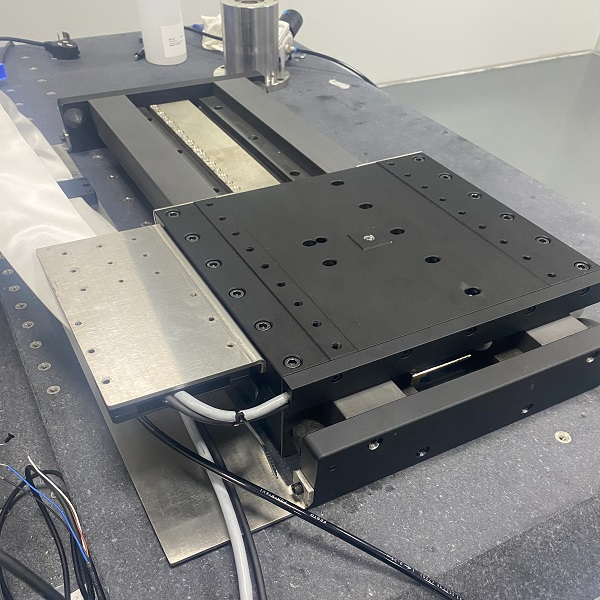
Comprehensive Solution for Enhancing Vibration Isolation Performance of 3D Precision Platforms
Divided into four major dimensions: base body vibration reduction, isolation support system, internal platform vibration suppression, and environmental/operational optimization, covering general modification/selection solutions for granite precision motion platforms, suitable for micron and sub-micron level inspection, semiconductor, and optical equipment.
I. Base Material Optimization (Reducing Self-Vibration Transmission at the Source)
Upgrade to high-grade natural granite base
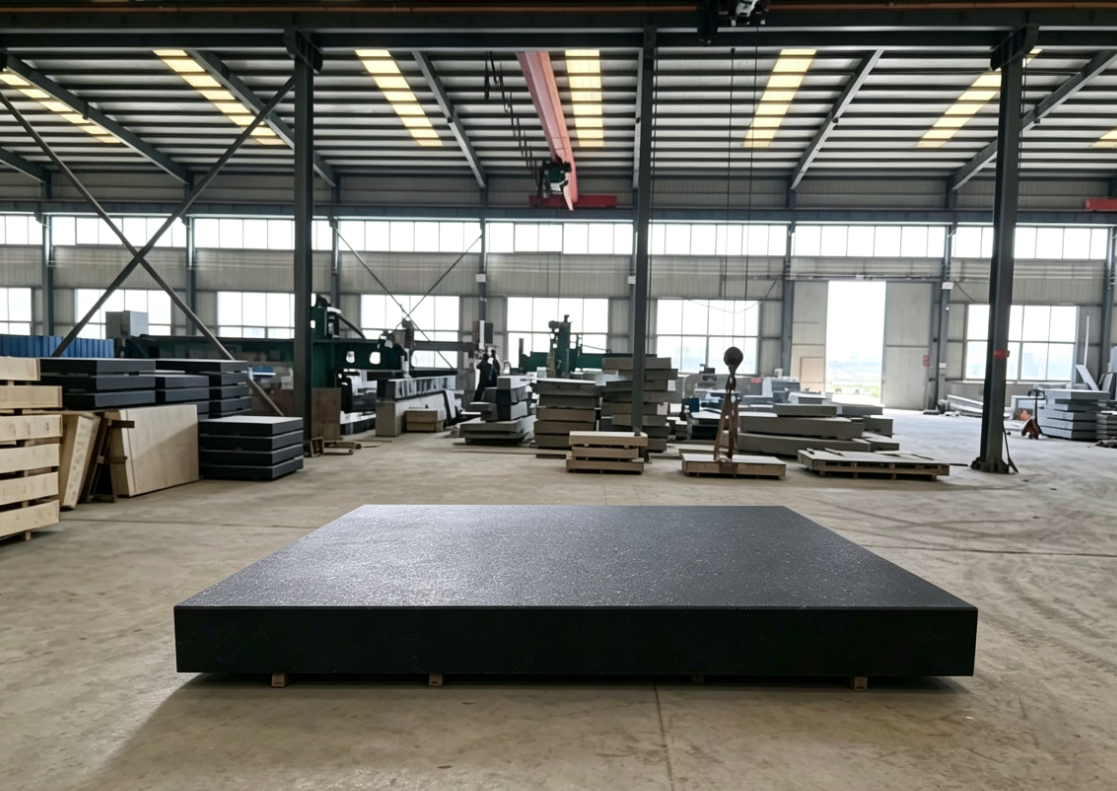
Select fine-grained, low-porosity black granite (Jinan Green, Indian Black) with density ≥3.07g/cm³, high elastic modulus, and high internal damping. Compared to cast iron and aluminum, it significantly suppresses self-resonance; thicken the base walls to increase overall mass, as higher mass enhances resistance to micro-vibrations.
Replace spliced bases with monolithic stone blocks
Splicing seams transmit vibrations and generate local resonance; monolithic solid granite provides continuous rigidity, improving vibration attenuation speed by over 40%.
Pre-embedded damping layers / filled damping sand within the stone
Cast iron sand or high-damping epoxy resin is poured into pre-reserved cavities in the base to absorb internal structural resonance and eliminate self-excited vibrations generated by three-axis motion.
Thickened surface damping coating
Spray high-viscoelastic damping paint on the bottom and sides of the stone to suppress thin-plate modal vibrations and weaken high-frequency noise vibrations from motor and screw rod operation.
II. External Base Isolation Support (Isolating Ground-Transmitted Vibrations, the Core Method)
- Passive Isolation (Low-cost General Upgrades)
Air spring isolators (Preferred for micron-level equipment)
Equipped with horizontal automatic leveling air bags, with a natural frequency of 0.5–2Hz, they can isolate low-frequency vibrations from workshop air compressors, overhead cranes, and machine tools; optional damping holes and additional mass blocks suppress the air bag’s own resonance.
Composite damping pads
Multi-layer structure: stainless steel plate nitrile rubber polyurethane damping, available in high and low-frequency models; use high-hardness damping pads for small platforms and metal spring damping feet for heavy-duty platforms.
Lead-core composite vibration isolators
High-density lead layers absorb high-frequency vibrations, suitable for harsh conditions such as upper floors of laboratories or proximity to stamping equipment. - Active Isolation (For Sub-micron and Nanometer Ultra-high Precision Requirements)
Equipped with servo-feedback active isolation platforms featuring built-in vibration sensors that output real-time counter-vibrations to cancel ground vibrations. They can suppress disturbances across the full 0.1–100Hz frequency band, solving low-frequency resonance problems for lithography, interferometers, and wafer inspection platforms. - Supporting Auxiliary Isolation Measures
Independent platform foundation: Cast a separate concrete weighted foundation with expansion joints separated from the factory floor to block the transmission path of ground vibrations;
Flexible piping connections: Replace all cooling water and air pipes with corrugated or rubber hoses to prevent rigid piping from transmitting compressor vibrations;
Loose cable routing: Do not tighten motor cables to prevent rigid cable pulling from introducing external vibrations.
III. Internal Vibration Suppression of Platform Moving Components (Eliminating Self-Generated Vibrations)
Vibrations do not only come from the ground; the movement of ball screws, motors, and guide rails generates self-vibration, which directly affects micron-level precision:
Transmission System Vibration Reduction Upgrades
Install damping nuts and vibration-absorbing sleeves on ball screws to suppress ball screw resonance during high-speed feed;
Equip servo motors with rubber vibration-damping flanges and place polyurethane damping sheets under the motor base to block motor operating vibrations from transmitting to the table;
Replace rigid couplings with bellows flexible couplings to buffer start-stop impact vibrations.
Guide Rail and Slide Table Damping Optimization
Install damping blocks and strips on linear guide rails to absorb friction and impact vibrations from the reciprocating movement of the slide table; add counterweights to the three-axis slide table to balance motion inertia and reduce start-stop jitter.
Optimization of Drive Control Programs
Servo parameter optimization: Reduce acceleration and deceleration impacts, enable S-curve smooth start-stop to avoid impact vibrations from sudden starts and stops; lower the motion resonance point speed to avoid the platform’s natural resonance frequency.
Internal Damping Material Filling
Fill the slide table cavity and beam hollow spaces with damping resin to weaken structural jitter during three-axis linkage.
IV. External Environment and Installation/Usage Optimization
Eliminating Airflow Disturbance Vibrations
Install sealed protective covers and light shields, as direct air conditioning airflow can cause micro-displacements of the table; change constant temperature air circulation to bottom-outflow to avoid airflow impacting the table.
Avoiding External Resonance Sources
Keep the platform away from water pumps, fans, CNC machine tools, elevators, and overhead cranes; stagger the operation of equipment in the same workshop to reduce superimposed vibrations.
Overall Weight Increase to Improve Inertia
Install counterweight steel plates and lead blocks on the granite base to increase the total system mass, significantly reducing vibration acceleration as mass increases.
Strict Level Calibration
Control the table level error to ≤0.02mm/m, as tilting will cause uneven loading on the isolators and drastically attenuate vibration reduction performance; regularly re-measure and adjust the level.
Reducing Human Interference
Install vibration-damping flooring in the equipment area to buffer and isolate ground pulse vibrations caused by operators walking and stepping.
V. Simple Reference for Solution Selection
Standard Micron-Level Vision Inspection Platform: Solid granite base passive air spring isolators motor damping flanges
High-Precision Semiconductor Packaging Platform: Passive air bag isolation internal ball screw damping kits independent concrete foundation
Interferometer and Nanometer-Level Measurement Platform: Active isolation system full-damping stone base independent vibration-damping foundation