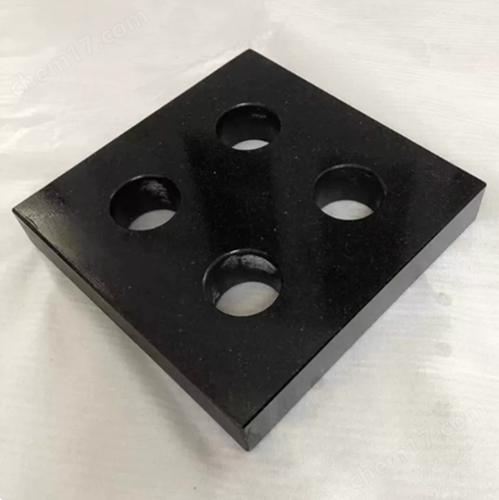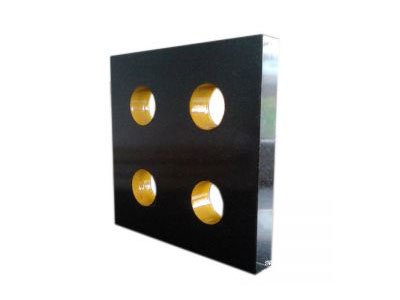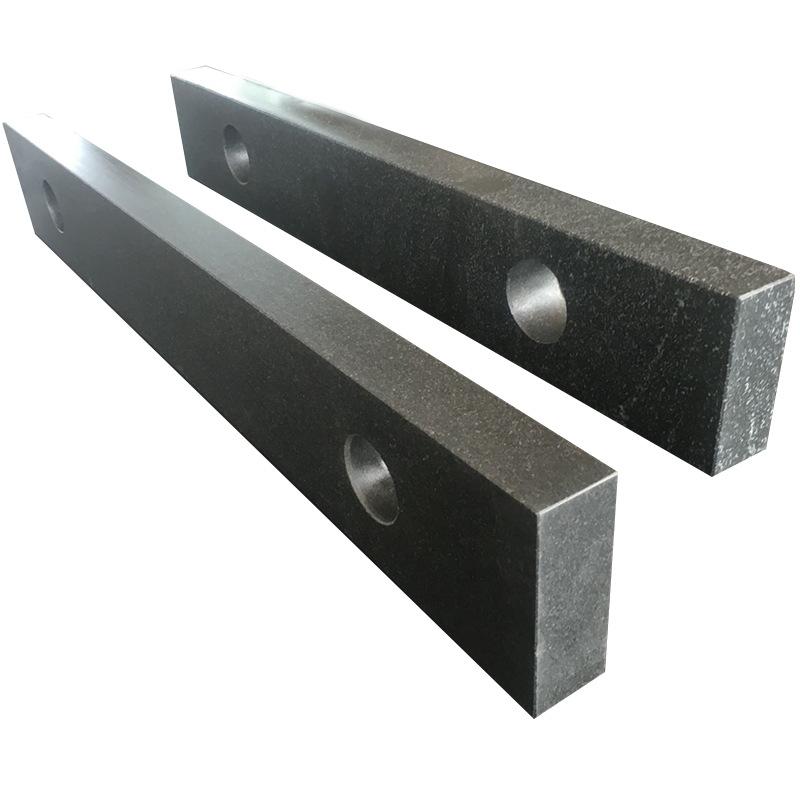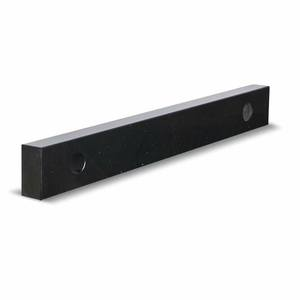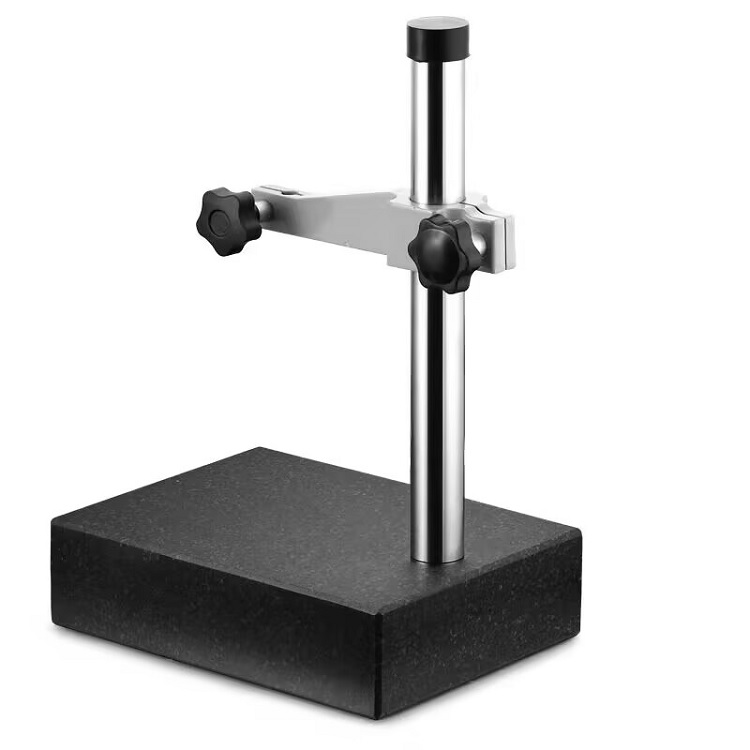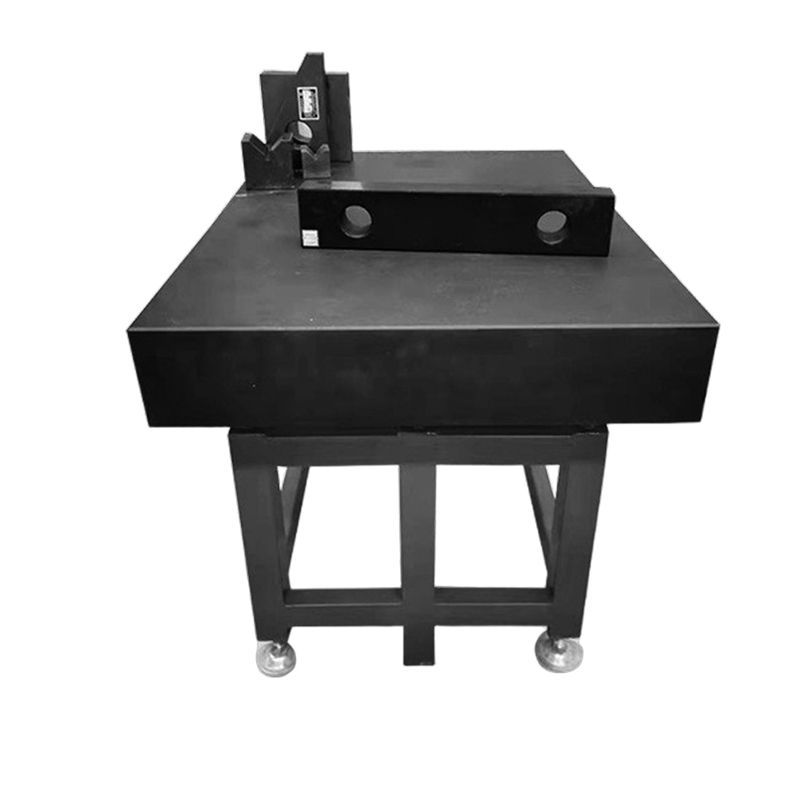
Granite precision square is a high-precision geometric measurement standard, primarily used for the inspection and calibration of perpendicularity, parallelism, and flatness, and is widely applied in fields such as machinery manufacturing, precision assembly, metrology calibration, and aerospace.
I. Core Features (Why Granite)
High Stability: Natural aging and internal stress release ensure long-term deformation-free performance; low coefficient of linear thermal expansion (approx. 4.5×10⁻⁶/℃), minimizing temperature effects.
High Precision: 000/00/0 grade accuracy, with right-angle tolerances reaching the micron level; working surfaces are manually precision-ground for extremely high flatness.
Durability and Interference Resistance: Mohs hardness of 6–7, wear-resistant and impact-resistant; rust-proof, anti-magnetic, and acid/alkali resistant; excellent damping properties to absorb vibration and reduce errors.
II. Main Application Scenarios
- Machine Tool Manufacturing and Installation
Inspecting perpendicularity and parallelism between machine tool columns, guide rails, and worktables (e.g., lathes, milling machines, machining centers).
Calibrating the mutual perpendicularity of X/Y/Z axes during the installation and commissioning of CNC machine tools and Coordinate Measuring Machines (CMM).
Verifying the right-angle relationship between the machine bed, spindle, and guide rails during machine tool overhauls or precision restoration. - Precision Machinery and Molds
Right-angle reference calibration for precision tooling, fixtures, and inspection gauges.
Perpendicularity inspection for mold (injection / stamping) templates and guide pin / guide bushing installation.
Perpendicular and parallel reference for the assembly of precision parts (e.g., semiconductor / optical components). - Metrology Laboratories and Calibration
Serving as a 90° reference gauge to calibrate metal squares, dial indicators, micrometers, optical instruments, etc.
Value transfer and precision comparison of perpendicularity and parallelism in laboratories / quality inspection departments.
High-precision measurement reference in constant-temperature environments, replacing metal gauges susceptible to temperature effects. - Aerospace and High-End Manufacturing
Precision assembly and form and position tolerance inspection of aerospace structural parts and engine components.
Horizontal and vertical reference calibration for semiconductor equipment, medical instruments, and optical platforms.
III. Accuracy Grades and Selection
Grade 000 (Reference Grade): Metrology rooms / laboratories, used for value transfer and high-precision calibration.
Grade 00 (High Precision): Precision machining / quality inspection, machine tool and CMM installation and calibration.
Grade 0 (Industrial Grade): On-site workshop inspection, equipment installation and commissioning.
IV. Usage and Maintenance Key Points
Handle with care to avoid bumps; keep the working surface clean and avoid scratches.
Apply anti-rust oil when not in use for a long time, and store in a dry, constant-temperature environment.
Regularly (recommended annually) send to a metrology institution for calibration to ensure reliable accuracy.