Combining the physical property differences of the two types of materials, this document analyzes the differences in the machining processes of instrument components from six major dimensions: overall process flow, core operations, cutting and grinding tools, machining parameters, post-processing, and quality control, while also providing a process table.
I. Core Premise Differences
Material Nature
High-hardness ceramics (alumina / silicon carbide / zirconia): Artificially sintered dense bodies, homogeneous without natural or internal stress, Mohs hardness 9~9.5, hard and brittle with extremely low toughness.
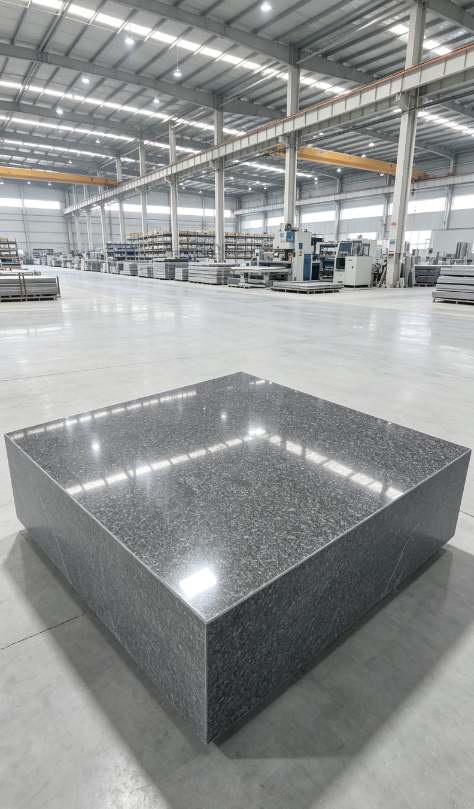
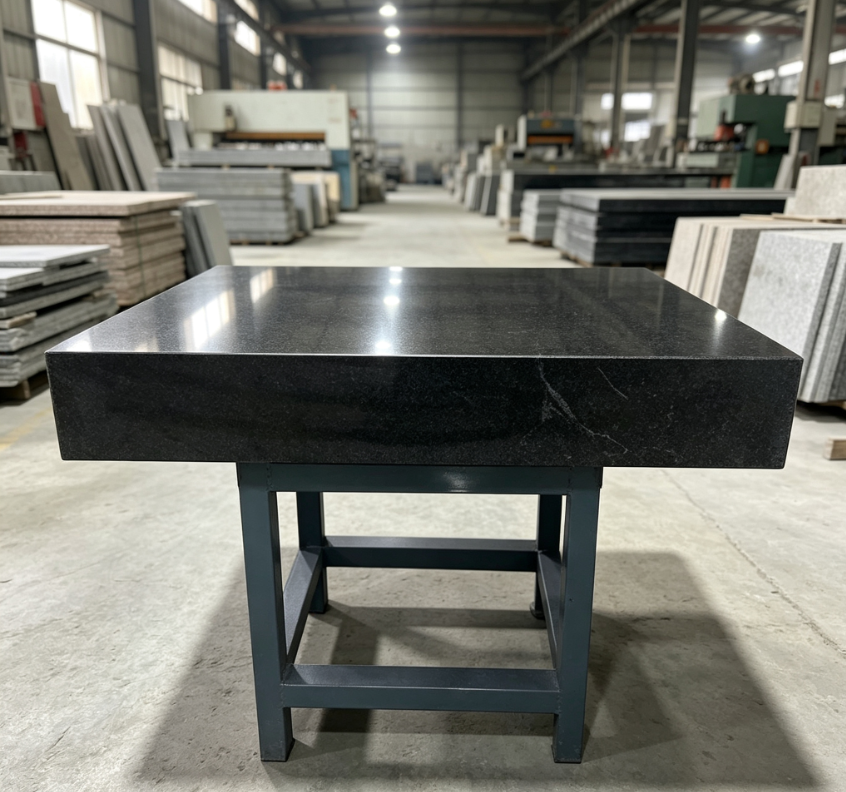
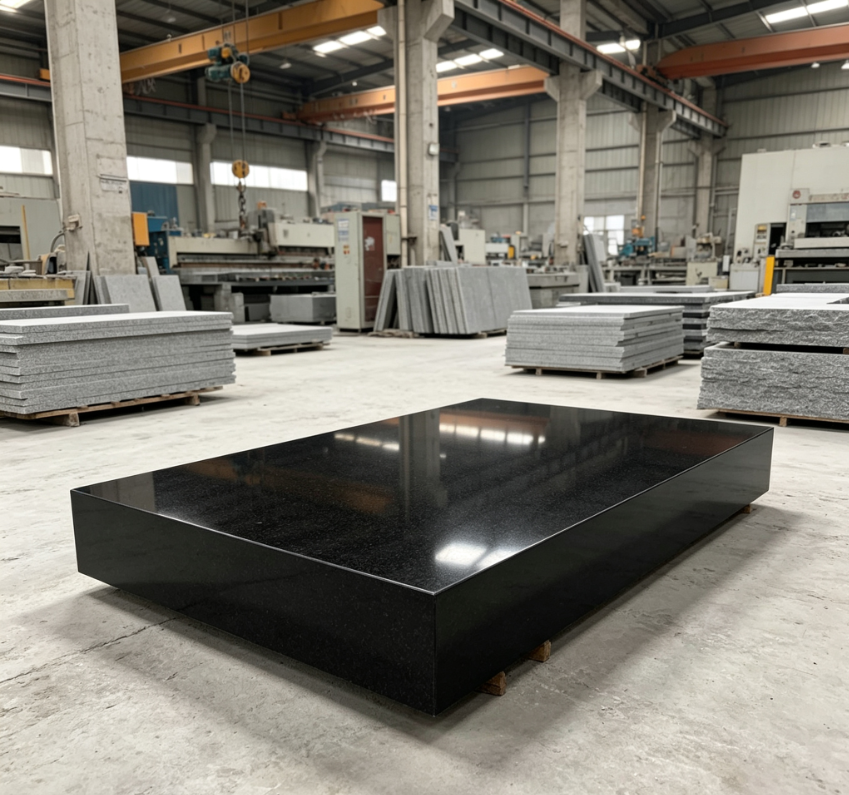
Precision granite: Natural crystalline composite stone, containing trace pores and inherent stress, Mohs hardness 6~7, medium hardness with better toughness and vibration damping properties.
Machining Commonalities: The finishing of both materials primarily uses diamond grinding tools ordinary high-speed steel / cemented carbide tools are strictly prohibited; both require ultra-precision operations to be completed in a constant-temperature workshop.
II. Step-by-Step of the Full Process
(1) Raw Material and Preparation Stage
High-hardness ceramics
The raw material is a sintered blank, formed by dry pressing / isostatic pressing and. It is close to the final shape upon leaving the factory, leaving only a total machining allowance of 0.2~0.5mm.
There are no mining, material sorting, or natural aging steps. Internal stress is basically released after sintering, so no long-term resting for stress relief is required.
Limitations: Restricted by sintering molds,-large sizes and complex deep cavities cannot be formed integrally; they are mostly standard blanks.
Granit
The raw material is mine-extracted rough stone, which needs to undergo mining, flaw detection, sorting, and natural aging (30~90 days) to release inherent stress.
It is first roughly cut into blanks by large saws, with total machining allowance of 3~8mm, which is much larger than that of ceramics.
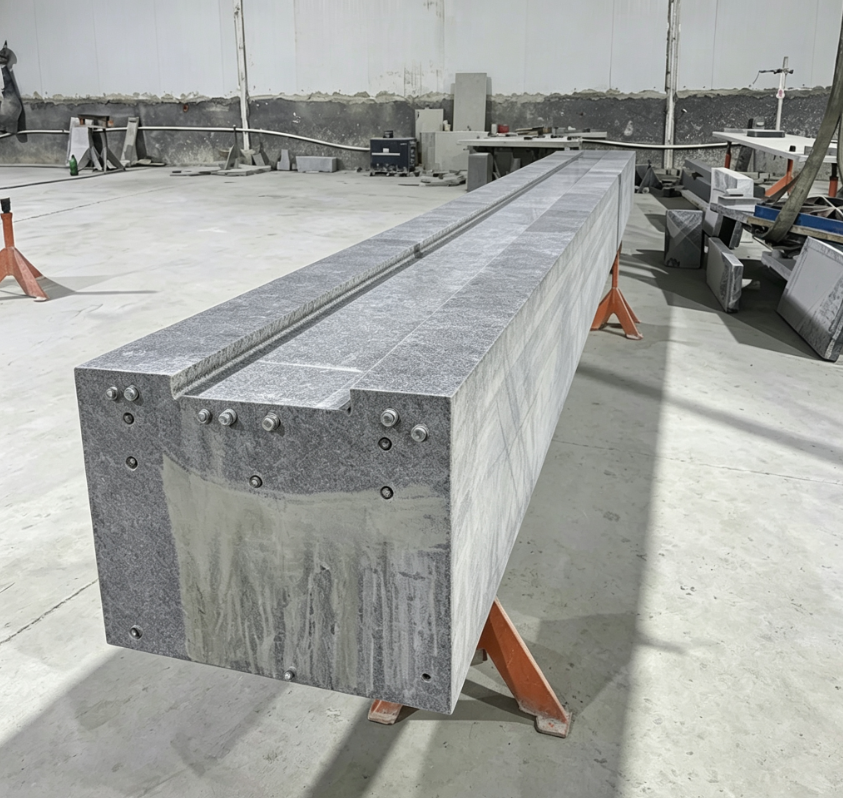
Advantages: Ultra-large size blanks can be cut arbitrarily, offering high freedom in structural shaping.
(2) Rough Machining Operations
High-hardness ceramics
Process: Primarily rough grinding with diamond grinding wheels; milling, planing, and sawing are basically not (impact easily causes cracking).
Method: Low-speed grinding on surface / outer cylindrical grinders, with extremely small single-pass cutting depth (single cut depth ≤0.0mm) to avoid impact and edge chipping.
Hole / Slotting: Laser drilling and ultrasonic machining are preferred; ordinary drills easily chip the edges and are not suitable for deep large holes.
Cooling: High-flow pure water / specialized ceramic grinding fluid must be used to lower the temperature while suppressing dust and preventing local thermal cracking.
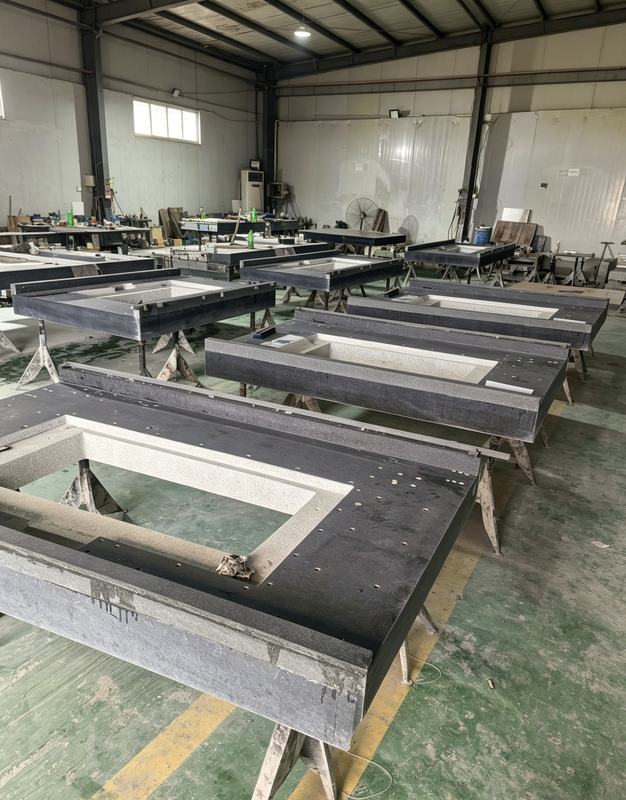
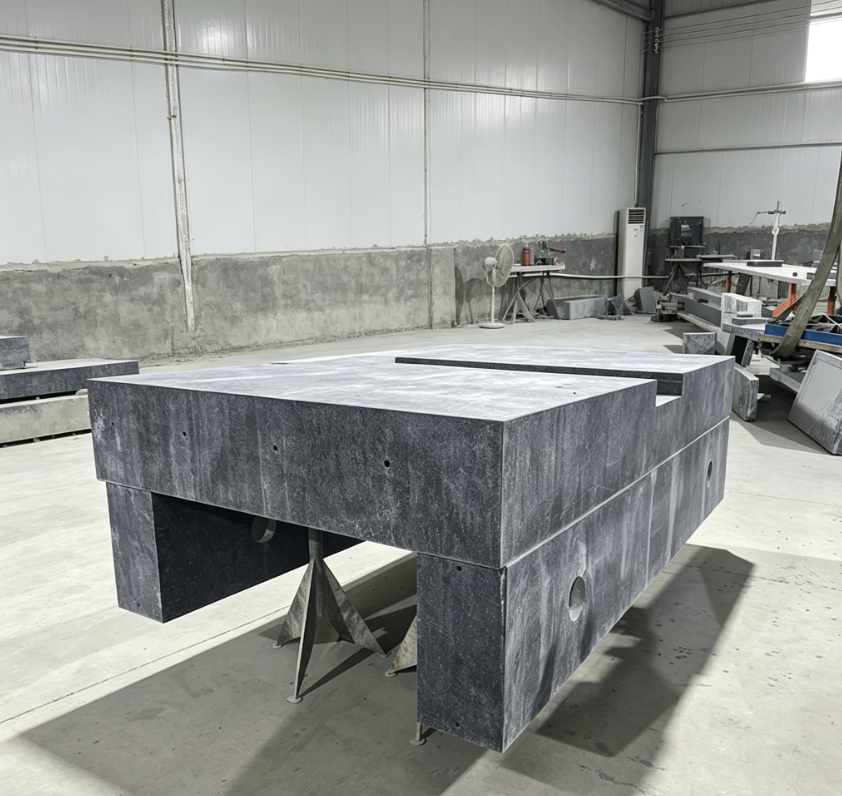
GraniteProcess: A combination of multiple processes including diamond saw blade cutting, gantry milling, gantry planing, and rough grinding, offering flexible machining methods.
Method: A combination of / grinding, with a larger single-pass cutting depth (cut depth 0.1~0.3mm), resulting in machining efficiency far higher than that of ceramics.
H / Slotting: Diamond drills and milling cutters can be used directly; machining of large holes, multiple holes, irregular slots, and stepped surfaces is mature.
Cooling: Ordinary fluid or clean water is sufficient, with no risk of thermal cracking.
Key Operation: After rough machining, a second aging rest of 7~15 days is required to cutting stress and prevent subsequent deformation.
(III) Semi-finishing / Finishing (Forming, Hole Systems, Inserts)
High-hardness Ceramics
Forming: Full CNC grinding and honing, almost no milling; contour accuracy is guaranteed by grinding.
Hole Machining:
Conventional Holes: Diamond micro-drill bits, ultrasonic drilling; hole diameter tolerance H7~H8, tapping is strictly prohibited (ceramics are brittle, threads easily chip).
Threaded Structures: Only pre-embedded metal inserts can be used; threads cannot be directly made in the ceramic body.
Insert Assembly: Only adhesive bonding is used for fixation; heat fitting and interference press-fitting are not allowed (stress concentration leads to cracking).
Feed Parameters: Low speed, low feed, small depth of cut; feed speed is only 1/3~1/5 of that for granite.
Granit
Forming: Combined CNC milling CNC grinding process; milling for contours, slots, and cavities, grinding for accuracy.
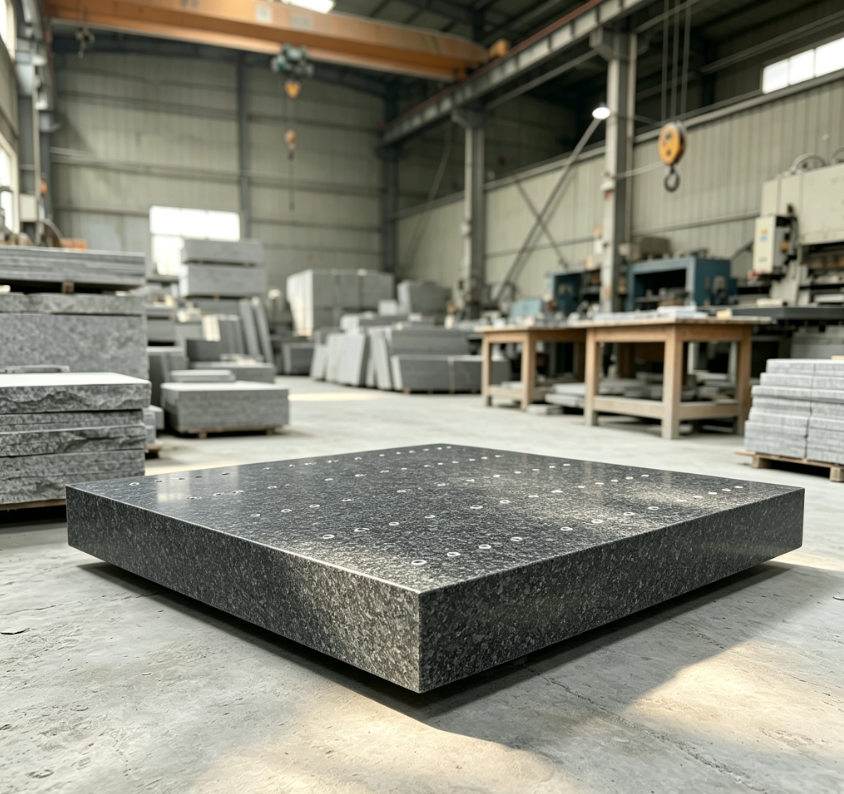
Hole Machining: Can be directly tapped after drilling with diamond bits; threaded holes can be machined in the stone body, allowing flexible hole system layouts.
Insert Assembly: Heat fitting of metal threaded sleeves / steel sleeves, interference press-fitting, and adhesive bonding are all applicable; assembly processes are diverse.
Feed Parameters: Speed, feed, and depth of cut can be significantly increased, resulting in high machining efficiency.
(IV) Ultra-precision Grinding & Polishing (Determines Final Accuracy and Surface Quality)
High-hardness Ceramics
Abrasive System: Full diamond micropowder, graded grinding from coarse to nano-scale; silicon carbide and aluminum oxide abrasives are not used (low efficiency, prone to scratching).
Processes: Coarse grinding → fine grinding → nano-polishing, with more stages (6~8 processes).
Surface Requirements: Mirror-grade finish can be achieved, Ra≤0.01μm, completely pore-free.
Difficulties: Grinding pressure must be uniform; excessive local pressure will directly cause micro-cracks; floating grinding heads and closed-loop pressure control are adopted.
Efficiency: Long polishing cycle; the time required for the same area is more than twice that of granite.
Granit
Abrasive System: Silicon carbide and aluminum oxide grinding discs are used for coarse grinding in the early stages, followed by diamond micropowder for fine polishing in the later stages; abrasive costs are lower.
Processes: Can be completed in 4~5 stages, with fewer processes.
Surface Requirements: Conventional precision parts Ra≤0.02~0.05μm; due to natural micropores, the extreme mirror effect of ceramics cannot be achieved.
Difficulties: Focus on controlling flatness and overall stress release; no need to worry about cracking under pressure.
Efficiency: Fast grinding and polishing speed, stronger mass production capability.
(V) Surface Post-treatment and Protection
High-hardness Ceramics
Cleaning: High-pressure pure water ultrasonic cleaning is sufficient; the material does not absorb dirt or oil.
Protection: No need for anti-seepage or sealing treatment, as it is inherently completely dense; only anti-static coatings are applied as needed.
Surface Modification: Can be coated or sprayed with optical coatings, with stable bonding strength.
Granit
Cleaning: Requires specialized degreasers to deeply clean grinding dust and oil stains within the micropores.
Protection: Must be coated with silane / siloxane penetrating protectants to seal micropores, preventing water absorption, stain penetration, and weathering.
Limitations: Coating adhesion is weaker than that of ceramics; high-end coating applications are relatively few.
VI) Inspection and Quality Control
Céramiques à haute dureté
Precision Inspection: Primarily laser interferometers and white light interferometers, focusing on microscopic flatness, surface roughness, and thermal stability.
Defect Detection: Focus on flaw detection (ultrasonic / penetrant testing) to screen for micro-cracks and hidden cracks (fatal defects) caused by machining.
Environment: Constant temperature of 20±0.5°C throughout the process, strictly controlling temperature differences.
Granit
Precision Inspection: Primarily CMMs, flat crystals, and dial indicators, focusing on dimensional tolerances, geometric tolerances, and long-term deformation.
Defect Detection: Visual inspection tapping flaw detection to screen for natural cracks and pinholes; no need to focus on machining micro-cracks.
Environment: Regular precision constant-temperature workshops are sufficient, with higher temperature tolerance.
III. Comparison Table of Key Process Parameters
Tableau
Comparison Item High-Hardness Structural Ceramics Precision Granite
Total Machining Allowance 0.2~0.5mm 3~8mm
Main Machining Method Full-process grinding, ultrasonic machining, laser machining Combination of sawing milling grinding
Applicable Tools / Abrasives Special diamond grinding heads / grinding wheels, no universal milling cutters Diamond saw blades, milling cutters, and grinding discs are all applicable
Single Cutting Depth ≤0.01mm (extremely small) 0.1~0.3mm (conventional)
Thread Machining Body cannot be tapped, only pre-embedded inserts Can be directly drilled and tapped
Aging Treatment No artificial aging required Two long-term aging processes before and after rough machining
Number of Grinding Processes 6~8 steps, nano-level polishing 4~5 steps, conventional mirror polishing
Surface Protection No need for anti-seepage sealing Must perform penetrant sealing protection
Machining Risks Chipping, micro-cracks, thermal cracks Stress deformation, pore contamination
Machining Efficiency Low, long cycle, high cost High, excellent cost-performance for mass production
IV. Summary of Core Differences
Different Machining Logic
Ceramics use “grinding instead of cutting”, avoiding impact and shear forces throughout the process, relying on pure grinding for shaping; the process is conservative and efficiency is low.
Granite uses “combined cutting and grinding”, primarily cutting with grinding for fine finishing; the process is flexible and efficiency is high.
Different Structural Machining Capabilities
Granite can be used for large parts, deep cavities, multi-holes, threads, and complex irregular shapes; ceramics are limited by brittleness and are only suitable for simple, small-to-medium-sized regular components.
Different Process Focus
The core of granite is controlling internal stress and deformation, relying on multi-stage aging; the core of ceramics is controlling micro-cracks and chipping, strictly controlling cutting parameters and pressure.
Cost and Mass Production
Ceramic grinding consumables are expensive and labor hours are long, suitable for small-batch ultra-high-precision parts; granite processes are mature and consumables are cheap, with a clear advantage in mass production of medium-to-large parts.