Application of Granite Bases in Coordinate Measuring Machines (CMM)
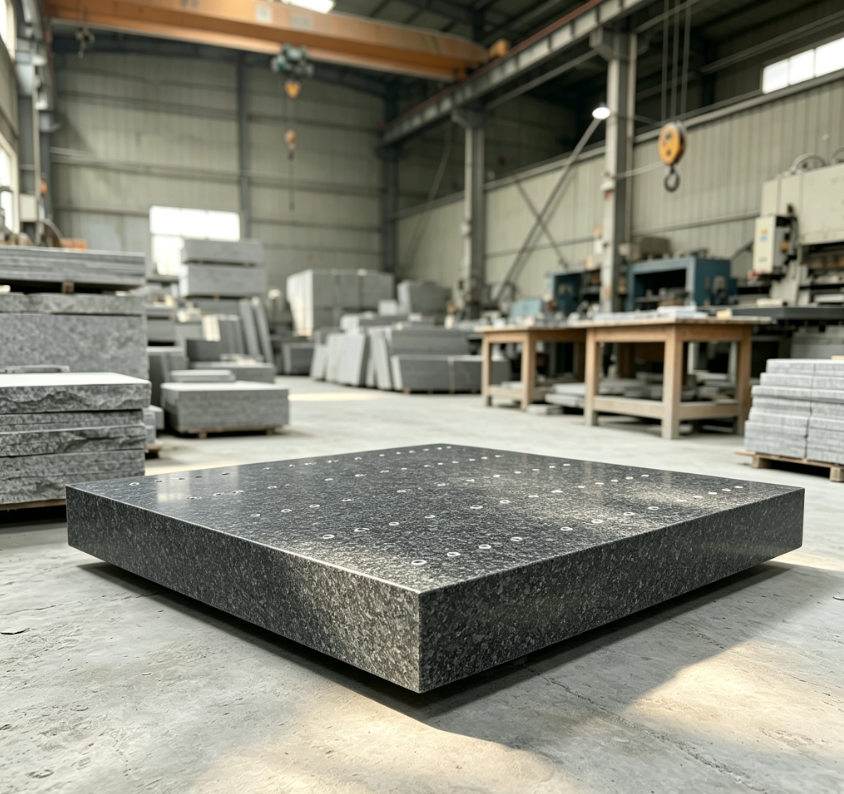
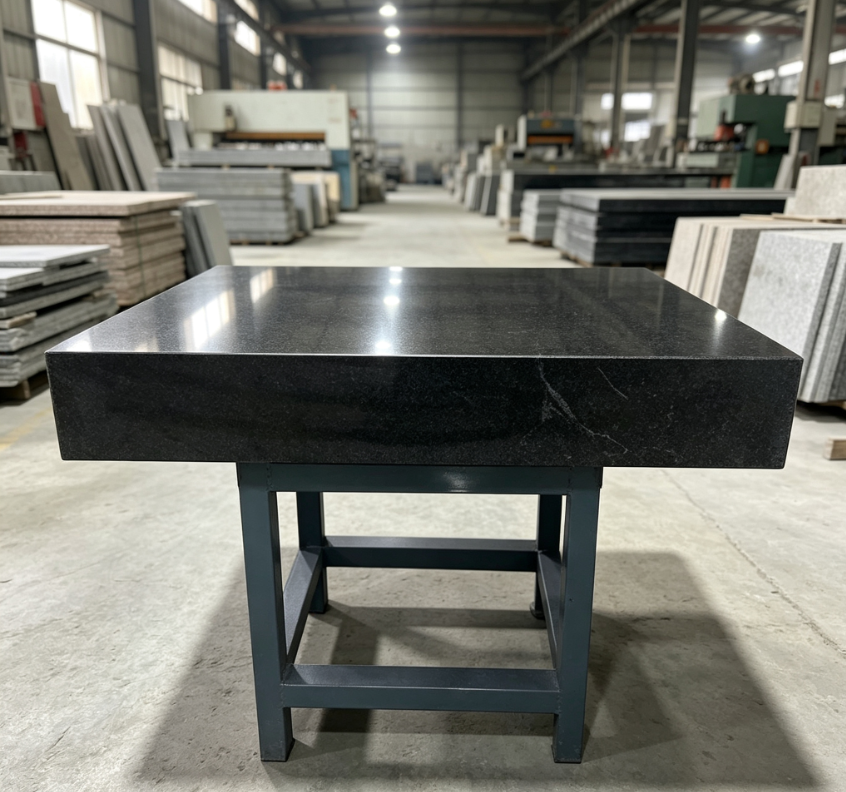
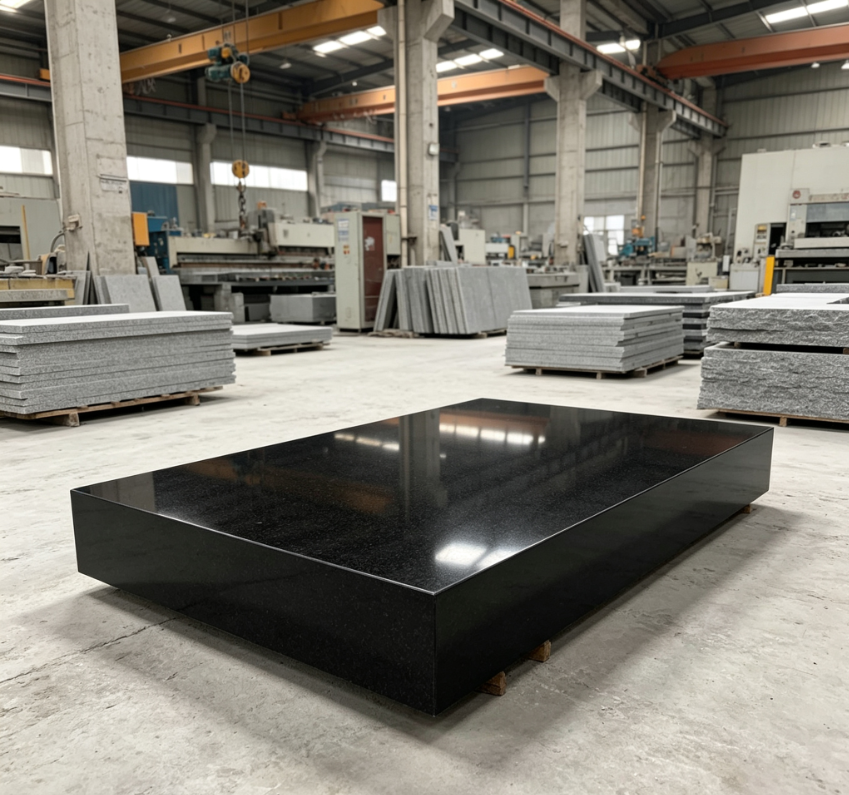
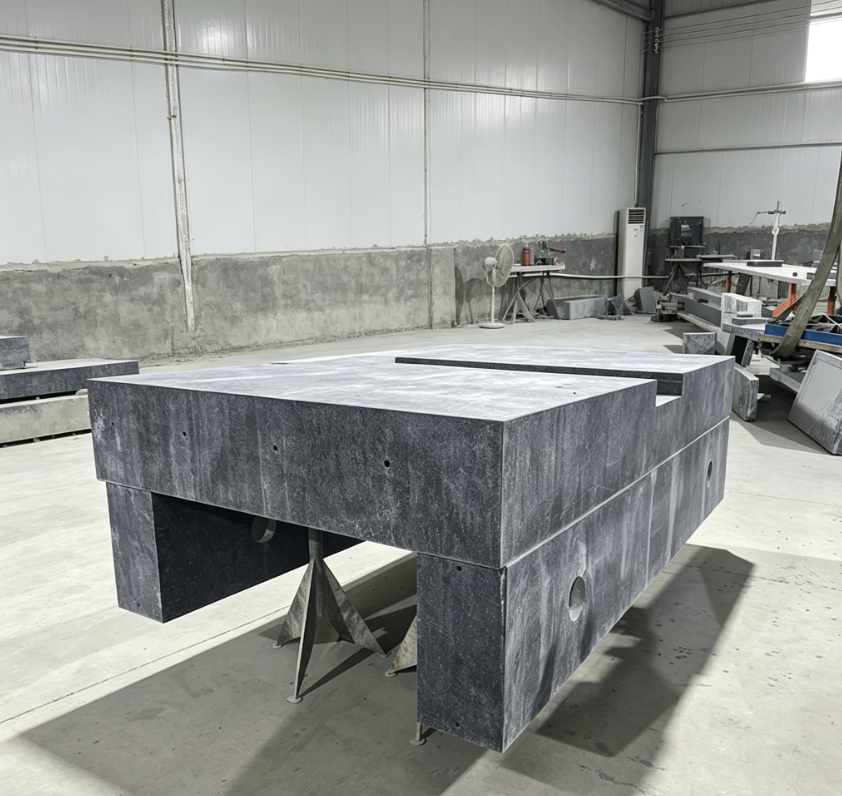
Granite is the core reference carrier for the vast majority of stationary CMMs other than bridge-type, gantry-type, and portable ones. Due to its physical properties, it has become the preferred base material for precision geometric measurement, determining the equipment’s reference accuracy, operational stability, and service life.
I. Core Advantages (Adapted to CMM Working Conditions)
Extremely low deformation, permanently stable reference
Natural granite (mainly Jinan Green) has no issues with metallic aging creep or internal stress release. It has high rigidity and is resistant to deformation under pressure. CMMs are heavy and their measuring frames move back and forth frequently. Granite bases can maintain reference geometric accuracy over the long term, eliminating measurement errors caused by frame displacement.
Extremely low thermal expansion coefficient, resistant to temperature interference
The linear expansion coefficient is far lower than that of cast iron and steel. When there are slight temperature changes in the workshop environment, the relative positions of the machine’s reference surface, guide rails, and columns remain almost unchanged. This significantly reduces system errors caused by temperature and relaxes the requirements for constant temperature foundations.
Excellent vibration absorption and damping performance
CMMs rely on the probe’s micro-contact to take points, making them extremely sensitive to vibration. Granite can absorb vibrations caused by foot traffic on the floor, machine tool operation, and overhead cranes, avoiding probe shaking and point-taking offsets, thereby improving repeatability.
Ultra-high flatness, wear resistance, and accuracy retention
Through precision grinding, it can achieve 00-grade / 000-grade reference planes. It has high surface hardness, is wear-resistant, and is not easily scratched. With long-term reciprocating use of guide rails and worktables, the accuracy of the reference surface decays very slowly, making maintenance simple.
Corrosion and rust resistance, adapted to workshop environments
It is resistant to cutting fluids, oil stains, and mild acid-base corrosion. It will not rust, oxidize, or peel like cast iron, making it suitable for production sites such as machining, mold making, and auto parts.
II. Specific Application Parts in the Machine Structure
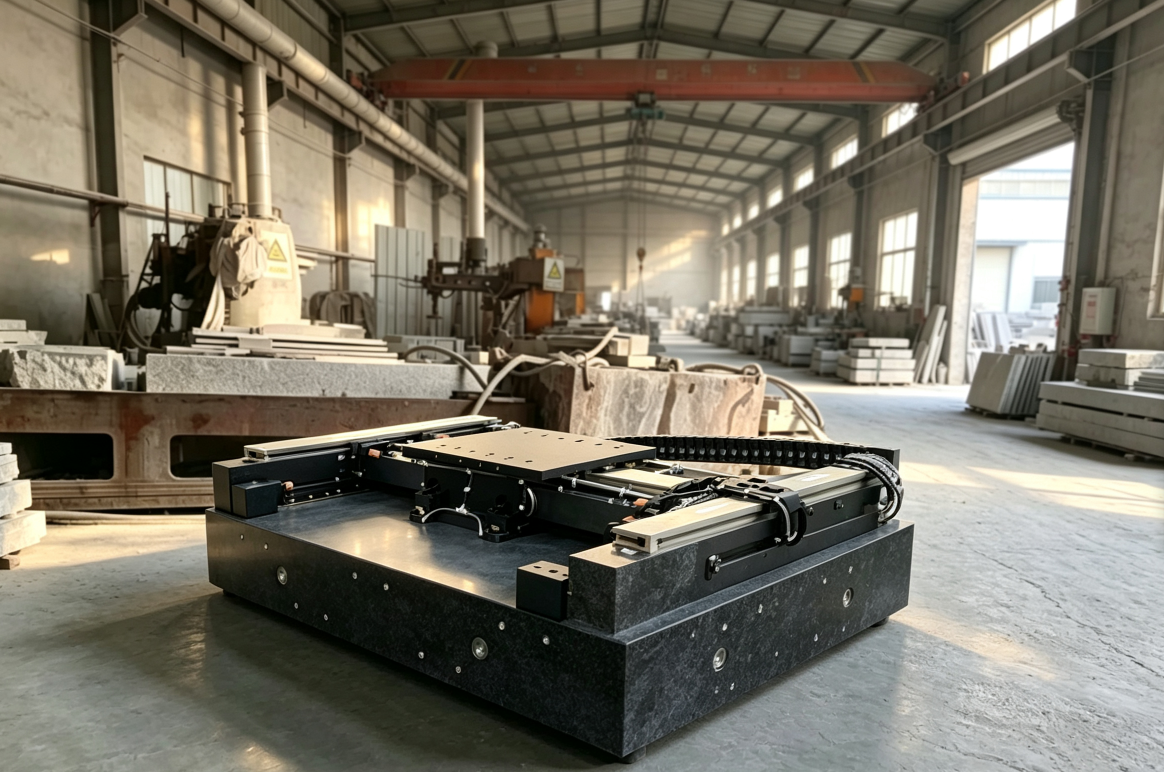
- Main Machine Base (Large Base)
The most core component of the machine, supporting the bed, X/Y guide rails, columns, crossbeams, and all moving mechanisms. It is the geometric reference origin of the entire equipment.
Ensures the parallelism of the left and right columns, the straightness of the guide rails, and the horizontal reference of the entire machine;
Distributes the self-weight and motion impact of the machine to prevent local sinking and deformation. - Worktable (Workpiece Support Table)
Directly supports the measured workpiece and tooling fixtures. It is divided into integrated granite tabletops and separate tabletops:
The tabletop often features standard T-slots / threaded holes for clamping fixtures;
The tabletop is rigidly combined with the main machine base to ensure the unity of the workpiece reference and the equipment measurement reference, avoiding tabletop deformation caused by the workpiece’s self-weight and clamping force. - Guide Rail Base (Integrated Granite Guide Rails)
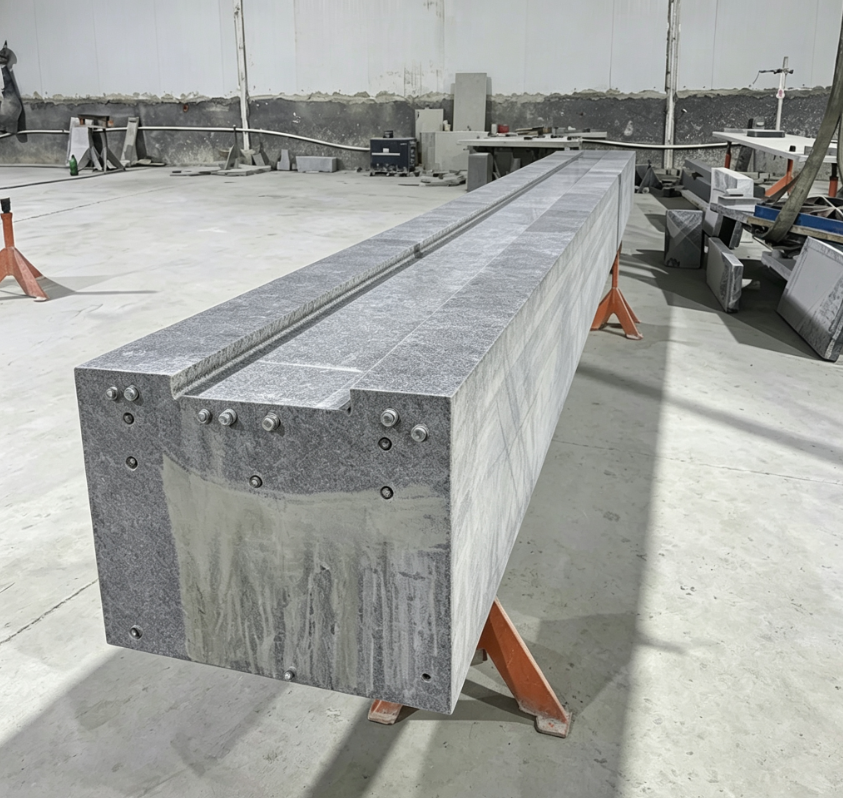
Mid-to-high-end bridge-type CMMs often use integrated granite guide rails (X and Y axes):
The guide rail surface is made of the same material as the base and is ground into shape in one go, with no splicing stress;
The moving slide runs smoothly with stable friction characteristics, and works best when used with air bearings. - Auxiliary Supports / Column Base Plates
Some machine models are equipped with granite base plates at the bottom of the columns to further isolate vibration, balance the load, strengthen column verticality, and reduce cantilever errors.
III. Actual Value of CMM Measurement Accuracy
Geometric Accuracy Assurance
Strictly ensuring guide rail straightness, axis perpendicularity, and three-axis orthogonality, which is the foundation for measuring spatial dimensions and geometric tolerances (parallelism, perpendicularity, position, and profile) in CMMs.
Repeatability Improvement
Shock absorption low deformation characteristics minimize the dispersion of repeated sampling data, meeting the inspection requirements for precision molds, aerospace, auto parts, and optical components.
Estabilidad a largo plazo
Under normal operating conditions, the reference accuracy shows no significant drift for several years, far superior to ordinary cast iron beds, significantly reducing the frequency of equipment calibration and repair.
IV. Common Materials, Grades, and Selection Key Points
Mainstream Stones
Jinan Green: The most widely used, with balanced density, hardness, and thermal stability, high cost-performance ratio, suitable for conventional bridge-type CMMs;
Zhangqiu Black / Indian Black: Higher density, lower thermal expansion coefficient, and higher accuracy grade, mostly used for high-precision laboratory models and large-travel gantry CMMs.
Accuracy Grades
Industrial CMMs are standardly equipped with Grade 00, while laboratory ultra-high precision models use Grade 000, strictly controlling flatness, parallelism, and right-angle accuracy.
Usage Restrictions (Precautions)
High Brittleness: Heavy impacts, collisions, and falling objects from heights are strictly prohibited, as they easily cause chipping and internal cracks;
Sensitive to Rapid Temperature Changes: Prohibit placing high-temperature workpieces directly on the table surface;
Extremely Heavy: Installation requires a floor with qualified load-bearing capacity, and must be used with anti-vibration leveling feet.
V. Granite vs. Cast Iron Bed Comparison (CMM Scenario)
Cuadro
Performance Granite Cast Iron
Aging Deformation Almost none Long-term stress creep exists
Thermal Stability Excellent Average, large temperature-induced error
Shock Absorption Damping Superior Medium
Wear Resistance / Rust Prevention Excellent Prone to rust, requires protection
Weight Extremely heavy Relatively heavy
Impact Resistance Brittle, sensitive to impact Good toughness, impact-resistant
VI. Typical Application Industries
High-precision 3D dimension and geometric tolerance inspection scenarios in precision molds, automotive parts, aerospace, medical devices, optical components, 3C electronics, etc., are the standard solutions for workshop-type and laboratory-type bridge CMMs.
Additional Distinction: Large gantry CMMs, due to their extremely large travel and high load-bearing capacity, mostly adopt welded steel structures cast iron tables; portable articulated arm CMMs have no fixed granite base; desktop small CMMs almost entirely use granite bases across all series.