Relying on its unique physical properties, granite has become a key material in the field of precision instrument manufacturing, playing a core role especially in high-precision measurement and machining equipment. Below is a detailed breakdown of its application scenarios, core advantages, and typical components:
🔧 I. Core Application Scenarios
The application of granite in precision instruments is mainly concentrated in scenarios with extremely high requirements for stability, precision, and resistance to interference:
Precision Measurement Equipment
Coordinate Measuring Machines (CMM): As the worktable and base of the equipment, granite provides a high-rigidity, low-thermal-expansion reference surface, ensuring measurement accuracy is unaffected by temperature changes and long-term use; it is the preferred material for the vast majority of CMMs.
Optical Inspection Instruments: The bases of devices such as laser interferometers, projectors, and video measuring machines utilize the high damping characteristics of granite to reduce vibration interference and improve imaging and measurement stability.
Gauges and Inspection Fixtures: Granite straight edges, square blocks, V-blocks, and angle blocks are used for high-precision inspection of workpiece flatness, parallelism, and coaxiality, with stable repeat positioning accuracy.
Ultra-Precision Machining Equipment
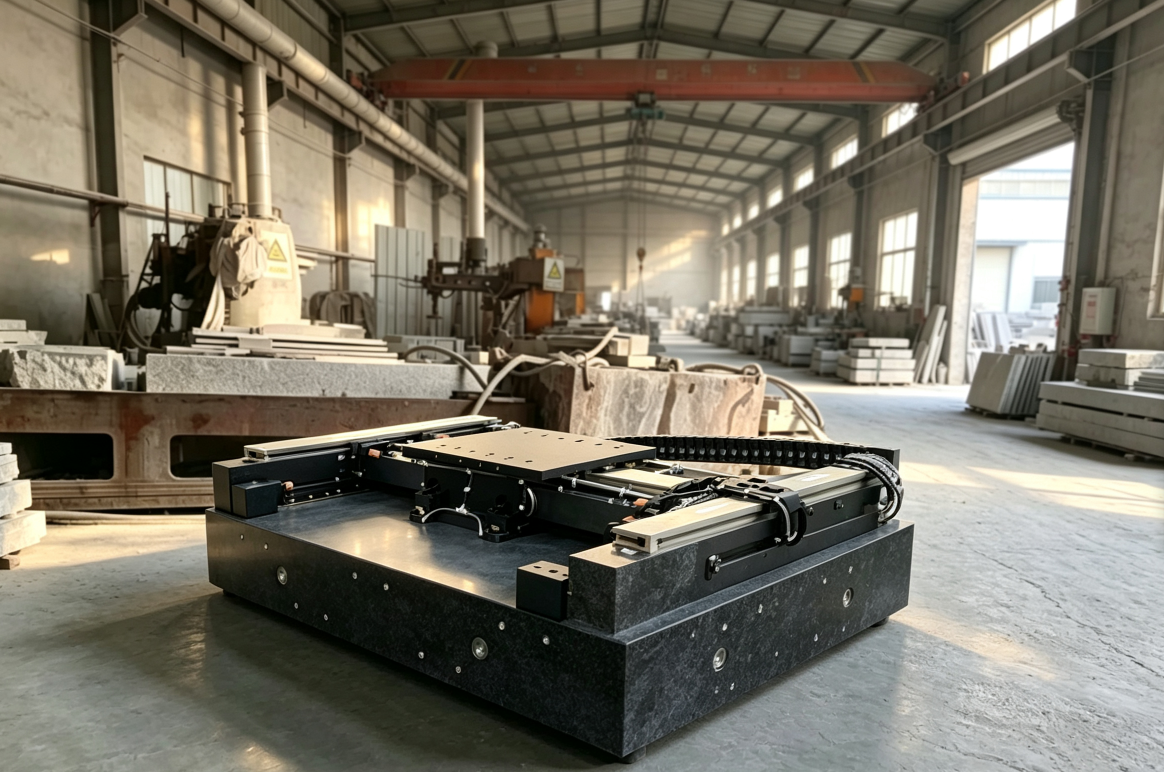
Motion platforms and guides for semiconductor and chip manufacturing equipment, such as the granite bases of lithography machines and wafer inspection equipment, ensure micron-level or even nanometer-level motion precision.
Beds, crossbeams, and guides of precision machine tools replace cast iron materials, reducing the impact of thermal deformation and vibration on machining accuracy.
Laboratories and Metrology Benchmarks
As measurement platforms for high-precision micrometers and dial indicator stands, it provides a stable reference plane for laboratory metrology, serving as an important auxiliary tool for length metrology.
✨ II. Why is Granite the “Ideal Material” for Precision Instruments?
Compared to traditional materials like cast iron and steel, the characteristics of granite are almost tailor-made for precision scenarios:
Таблица
| Характеристики | Advantage Interpretation | Value to Precision Instruments |
|---|---|---|
| Долгосрочная стабильность | Natural granite has undergone geological aging over hundreds of millions of years, with internal stresses fully released; it will not undergo plastic deformation for decades after processing | Ensures measurement benchmarks do not drift over time, maintaining long-term equipment accuracy |
| Low Coefficient of Thermal Expansion | Linear expansion coefficient is much lower than steel, resulting in minimal dimensional changes with temperature variations | Reduces measurement errors caused by environmental temperature fluctuations, suitable for the precision control needs of temperature-controlled workshops |
| Высокая твердость и износостойкость | Mohs hardness of 6-7, making the surface resistant to scratches and wear | The worktable maintains extremely high flatness even after long-term use, with low maintenance costs |
| Excellent Vibration Damping | Dense internal crystalline structure effectively absorbs vibration | Reduces interference from external vibrations on measurement and machining processes, improving equipment stability |
| Corrosion and Insulation Resistance | Chemically stable, resistant to acids and alkalis, does not rust or conduct electricity | Suitable for workshop environments with humidity and slight corrosion, and can be used as an insulating base for electronic equipment |
📦 III. Typical Precision Granite Components
The images you previously showed are exactly the common types of granite components:
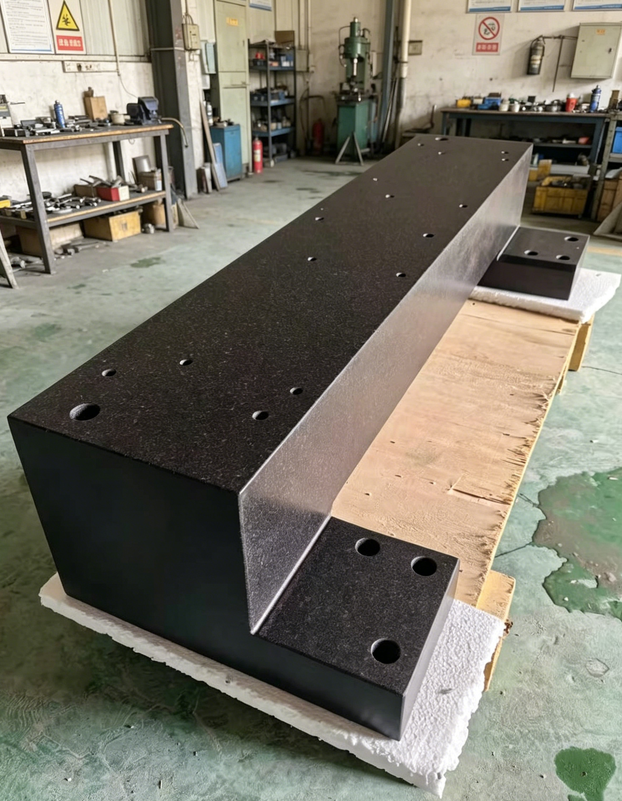
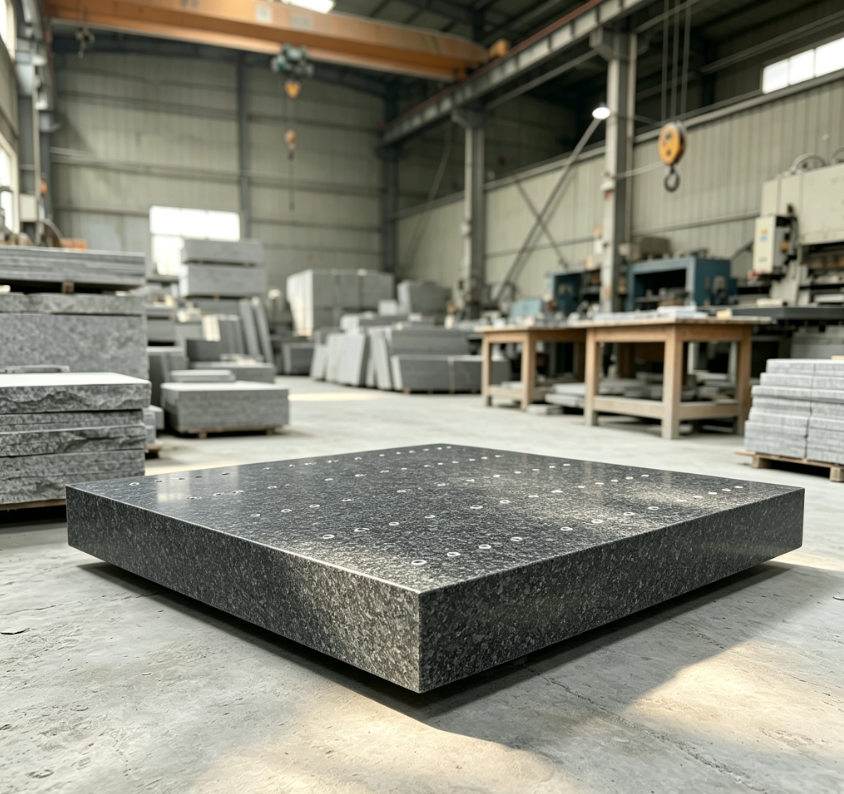
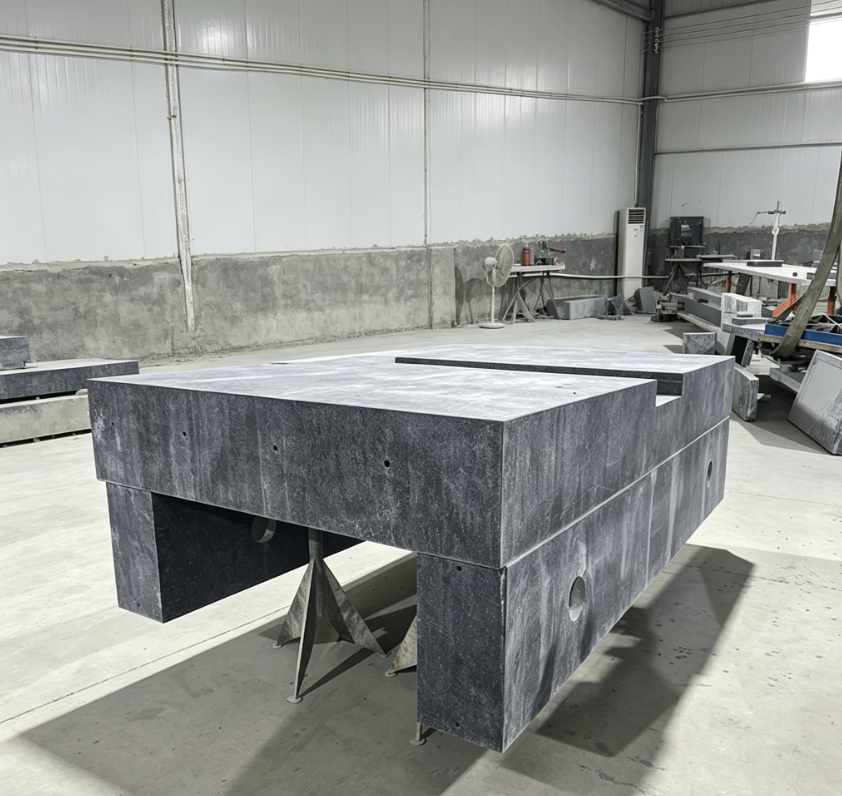
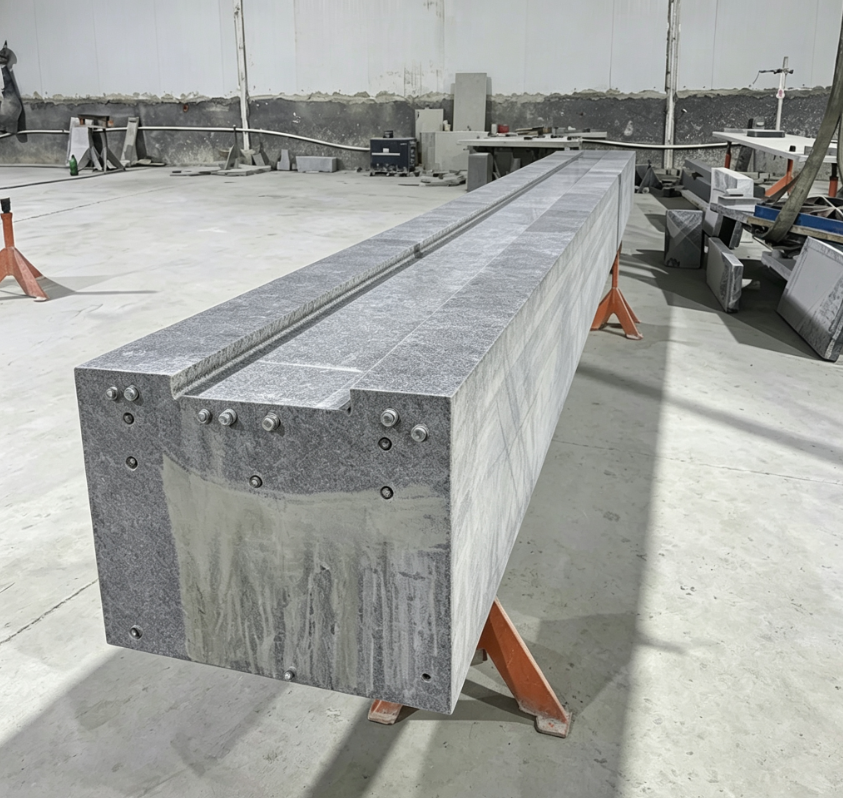
Large Equipment Bases / Beams: Such as granite beds for CMMs and gantry machines, which integrate guide rails and drive components through precision drilling and slotting to support high-precision equipment motion.
Precision Guides and Sliders: Granite guide surfaces can serve directly as a reference for linear motion, enabling frictionless, high-precision linear movement when paired with air bearings or linear motors.
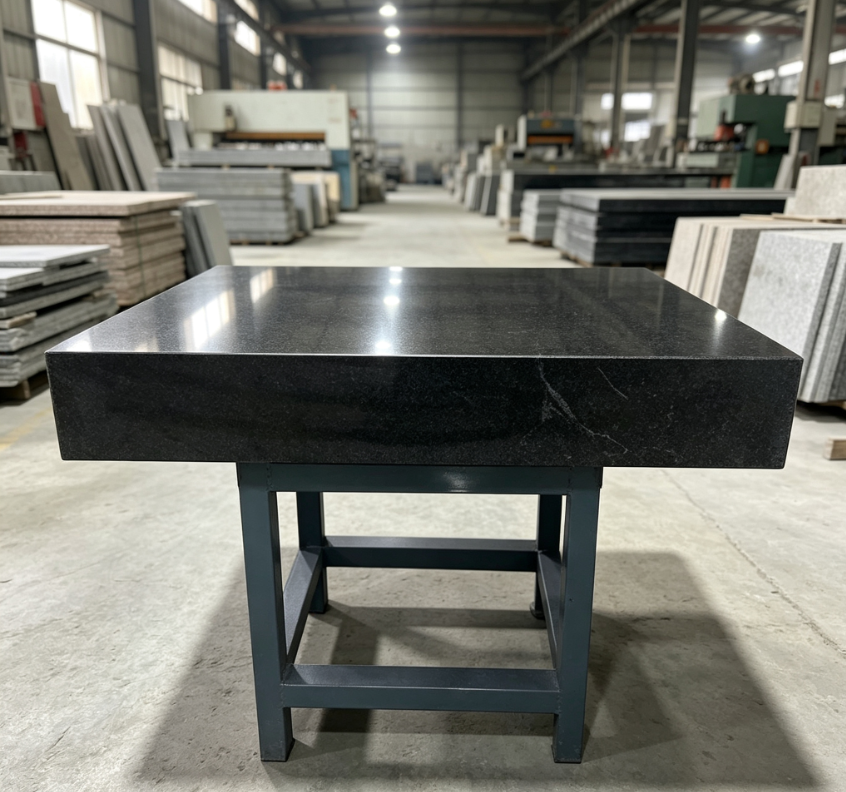
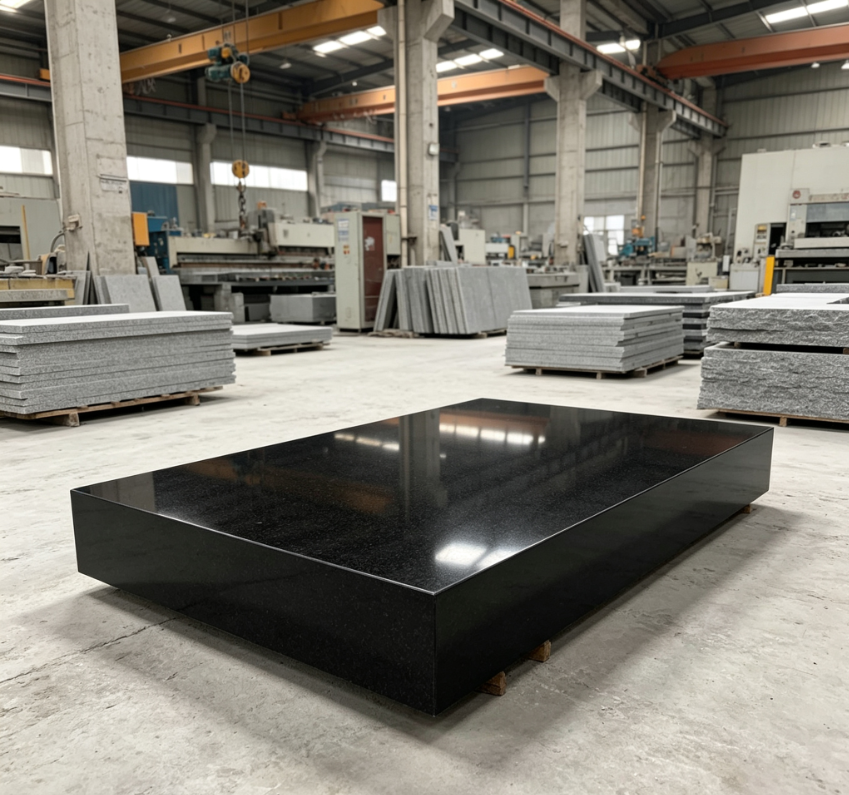
Measuring Platforms / Workbenches: Such as granite bases for dial indicators and small measuring platforms, which are the most fundamental metrological reference instruments.
Customized Structural Components: Such as gantry components with columns and dedicated bases with mounting holes, providing integrated high-precision support solutions for specific equipment.