Precision granite (commonly known as granite) is the core structural material for ultra-precision machine tools. Leveraging four key characteristics—low thermal expansion, high damping, high rigidity, and zero internal stress—it has become the preferred choice for equipment requiring nanometer/micrometer-level precision. It is widely used in critical components such as beds, bases, guideways, crossbeams, and worktables, supporting ultra-precision turning, grinding, lapping, and the processing of semiconductor/optical components.
I. Core Material Advantages (Compared to Cast Iron)
Extremely Low Thermal Expansion Coefficient: Approximately 0.6×10⁻⁶/℃, only 1/20th of cast iron (11×10⁻⁶/℃). Deformation under temperature fluctuations is minimal, and annual precision variation can be controlled within 2μm, suitable for long-term stable operation in constant temperature workshops.
Ultra-High Damping Vibration Reduction: Damping coefficient is over 10 times that of cast iron, with high-frequency vibration attenuation reaching 95%. It effectively suppresses cutting/grinding vibrations, eliminates workpiece chatter marks, improves surface finish by over 30%, and extends tool life by 37%.
High Rigidity and Stability: Naturally dense, free from casting defects and internal stress, it remains deformation-free during long-term use. With an elastic modulus of about 50GPa and high density (≈3000kg/m³), its structural stability far exceeds that of cast iron.
Insulation and Corrosion Resistance: Rust-proof, resistant to acids and alkalis, and non-magnetic. It reduces parasitic capacitance in EDM processes, making it suitable for high-precision mirror surface processing. Its good insulation makes it ideal for electronic/semiconductor equipment.
II. Typical Application Components and Scenarios
- Beds and Bases (Most Core)
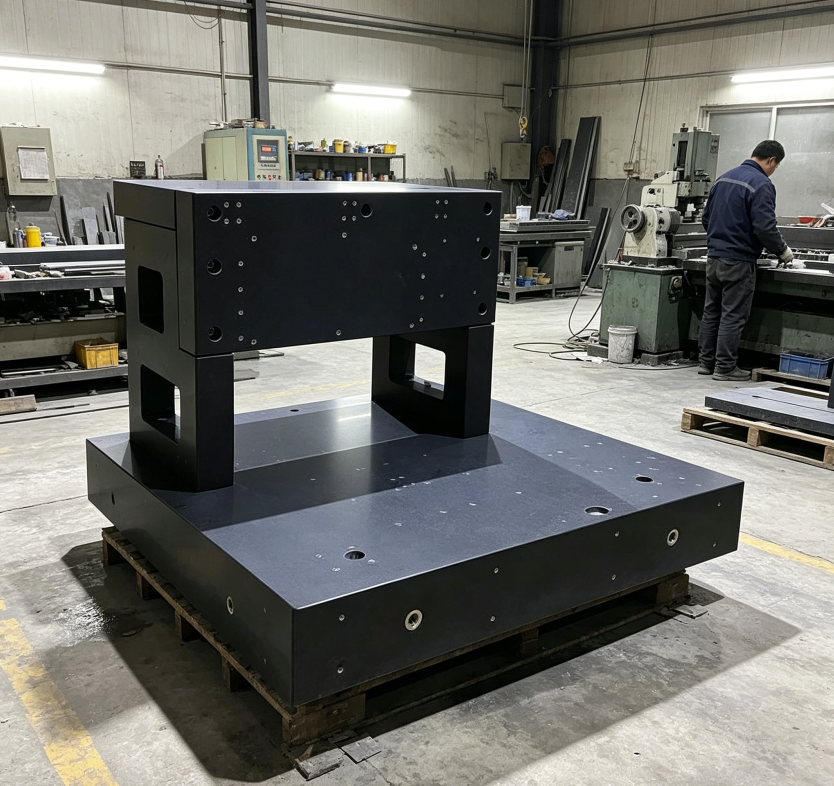
Main support for ultra-precision diamond turning machines, nanogrinding machines, and 5-axis ultra-precision machines. It adopts integral/divided granite structures (e.g., T-type, basket-type) to provide micron-level installation benchmarks.
Case: Huacui ultra-precision diamond turning machine uses a natural granite bed basket-type vibration isolation, combined with an air-bearing spindle, achieving ≤1μm positioning accuracy. - Guideways and Slides (Motion Benchmarks)
Air-bearing / hydrostatic guideway bases: Granite surfaces are machined with air-bearing holes/oil cavities, achieving flatness ≤0.5μm to realize frictionless, high-straightness motion, used in ultra-precision machine tools and Coordinate Measuring Machines (CMMs).
Installation substrates for linear motors/ball screws, ensuring long-term motion accuracy, suitable for Grade 00 precision requirements. - Crossbeams, Columns, and Gantry Frames
Horizontal/vertical support for gantry-type ultra-precision grinding machines, lithography machines, and optical inspection equipment. High rigidity suppresses crossbeam sagging and vibration, ensuring positional accuracy across large spans.
Case: WENZEL CMM adopts an integral granite gantry table, requiring no special foundation and offering excellent long-term stability. - Worktables and Measuring Platforms
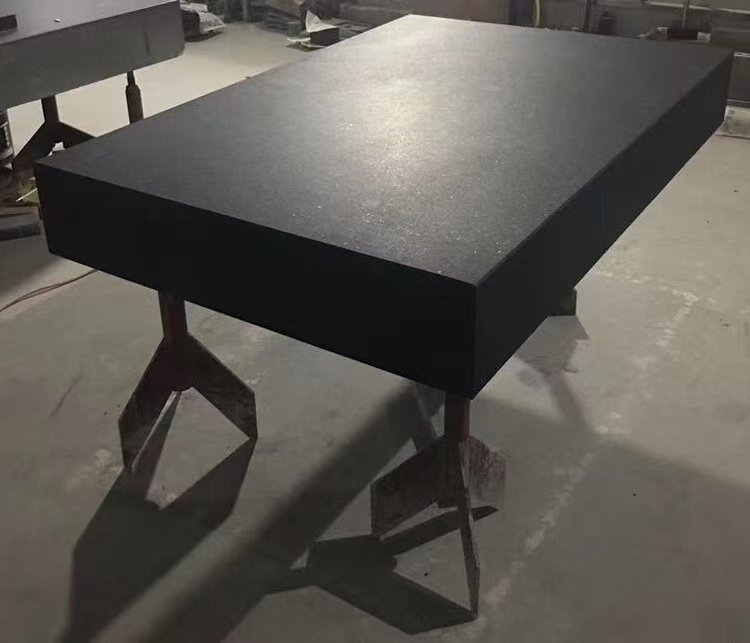
Grade 00 granite worktables for EDM machines and optical grinding machines, with flatness ≤1μm, providing insulation and heat resistance to ensure stable workpiece positioning.
Semiconductor wafer inspection and laser interferometer reference platforms, providing nanometer-level planar benchmarks. - Auxiliary Components
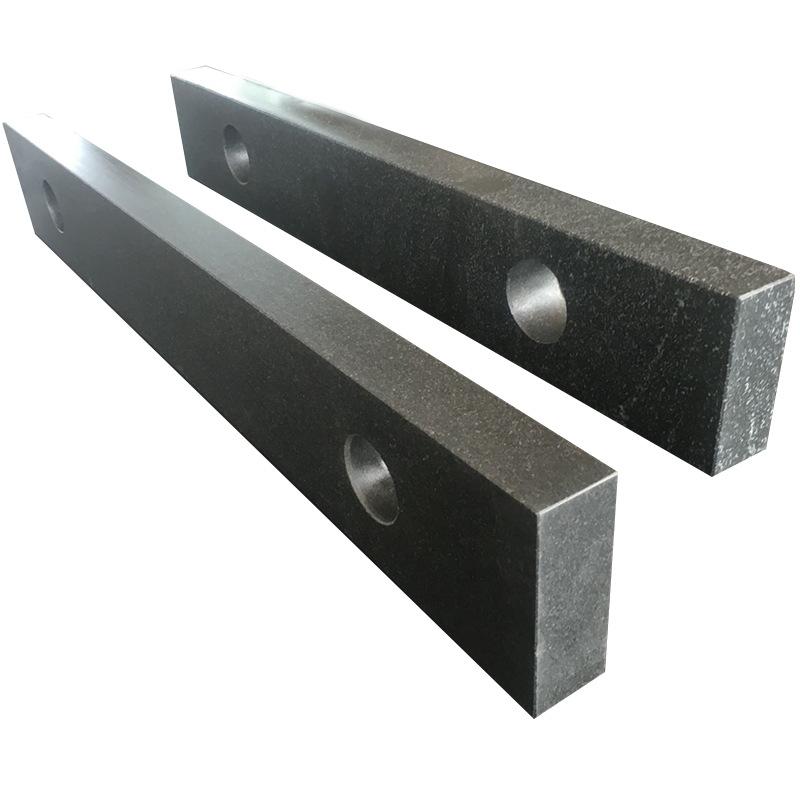
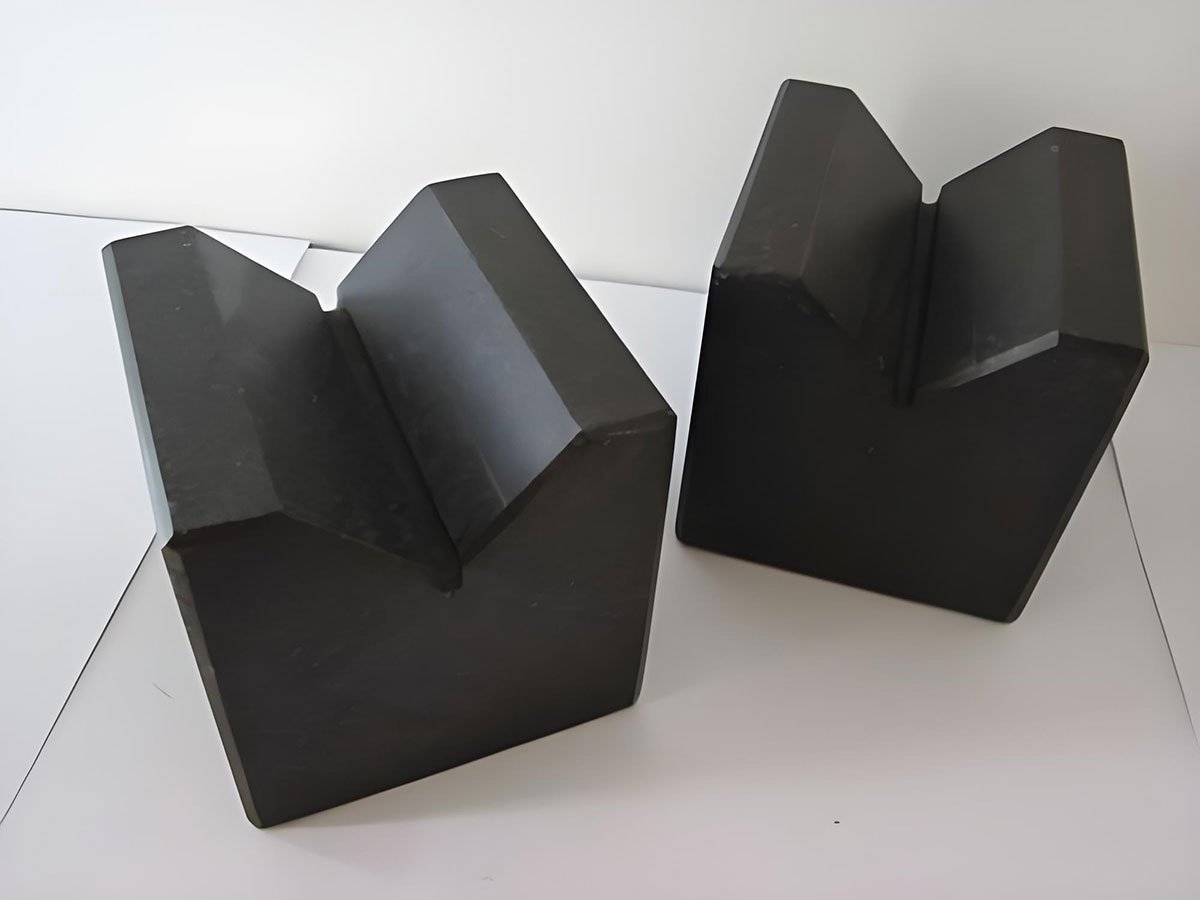
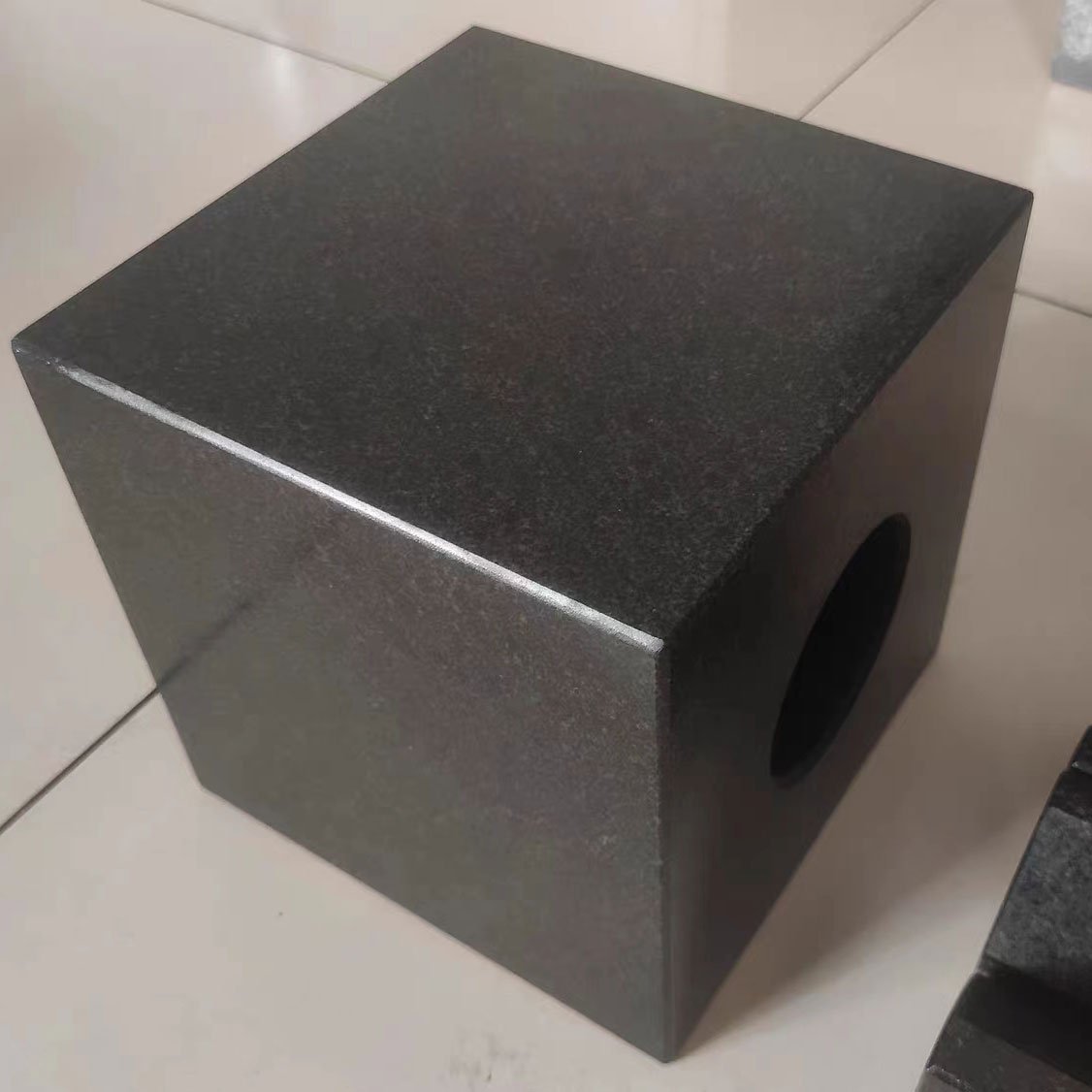
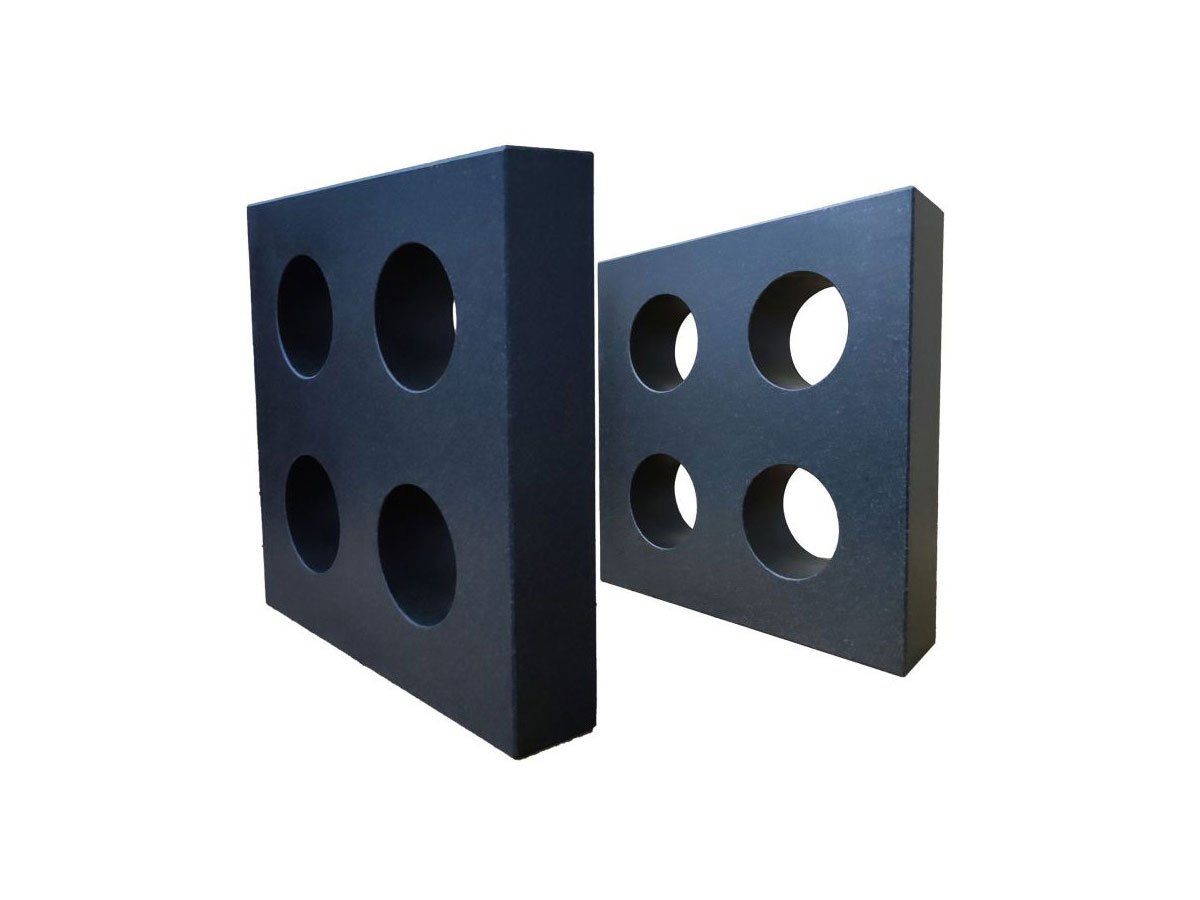
High-precision measuring tools such as straight edges, square blocks, and V-blocks, used for machine tool guideway calibration and geometric precision inspection, with accuracy reaching Grade 00 (≤1μm).
Fixture/jig substrates for fixing thin-walled/easily deformed parts, reducing clamping errors.
III. Key Manufacturing Processes and Precision Assurance
Material Selection: Prioritize dense black granites such as Jinan Black and Mount Tai Bliamond, with quartz content ≥40% and water absorption rate ≤0.1%, ensuring uniform and stable material quality.
Processing Flow: Block cutting → Rough grinding → Fine grindHand lapping (Grade 00) → Drilling/Slotting → Metal inlaying → Aging treatment (to eliminate machining stress).
Precision Grades:
Standard Grade Flatness 1–3 μm/m, suitable for general ultra-precision machine tools;
Precision Grade: Flatness 0.5–1 μm/m, suitable for diamond turning machi lithography machines;
Ultra-Precision Grade: Flatness ≤0.5 μm/m, enabling nanometer-level motion when paired with air bearings.
IV. Industry ApplicatFields
Aerospace: Ultra-precision turning/grinding of engine blades, gyroscopes, and optical lenses, with precision ≤1 μm.
Semiconductor: Lithography mane bases, wafer cutting/inspection platforms, and nanoimprint lithography equipment, with thermal stability suitable for ±0.1°C constant temperature environments.
Optical EngineerinMachining of aspheric lenses, mirrors, and laser devices, with surface roughness Ra ≤10 nm.
Precision Molding: Molds for optical lenses and medical devices,micro-cavity machining, featuring excellent long-term precision retention.
V. Limitations and Solutions
High brittleness and poor impact resistance: Avoid heavy load impacts; add protective structures du design; use in conjunction with damping vibration isolators (e.g., air springs).
High processing difficulty and cost: Suitable for high-value-added, high-precision scenarios; for medium andd components, a composite structure of granite metal inlay can be adopted to balance cost and performance.