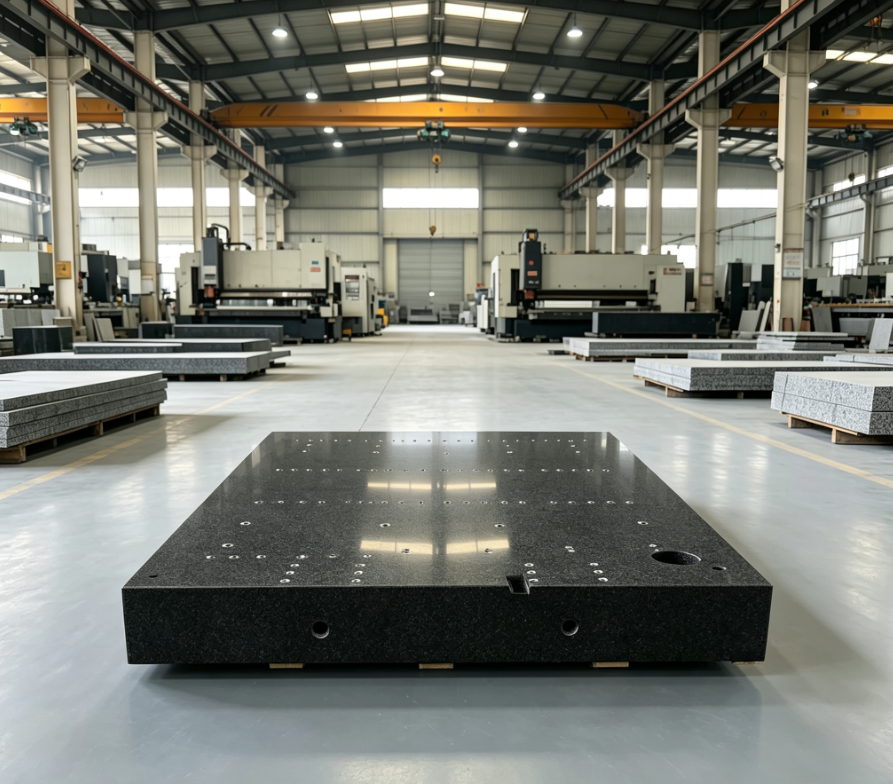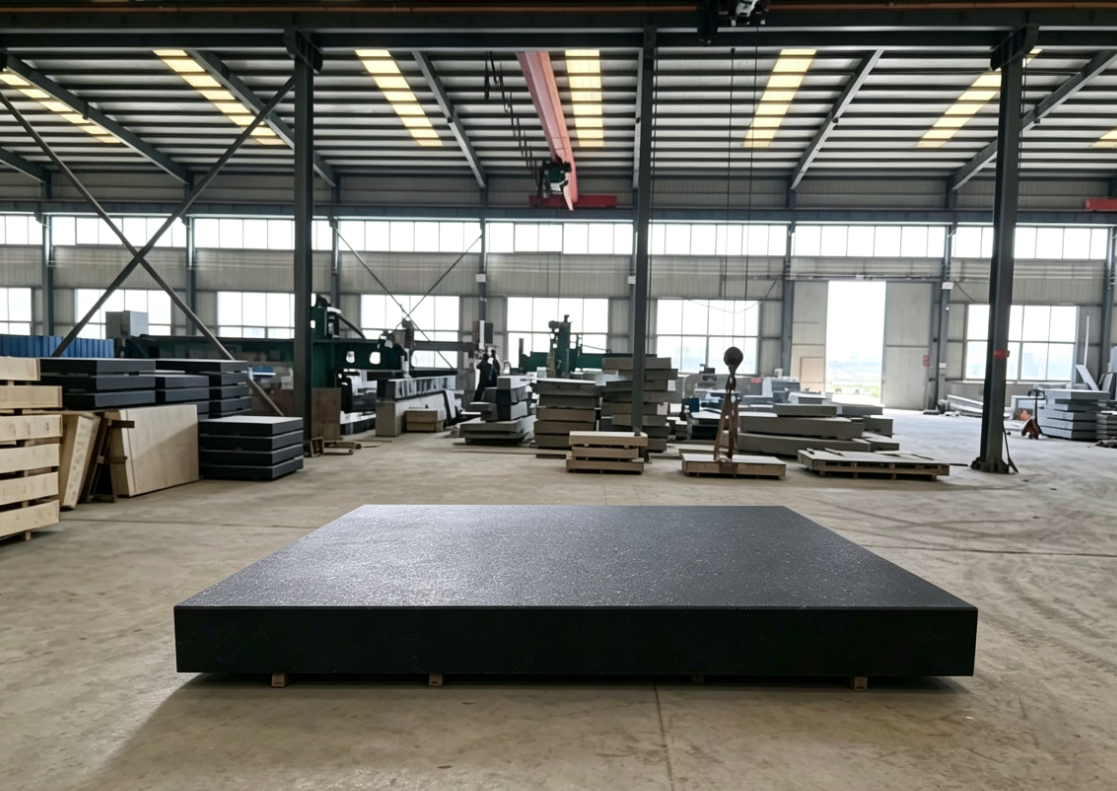
Technical Requirements for Flatness of Nanoscale Positioning System Bases (Granite / Marble Bases)
Applicable Objects: Linear motor platforms, semiconductor inspection equipment, optical alignment platforms, nano-displacement stages, CMM core bases; Mainstream Material: Jinan Blue Granite.
Core Logic: The system pursues nanoscale positioning (±1~100 nm), and the drives (linear motors, gratings, voice coil motors) can only correct dynamic motion errors; the geometric tilt, rolling undulations, and rail stress deformation caused by base flatness are static low-frequency errors that the drives cannot compensate for, making them the underlying bottleneck restricting nano-precision.
I. Flatness Grading Indicators (Industry Standards GB/T 20428, ISO 8512)
Distinguish between two concepts: Flatness of the base blank, and flatness of the rail mounting reference surface (nano-platforms focus on controlling the latter).
Unit Reference: μm/m, μm / full area
1) Sub-micron Positioning (≥100nm)
Flatness Requirement: Grade 0 / Grade 00 granite platform
Full-area Flatness: ≤2 μm/1000mm
2) Nanoscale Positioning (10 ~ 100 nm, precision inspection, optical packaging)
Recommended Reference Surface: Grade 000 (AAA) precision ground granite
Full-area Flatness: ≤1 μm/1000mm
Local Flatness (Effective travel range of the rail): ≤0.3~0.5 μm/500mm
Key Point: Not just the total length indicator; the local flatness of the rail mounting area takes priority over the entire base.
3) Ultra-high Precision Nano-positioning (<10nm, semiconductor, interferometer, lithography auxiliary platforms)
Custom ultra-precision manually ground base
Flatness of effective travel area: ≤0.2 μm/500mm
Flatness Waviness: Short-wave waviness <50nm (extremely critical!)
II. Easily Overlooked: Flatness ≠ Macro-straightness; Waviness (short-wave undulations) is the killer of nano-precision
Long-wave Flatness: Slow tilt, can be slightly compensated by leveling feet;
Short-wave High-low Undulations (Waviness): The rail follows the surface waves up and down, generating periodic vertical jumps during motion, which directly translate into nanoscale Z-axis errors that leveling cannot eliminate.
✅ Mandatory Additional Requirements for Nano-platforms:
Surface Waviness Wt <80 nm (rail mounting band); grinding marks must be uniform, coarse tool marks and discontinuous grinding bands are prohibited.
III. Typical Precision Consequences Caused by Flatness Defects
Poor Flatness → Uneven preload after linear rail installation
Periodic changes in ball friction resistance during motion, causing speed fluctuations in linear motors, deterioration of positioning repeatability, and drifts of tens of nanometers;
Base Surface High-low Undulations → Minute pitch and roll oscillations of the motion unit
If the platform carries optical lenses / lasers, the tiny tilt angle will amplify the target position error (Abbe error);
When locking screws are tightened, the uneven surface causes local elastic deformation of the base, leading to slow precision drift after thermal cycling of the equipment.
IV. Supporting Hard Constraints (Effective in synergy with flatness, both are indispensable)
Flatness Measurement Reference Environment
Must be constant temperature 20℃±0.2℃, constant temperature ≥24h to eliminate granite temperature gradient; temperature difference will distort the measured flatness value.
Flatness Measurement Method
Cannot use only a spirit level; use a laser interferometer / electronic level for continuous sampling to plot a flatness contour map, avoiding local protruding “hard spots”.
Installation Constraints
Under the premise that the base flatness meets the standard, it is forbidden to use shims to forcibly correct the guide rail straightness. Forcible leveling with shims will introduce stress, which will release after temperature changes, causing nano-precision to fail rapidly.
Base Thickness Rigidity Matching
Even if a thin plate base has a qualified ground flatness, it will bend under the influence of self-weight, load, and vibration, deteriorating the dynamic equivalent flatness.
Experience: Granite base thickness ≥ 1/6 of the travel length.
V. Concise Summary of Engineering Selection (Can be directly used in technical proposals)
Таблица
Positioning Grade Guide Rail Mounting Surface Flatness Requirement Core Risk Points
100nm level ≤1μm/1000mm Long-wave tilt, uneven guide rail preload
10~100nm ≤0.5μm/500mm effective travel Short-wave ripple, local high points
<10nm ultra-high nano ≤0.2μm/500mm waviness <50nm Microscopic undulations, stress deformation