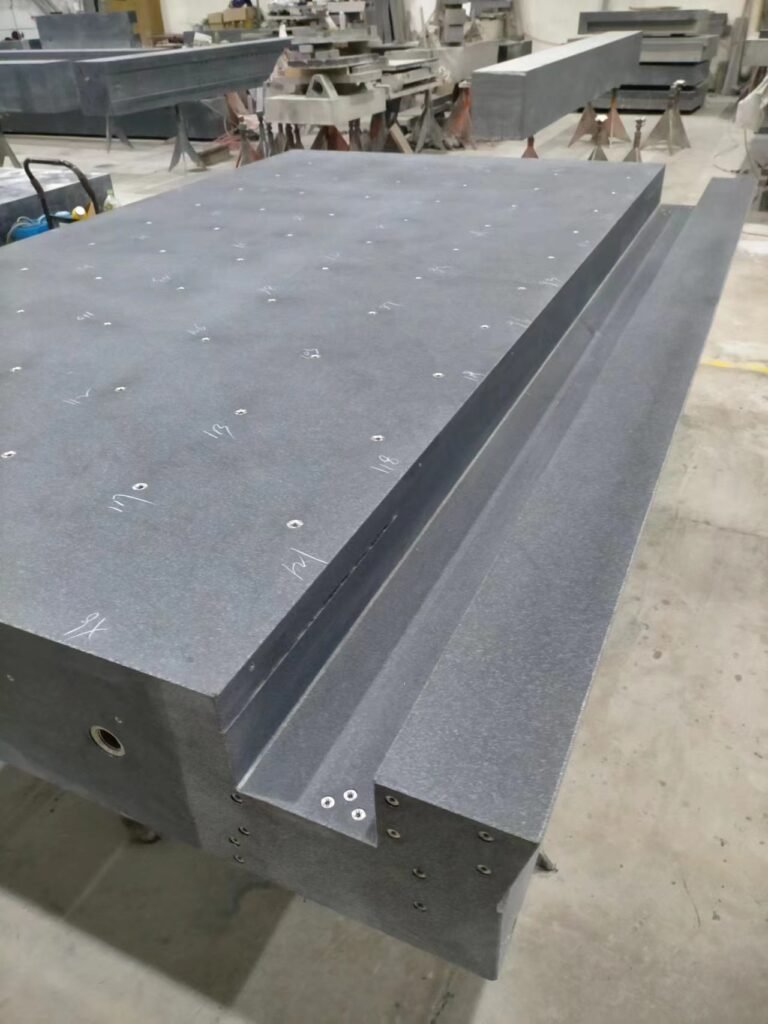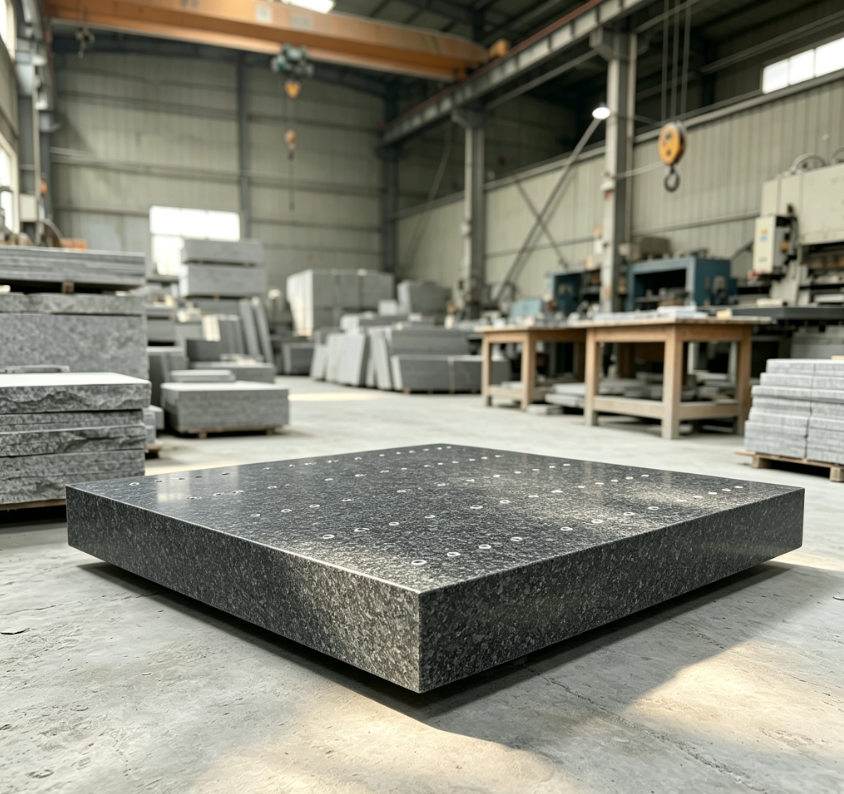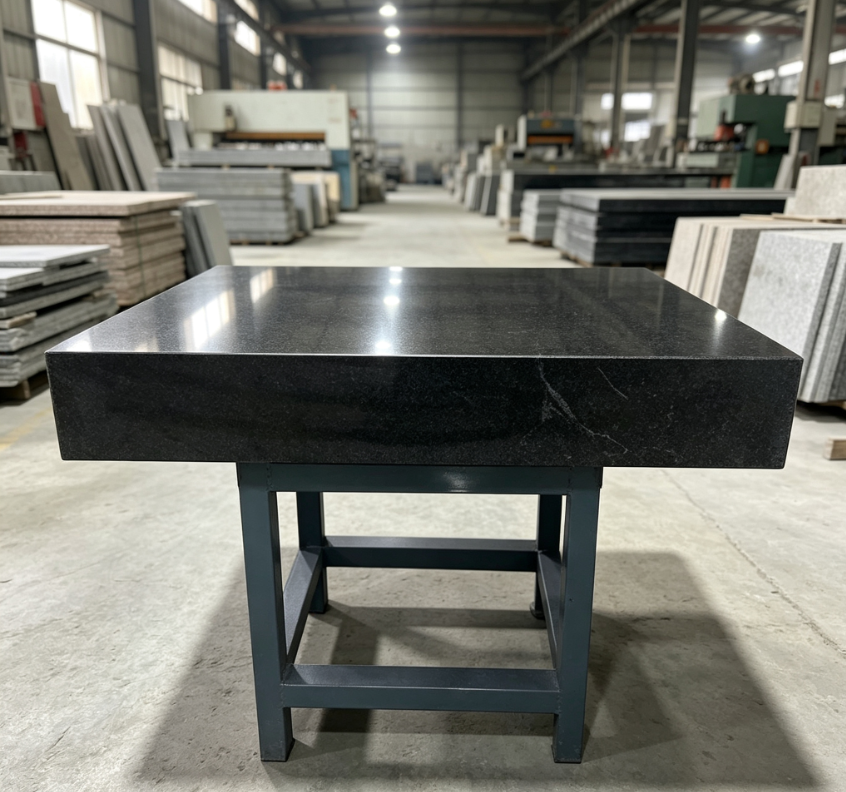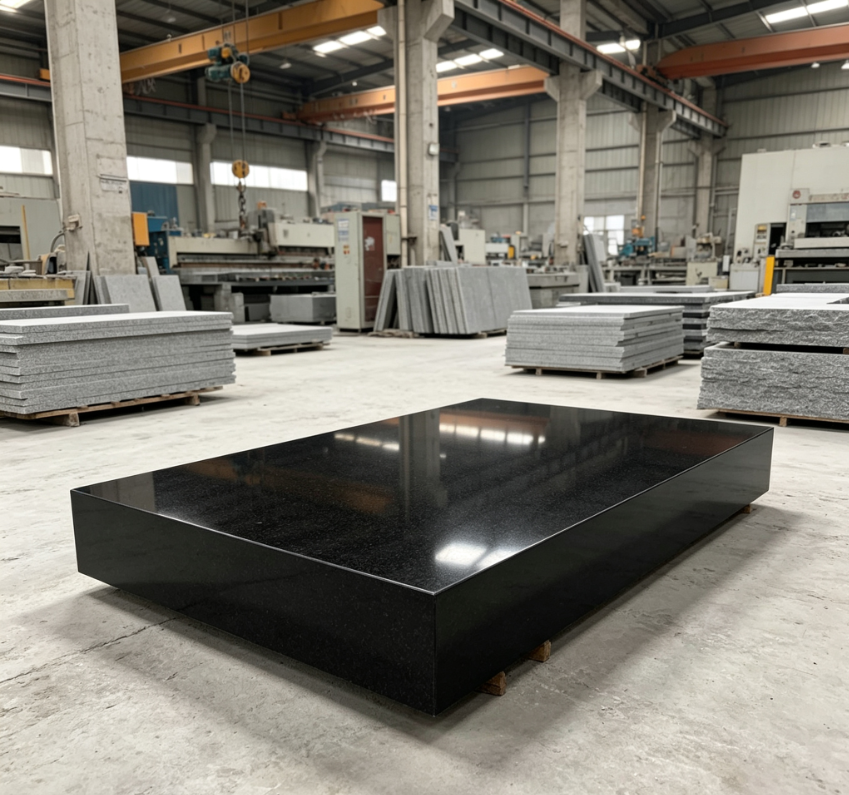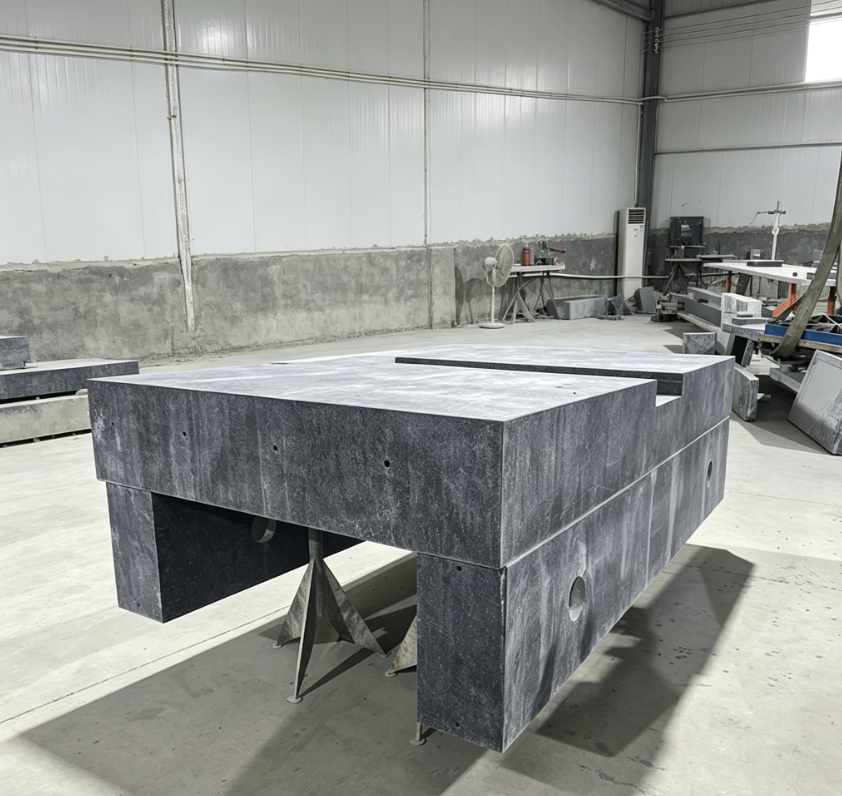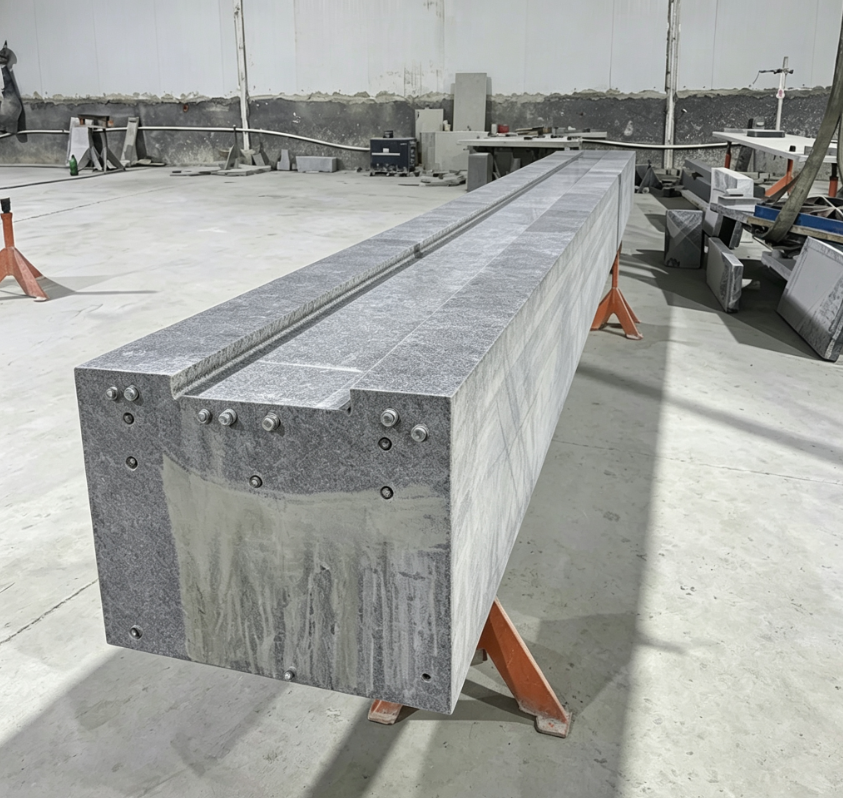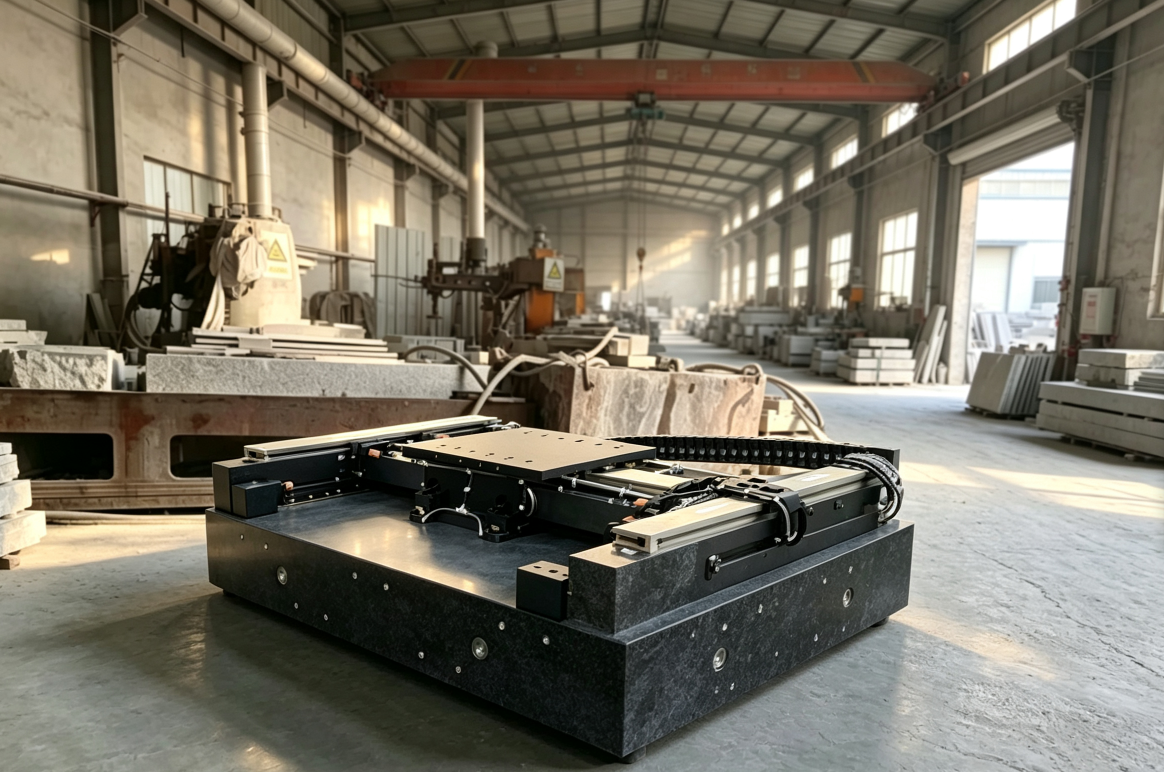
In next-generation nano/sub-micron precision machine tools, granite (especially high-density varietiee Jinan Blue) is transitioning from an “optional component” to a core benchmark material, comprehensively replacing traditional cast iron and steel. Its core value lies in: extreme thermal stability, supeior damping, zero internal stress, and non-magnetic cleanliness, perfectly matching the extreme precision requirements of semiconductors, optics, and nanofabrication. Through three technological route structures, intelligentization, and integration—it overcomes the traditional brittleness limitations, becoming the mainstream solution for next-generation precision machine tool bases.
I. Core Challenges of Nextion Machine Tools (Strategic Opportunities for Granite)
Next-generation precision machine tools (targeting 2nm processes, nano-lithography, and ultra-precision grinding/turing/milling) face three physical bottlenecks that traditional materials cannot break:
Thermal drift: Temperature fluctuation ±1°C → Cast iron deformation ≈ 11μm/m ct scrapping of nanoscale workpieces
Vibration resonance: High-speed spindles (≥40,000rpm) and linear motors generate high-frequency vibrats → Deterioration of surface roughness, drastic reduction in tool life
Precision decay: Release of metal internal stress, creep → Annual deformation ≥ 5μm → Unable to maintain sub-micron precision long-term
Natural Advantages of Granite (Next-Generation Core Metrics)
Coefficient of thermal expansion: 4.⁶/°C (≈ half of cast iron, one-third of steel) → Minimizes thermal drift
Damping performance: 5–10 times that of cast iron → Efficiently absorbs hiy vibrations, suppresses resonance
Dimensional stability: Aged naturally over millions of years, zero internal stress → Annual deformation ≤ 0.2μm/m under constant temperature
Non-magnetic / Insulating: Does not interfere with electron beams, lasers, or magnetic field detection → Suitable for semiconductor/vacuum environments
High rigidity / Wear res Compressive strength ≈ 800MPa, Mohs hardness 7 → No wear or sagging during long-term use
II. Three Technological Innovations in Gnite Bases (Next-Generation Application Forms)
Monolithic Granite Structure (Ultra-Precision Flagship Models)
Fully integrated stone bed, column, crossbeam, and wotable (e.g., CMMs, nano-grinding machines)
Precision: Flatness Grade 000 (≤1μm/m), straightness ≤0.5Applications:
Semiconductor wafer inspection/dicing equipment
Nano-imprint, Electron Beam Lithography (EBL) bases
Ultra-precision optical grinding machines, diamond cutting machineoordinate Measuring Machines (CMMs), high-precision metrology platforms
Steel-Granite Composite Structure (Mainstream High-End Models)
Solves the pas of granite brittleness and low tensile strength, balancing rigidity and precision
Structure: Steel frame (tensile load bearing) Granite table/way surface (stab precision)
Преимущества:
Significantly improved impact and torque resistance (can withstand moderate cutting loads)
Weight reduced by 30–40% compared to pure cast iron
Thermbility close to pure granite, dynamic rigidity superior to cast iron
Representative Models:
DMG MORI high-end 5-axis machines
Hermle high-speed precision machinng centers
Makino ultra-precision mold machines
Granite-Air Bearing/Linear Motor Integration (Next-Generation Standard)
Granite way surfaces directly grond (Ra ≤ 0.05μm) → Forms a frictionless, wear-free motion pair with air bearings
Characteristics:
Positioning accuracy ±0.1μm, repeatability ±0.05μm
Dust-free, lubrication-free, maintenance-free → Suitable for cleanrooms (Class 1–100)
Service life ≥ 15 years (no loss of accuracy)
Applications:
Laser processing, PCB drilling, semiconductor bonding machines
High-precision CCD vision inspect
III. Global Standards and Material Specifications (Next-Generation Entry Threshold)
- Stone Grade (MandFirst Choice: Jinan Black — Fine-grained, dense, globally optimal stability
Second Choice: Mount Tai Black, Indian Black (Diabase) — High-purity bl granite
Prohibited: Light-colored granite, stone with cracks/lamination/color variation - Core Performance Standards (ISO/GB/T)
Таблица
Indicator Next-Generation Precision Machine Requirements Tst Standard
Density ≥ 2.75 g/cm³ GB/T 9966.3
Water Absorption Rat≤ 0.15% GB/T 9966.4
Compressive Strength ≥ 250 MPa GB/T 9966.2
Modulus ofElasticity ≥ 70 GPa GB/T 9966.2
Flatness Grade 000 ≤1μm/m; rade 00 ≤2μm/m GB/T 28537
Surface Roughness Ra ≤0.4μm (Guide surface Ra0.05μm) GB/T 1031
Radioactivity Class A (Ira≤1.0, Ir≤1.3) GB 6566 - MInstallation Standards (ISO 1302, DIN 876)
Form and Position Tolerances:
Overall Flatness: ≤0.02mm/m
Gu Parallelism: ≤0.01mm/m
Perpendicularity: ≤0.005mm/100mm
Installation: Three-point support, adjusms, leveling calibration ≤0.02mm/m
Environment: Constant temperature (20±0.5℃), vibration-isolated foundation (Vibratn ≤ 1μm/s²)
IV. Global Leading Application Cases (2025–2026 Next-Generation Models)
Semiconductor Equipment (TSMC, ASML Supply r inspection stages, probe station bases: Jinan Black Grade 000
Thermal Stability: ±0.1℃ fluctuation → Deformatio≤0.5μm
Non-magnetic Properties: Ensures precise electron beam / laser path
Nanoprocessing Machines (Moore Nanotech, Precitech)
Diamond cutting, optical lens machiningthic granite bed
Machining Precision: Form error ≤50nm, surface roughness Ra ≤0.01μm
High-end 5-Axis / Laserchining (Domestic Substitution)
5-axis laser machining machine: Granite bed → PCD tool precision ±0.005mm
Precision grinding machine: Granite guide → Part olerance ≤0.002mm
Metrology and Inspection (Zeiss, Mitutoyo)
Next-generation CMM: Granite air bearing → Measurement accuacy ≤0.1 L/1000μm
V. Challenges and Next-Generation Solutions - Core Shortcomings
High brittleness: Not impact-resistant, cannot bere-machined, prone to chipping
Low tensile strength: Cannot withstand high torque, complex stresses
High cost: Material precision machining costs 2–3 times that o cast iron - Next-Generation Breakthrough Technologies
Nano-enhanced coating: Surface deposition of DLC / ceramic coating → Impact resistance improved by 2x, wear resistance imroved by 5x
Carbon fiber-granite composite: Carbon fiber mesh reinforcement → Tensile strength improved by 3x, weight reduced by 25%
Smart granite: Built-inptic sensors → Real-time monitoring of temperature, deformation, vibration, closed-loop precision compensation
3D texture structure: Internal biomimetic ribs → Rigidity improved by ng optimized
VI. Selection Decision (Next-Generation Machine Tools)
Ultra-precision / Nanoscale (≤0.1μm) → Pure granite (Jinan lack Grade 000)
High-speed precision / Medium cutting (1–5μm) → Steel-granite composite structure
Semiconductor / Cleanroom / Non-magnetic → re granite air bearing
Large-scale / Heavy load → Cast iron main body granite precision base
VII. Conclusion: Granite is the “foundation material” for next-generation precision machine tools
Positioning: Upgraded from an “auxiliary platfore structural component, defining the upper limit of machine tool precision
Trend: From 2025 to 2030, the penetration rate of granite basesnd precision machine tools will exceed 60%
Core Value: A triad of thermal stability, damping, and stability, breaking through the physical limits of met