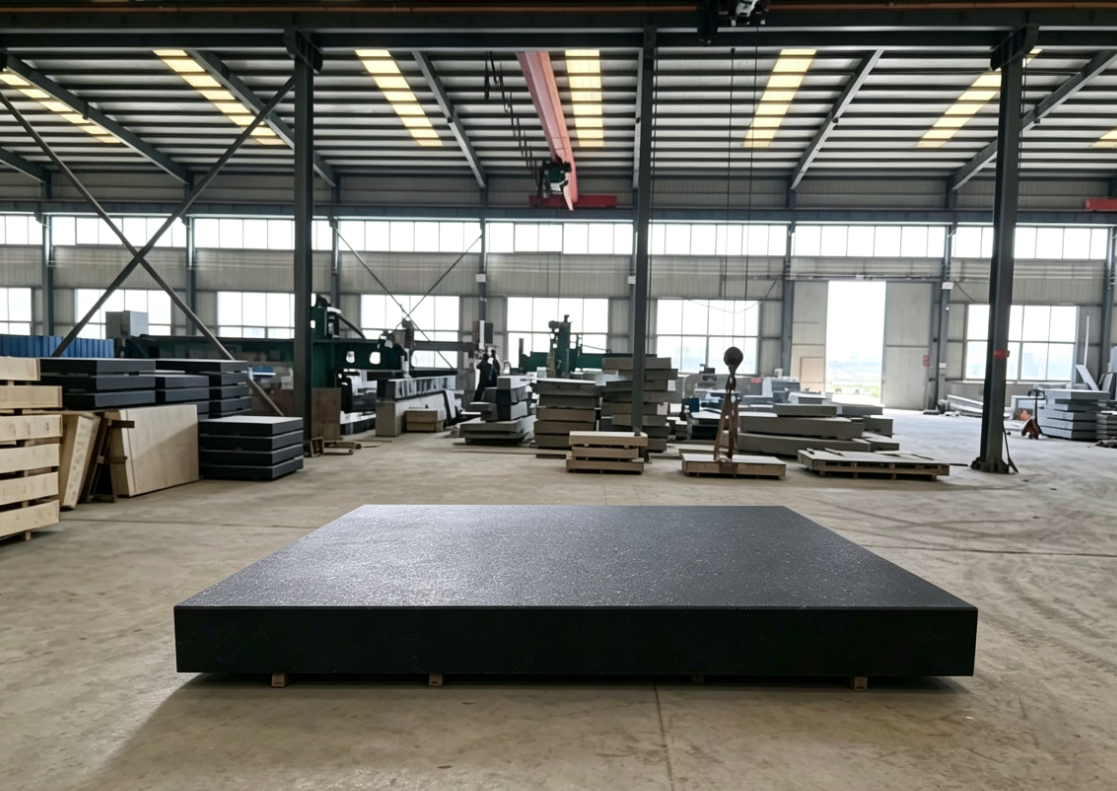
Complete Production Process for Precision Granite Components (From Raw Rock to Finished Product, Industry Standard Workflow)
Overall Process: Material Selection → Block Cutting → Rough Machining → Heat Treatment Aging → Precision Machining → Precision Grinding → Inspection → Anti-corrosion Protection → Packaging and Shipping. Precision, flatness, and stability are controlled throughout the process to meet Grade 00 and Grade 000 accuracy standards.
I. Material Selection (The First Step in Determining Quality)
Prioritize dense granites such as Jinan Green, Zhangqiu Black, and Indian Black, characterized by fine grains, no cracks, no pores, no white veins, and no weathering.
Testing: Water absorption rate <0.13%, high compressive strength, low coefficient of thermal expansion, non-magnetic, and resistant to deformation.
Reject raw blocks with hidden cracks, layers, or severe color differences to avoid cracking during later processing.
II. Block Cutting (Material Cutting and Shaping)
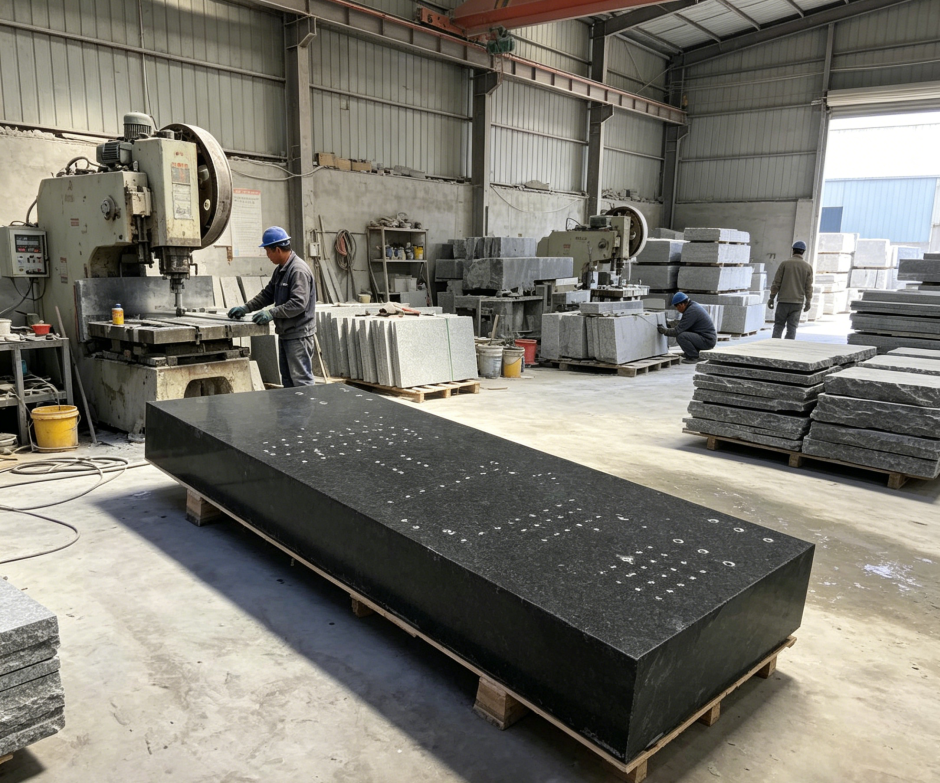
Large saw cutting: Using diamond wire saws or large cutting machines to cut blocks into slabs, square materials, and rough components.
Allowance according to drawings: 5–15mm for flat surfaces; larger allowances for irregular parts and large machine tool bases.
Preliminary trimming of rough components after cutting to remove sharp corners and chipped edges.
III. Rough Machining (Defining Shape, Drilling, and Slotting)
Gantry milling machine / CNC gantry mill: Milling planes, sides, steps, slots, and chamfers.
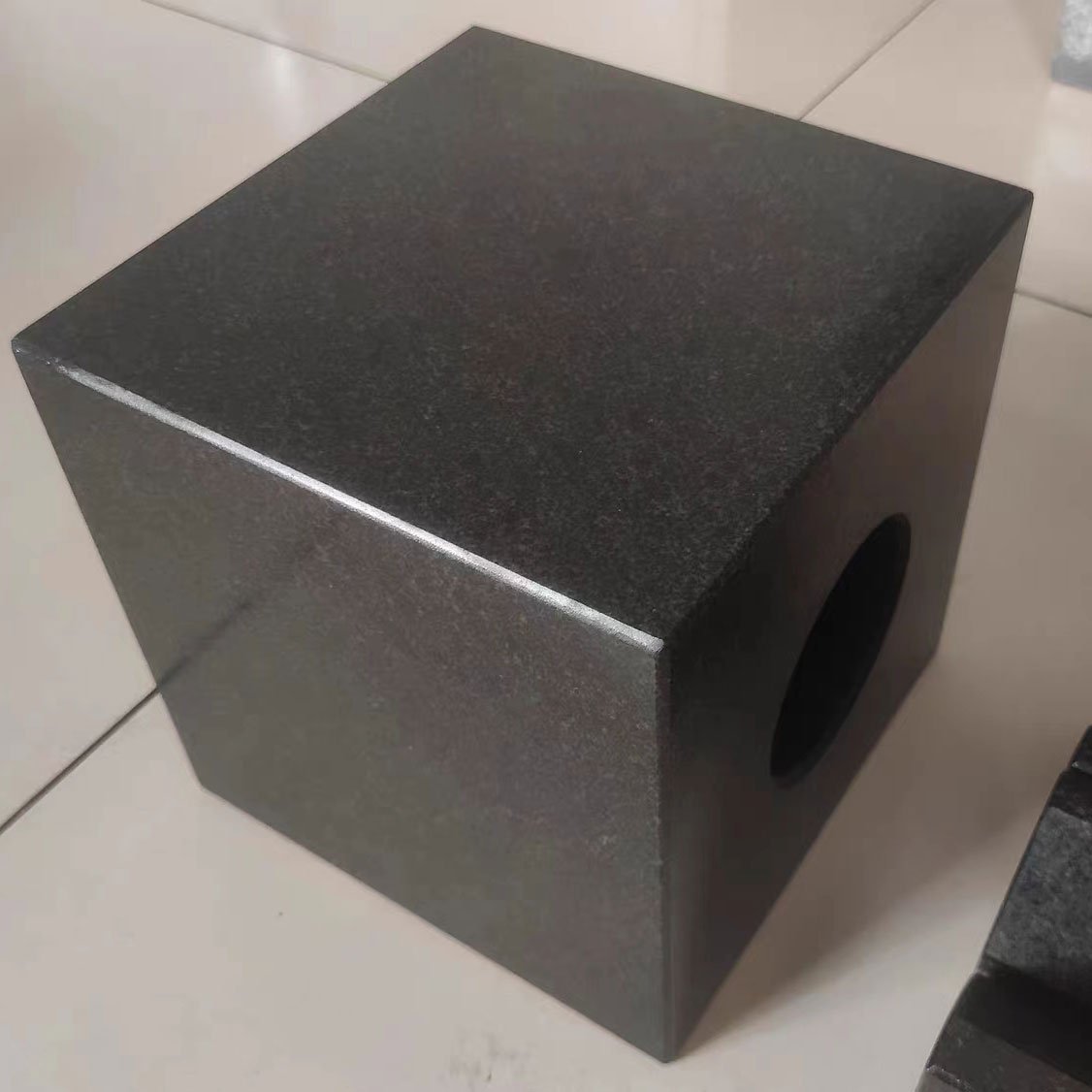
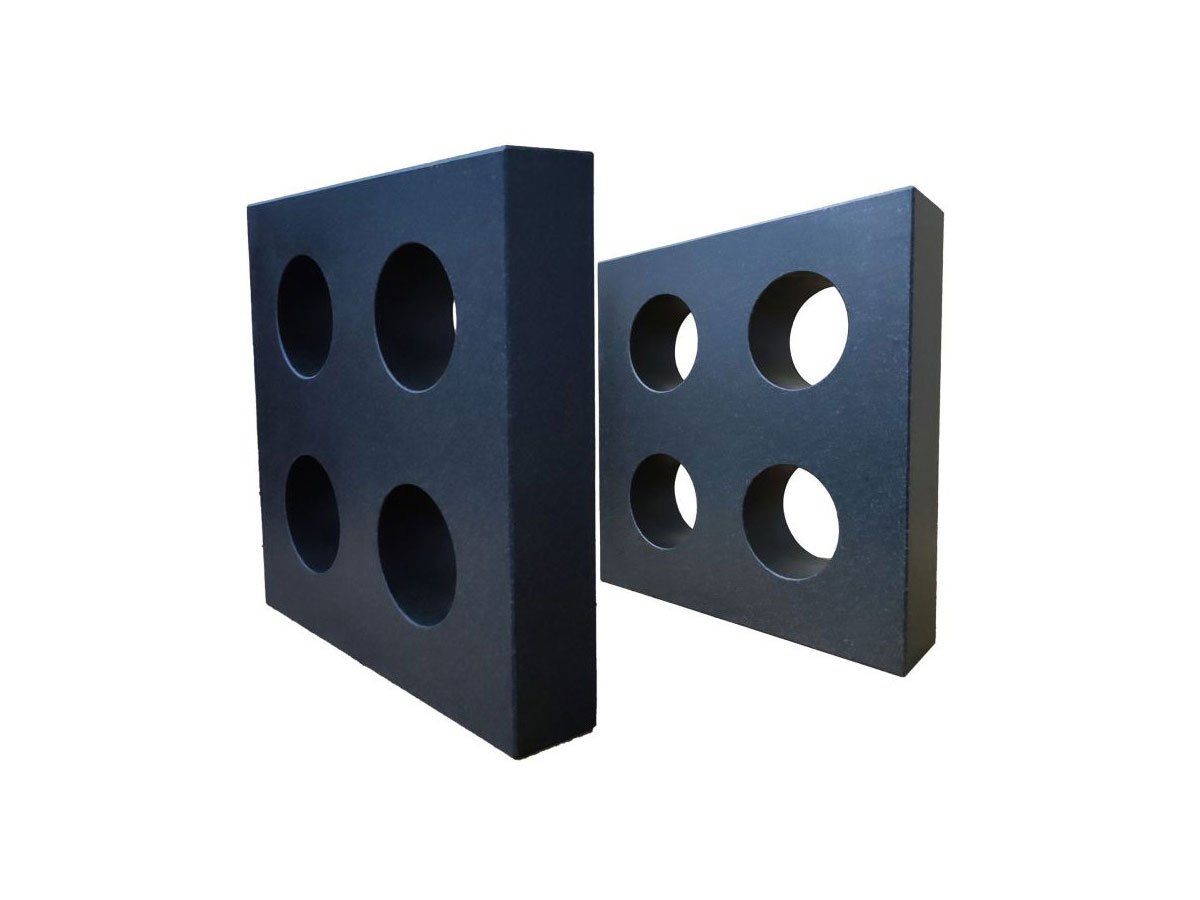
Drilling, tapping, and embedding metal parts (stainless steel inserts, expansion bolt sleeves).
Dimensional accuracy after rough machining is approximately ±0.5mm; surfaces are rough, primarily defining the structural shape.
IV. Aging Treatment (The Most Critical Step, Ensuring No Deformation)
Granite contains internal stress; without aging, warping and loss of precision will occur later.
Two methods:
Natural aging: Rough components are stacked outdoors for 3–6 months to release internal stress (mandatory for large components).
Constant temperature heat aging: Baking at 40–60°C to quickly relieve stress, suitable for medium and small parts or urgent orders.
Precision machine tools, CMM bases, and semiconductor components must undergo aging.
V. Semi-precision Machining (Precision Milling and Shaping)
Secondary processing using CNC gantry mills, leaving an allowance of 0.3–1mm. Ensures dimensional accuracy, perpendicularity, and parallelism, preparing for grinding.
Structural machining for irregular parts, beams, columns, and frames is completed at this stage.
VI. Precision Grinding (Core Process, Determines Accuracy Grade)
Three-level grinding, from coarse to fine:
Coarse grinding: 80#–240# abrasives to remove tool marks and level the plane.
Medium grinding: 400#–800# to further improve flatness.
Fine grinding / Precision grinding: 1200#–3000#; dedicated for Grade 00 and Grade 000 platforms; high-end products combine manual scraping with mechanical grinding.
Precision standards reference:
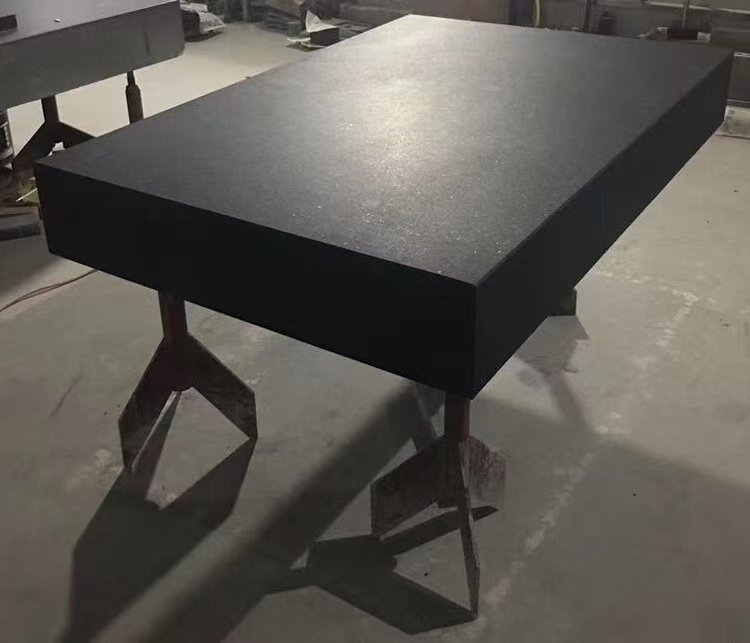
Ordinary platforms: Grade 0
Precision inspection: Grade 00
Semiconductor / Optical equipment: Grade 000 (micron-level flatness)
VII. Cleaning, Drying, and Protection
High-pressure water gun cleaning to remove dust and grinding slurry.
Drying in an oven to ensure the stone is dry.
Anti-seepage, anti-stain, and anti-corrosion treatment: Applying specialized granite protector to resist oil stains, water marks, and acid/alkali corrosion.
VIII. Precision Inspection (Mandatory for Factory Release)
Item-by-item inspection using professional equipment:
Flatness, parallelism, perpendicularity, straightness
Dimensional tolerances, hole spacing tolerances
Surface finish
Issue inspection reports; store in inventory after passing inspection.
IX. Emballage et expédition
Large components: Wooden frames foam stretch film to prevent shock and impact;
Precision small parts: Individual wooden box packaging to prevent moisture and shock.