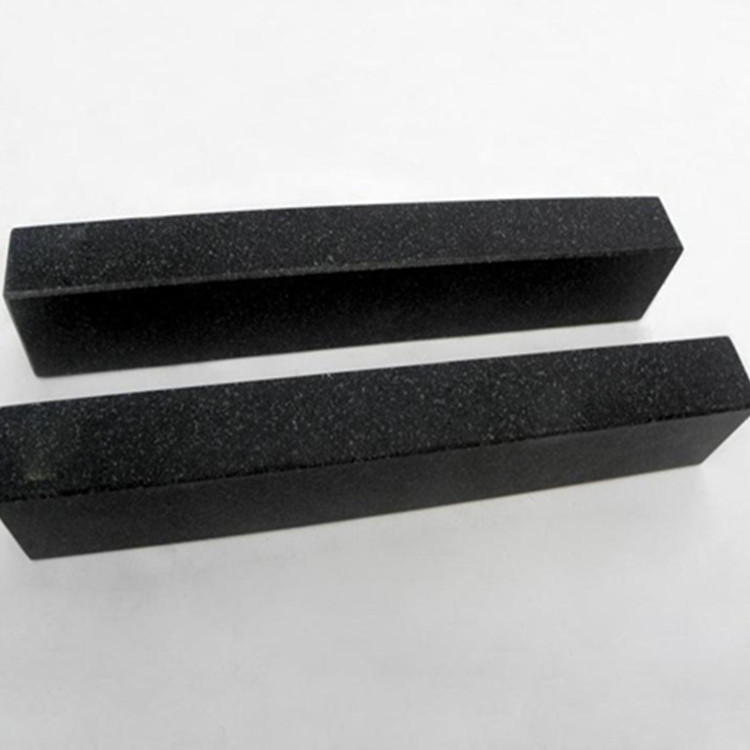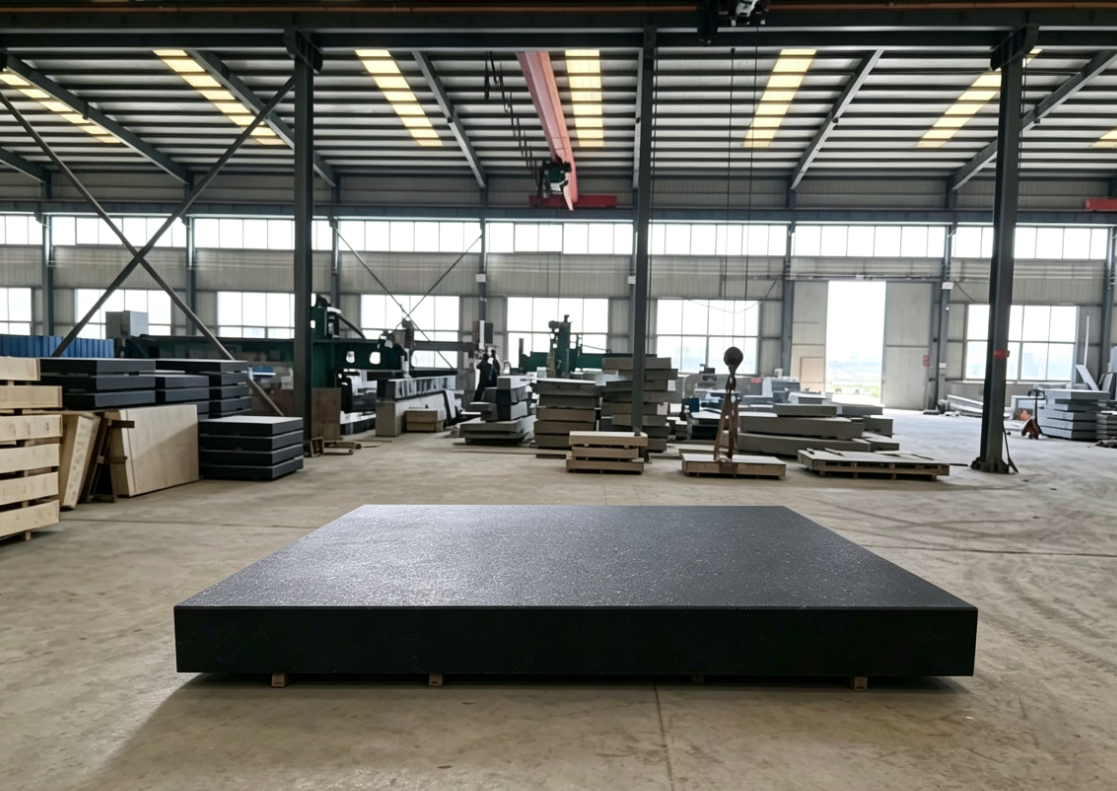
Granite Precision Parallel Blocks Application Instructions
Granite parallel blocks (also commonly known as parallel blocks, parallel plates, or height blocks) are made of natural granite. They feature high precision, minimal deformation, wear resistance, rust prevention, non-magnetism, and excellent stability. They are fundamental precision measuring tools for mechanical inspection, scribing, tooling positioning, and machine tool commissioning, and are mostly used in pairs or sets.
I. Core Functions
Relying on the characteristics of strictly parallel working surfaces and precisely consistent thickness/height dimensions, they are used to raise workpieces, set reference heights, level workpieces, and establish a unified measurement datum, working in conjunction with dial indicators, height gauges, straight edges, calipers, etc., to complete operations.
II. Principaux cas d'utilisation
- Precision Dimension and Geometric Tolerance Inspection (Core Use)
Raising workpieces to expand measurement space
By placing the workpiece on two sets of equal-height parallel blocks to lift it off the workbench, it becomes easier to inspect the bottom surface, peripheral dimensions, and bottom flatness of the workpiece, and also facilitates the insertion of measuring tools for measurement.
Flatness and straightness inspection
Used with granite surface plates, edge straight edges, and dial indicators to inspect the flatness and straightness of box bodies, plates, mold base plates, and machine tool beds.
Parallelism and perpendicularity verification
By raising the workpiece in pairs, the parallelism between the upper and lower surfaces and side surfaces of the workpiece is inspected; combined with square rulers and square boxes, the perpendicularity of various surfaces of the workpiece is verified.
Step and groove dimension measurement
After raising the workpiece to be measured, depth gauges and micrometers are used to accurately measure step height, groove depth, and drop dimensions. - Precision Scribing Operations
Commonly used in fitter and mold workshops: workpieces are placed on equal-height parallel blocks for leveling and height setting, and then scribing of contour lines, machining boundaries, and hole centerlines is performed to ensure a unified scribing datum and accurate dimensions, with precision far superior to ordinary steel blocks. - Machine Tool Tooling and Workpiece Positioning
Machining auxiliary support
When milling machines, grinding machines, and machining centers process plate and box-type workpieces, parallel blocks are used as auxiliary supports to ensure the workpiece is evenly loaded, prevent clamping deformation, and guarantee machining accuracy.
Tooling and fixture adjustment
Adjust the support height of fixtures and jigs, calibrate the horizontality of the positioning surface, and ensure a uniform workpiece position during mass production.
Machine tool maintenance and leveling
During the maintenance of machine tool guide rails and worktables, parallel blocks are used in conjunction with spirit levels to verify the horizontality of the worktable and the parallelism of the guide rails. - Height Matching of Measuring Tools and Workpieces
Combinations of multiple sets of parallel blocks of different specifications, paired with height gauges, quickly set a standard equal-height datum, used for height sorting and comparative inspection of mass-produced workpieces.
Used in combination with granite V-blocks: V-blocks support shaft-type parts, while parallel blocks assist in leveling and raising, combined to inspect the runout and parallelism of the end faces and flange faces of shaft-type parts. - Metrology Room / Laboratory Reference Use
Used as standard reference blocks for measuring tool calibration, precision component sampling inspection, and third-party testing. The granite material is minimally affected by temperature and humidity, and its accuracy remains unchanged over long-term use, making it suitable for constant-temperature metrology rooms and regular workshops. - Specialized Use in Mold and Sheet Metal Industries
Raising and inspecting mold templates, mold bases, and inserts, and verifying mold closing;
Flatness, margin dimension inspection, and sorting of sheet metal and stamped parts.
III. Application Methods
Paired use (most common): Pair two blocks of the same specification to ensure equal height and levelness at both ends of the workpiece;
Multi-set combination: Stack or combine parallel blocks of different thicknesses to achieve multi-level height adjustment;
Combination pairing: Parallel blocks granite surface plate / V-block / square box / dial indicator / height gauge to form a complete inspection reference platform.
IV. Advantages of Granite Material Compared to Steel Parallel Blocks
Low coefficient of thermal expansion, almost no deformation with temperature changes, and stronger stability for high-precision inspection;
Rust-proof, burr-free, and non-magnetic, so it will not scratch precision workpieces;
High hardness and wear resistance, with minimal precision loss after long-term repeated use;
Resistant to cutting fluids, oil stains, and mild acid/alkali corrosion, making it suitable for machining site environments.
V. Applicable Workpiece Types
Plate-like, block-like, and box-like workpieces such as various plates, mold bases, boxes, flanges, mold parts, machine tool castings, sheet metal parts, and non-standard fixtures.