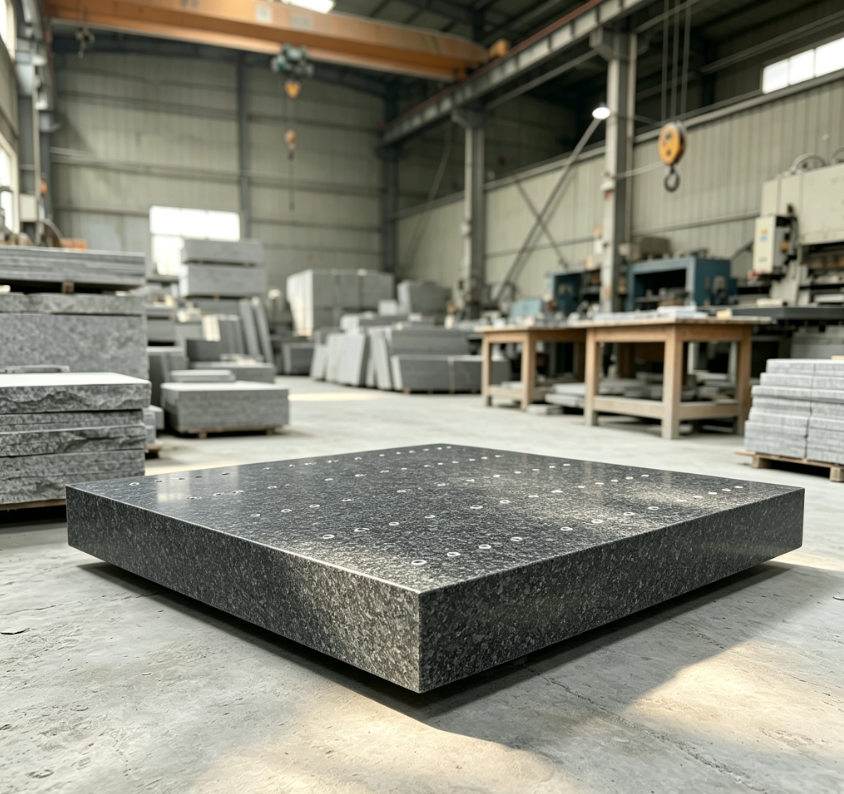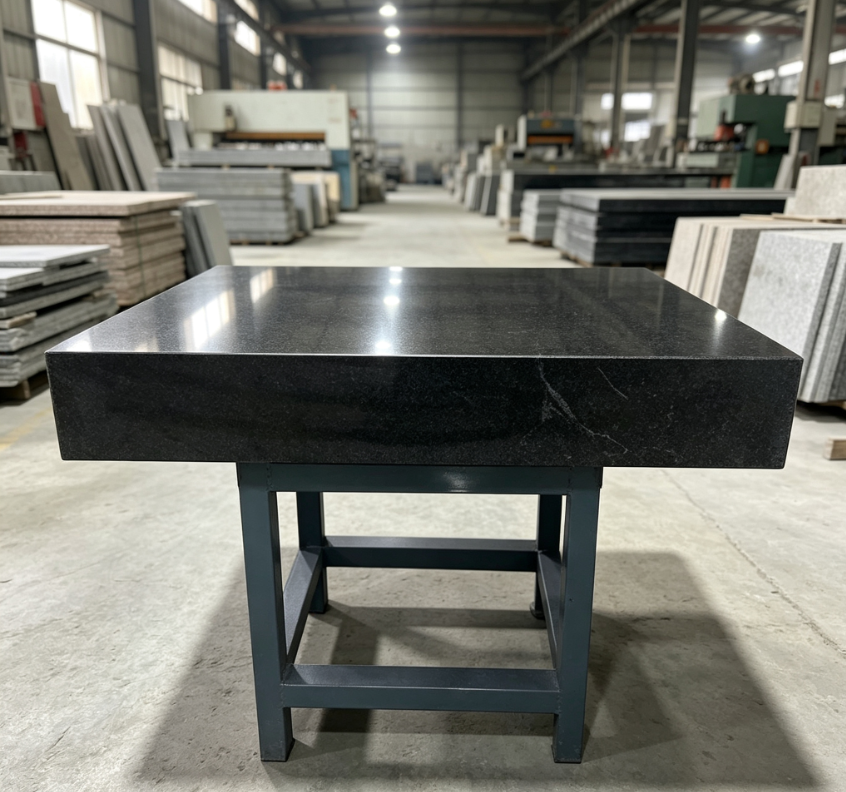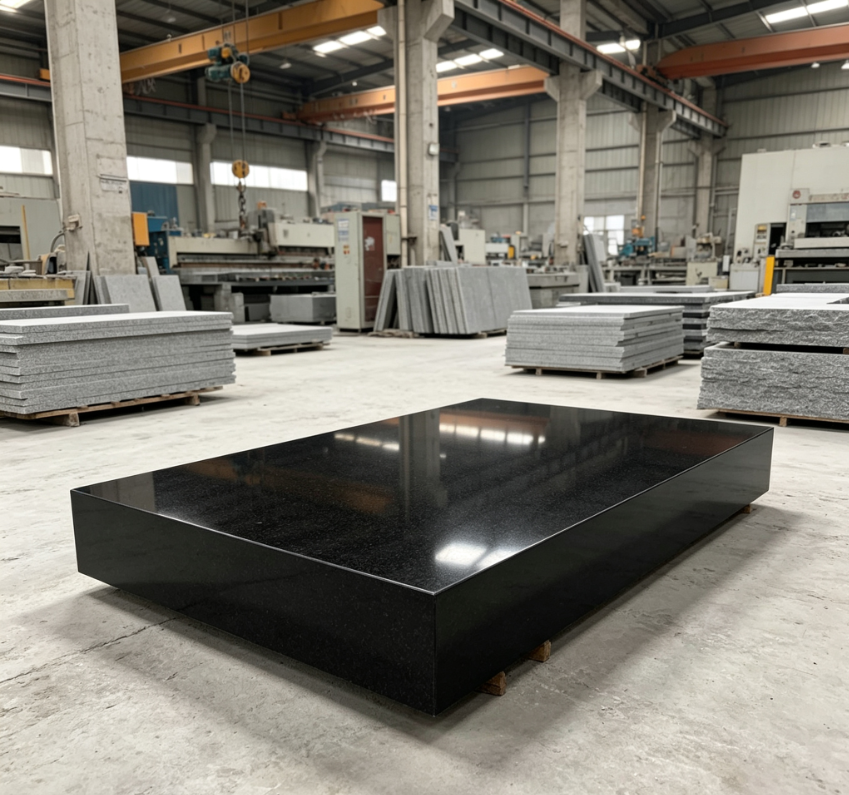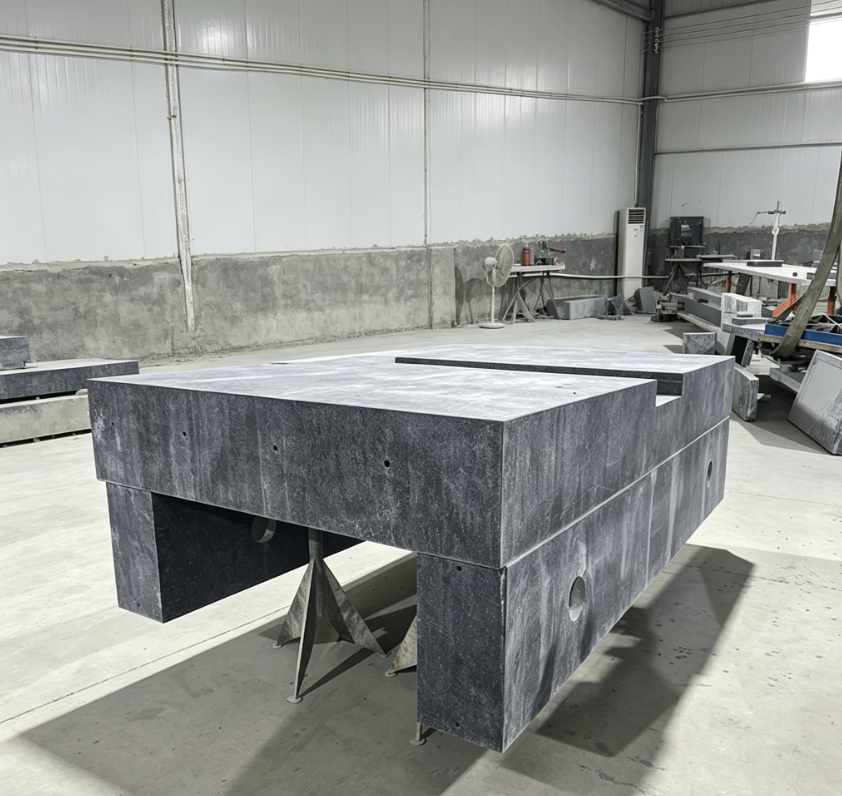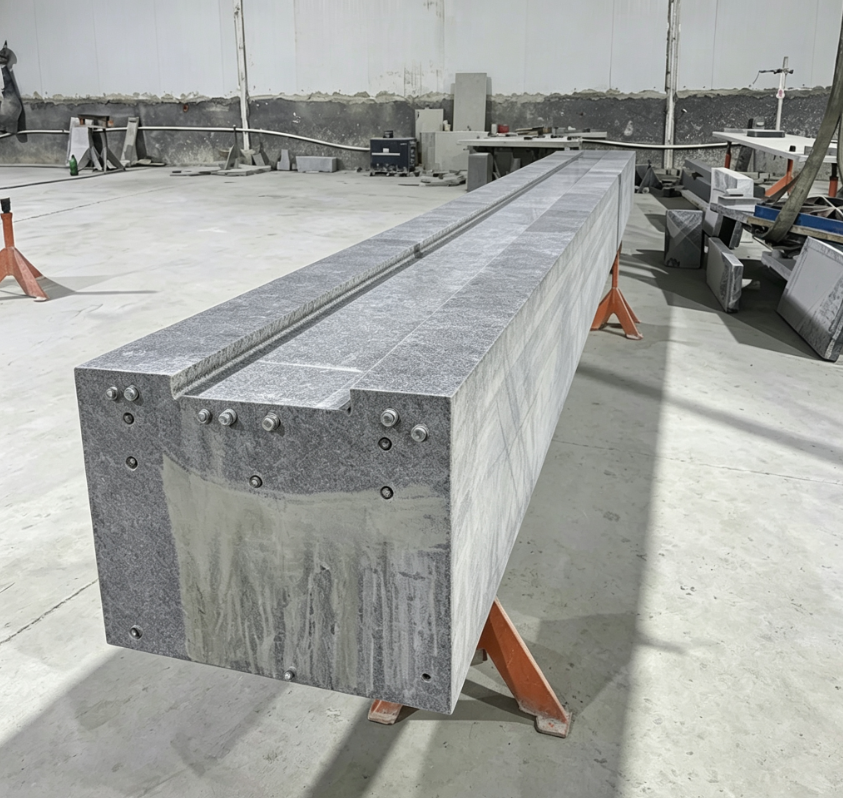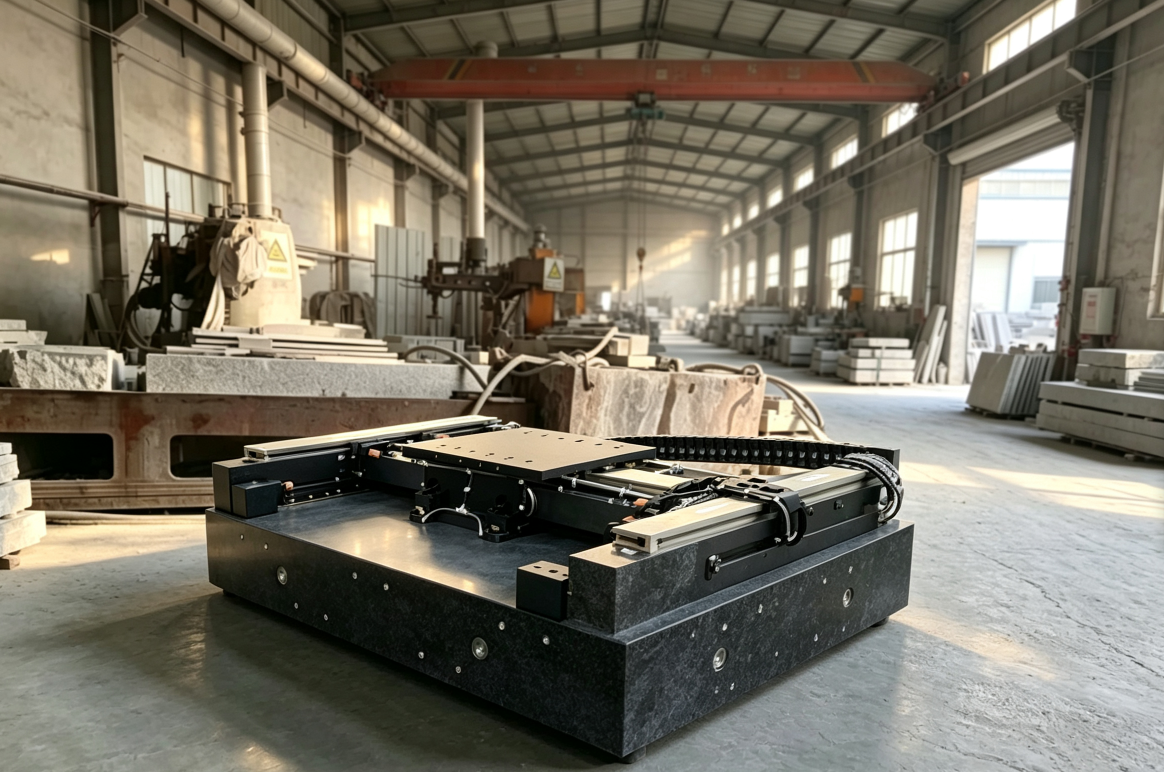
When selecting laboratory granite countertops, the key is to base decisions on four major dimensions: experiment type, precision requirements, chemical environment, load-bearing capacity, and installation conditions. Prioritize highly dense, low-radiation stone with precision machining, and match thickness, grade, sealing, and structural design. Here is the complete selection guide:
I. Core Advantages and Applicable Scenarios
Granite (especially Jinan Black and Mount Tai Black) is the first choice for precision, high-temperature, and high-load-bearing laboratories. Core advantages:
Ultra-high stability: Extremely low coefficient of thermal expansion (≈4.6×10⁻⁶/℃), natural aging over millions of years, permanent deformation resistance
High precision flatness: Precision machining can reach Grade 000 (≤1μm/m), suitable for optics, metrology, and CMMs
Strong high-temperature resistance: Can withstand temperatures above 500℃ and thermal shock, suitable for high-temperature benches and electric furnace areas
High load-bearing and wear resistance: High compressive strength, load-bearing capacity up to 500kg/㎡, Mohs hardness 6-7, scratch and wear resistant
Non-magnetic and anti-damping: No magnetic interference, good shock absorption, protects precision electronic/optical instruments
Clean and easy to clean: Dense and low-porosity after polishing, dust accumulation resistant, suitable for semiconductor and pharmaceutical cleanrooms
✅ Best suited for:
Precision metrology rooms, balance benches, optical laboratories, SEM/AFM bases
High-temperature experiment benches (muffle furnaces, high-temperature furnaces), heavy equipment areas
Semiconductor, lithography, laser equipment operation benches
Physical mechanics testing, non-destructive testing platforms
❌ Not suitable for:
Chemical wet benches with long-term contact to concentrated strong acids (hydrochloric, nitric, sulfuric), hydrofluoric acid, or strong alkalis
Scenarios with high-frequency strong impact or heavy object drops (relatively brittle)
II. Key Selection Parameters (Must-read)
- Stone Variety Selection (Laboratory Preferred)
Jinan Black: Optimal choice. Black, fine-grained, highest density, minimal color variation, extremely strong stability, best flatness and wear resistance, suitable for Grade 00/000 precision platforms
Jinan Black Granite
Mount Tai Black, Zhangqiu Black: Secondary choice. Performance close to Jinan Black, high cost-effectiveness, suitable for general precision benches
Mount Tai Black Granite
Indian Black, Mongolian Black: Imported/ordinary black granite, slightly lower stability and precision, suitable for non-precision load-bearing benches
Light-colored granite: Select with caution. High porosity, prone to staining, poor stability, only suitable for non-corrosive, low-precision areas
- Precision Grade (Based on Flatness)
Laboratories are graded according to National Standard GB/T 28537-2012:
Grade 000 (Highest): Flatness ≤ 1μm/m → Optical metrology, CMMs, high-precision testing
Grade 00: ≤ 2μm/m → Balance benches, precision instrument bases
Grade 0: ≤ 4μm/m → General physical experiment benches, high-temperature benches
Grade 1 and below: ≤ 8μm/m → Ordinary load-bearing benches, non-precision areas - Thickness Specifications (Based on Function)
50mm (Standard): Balance benches, precision optical benches, high-temperature benches, heavy equipment benches (optimal stability and load-bearing)
80–100mm: Ultra-heavy equipment, large-size platforms (>1.5m), strong vibration environments
25–30mm: Only for small, non-load-bearing, low-precision auxiliary benchesSurface Finishing Process
Precision Grinding / Mirror Polishing: Laboratory standard. Ra≤0.4μm, dense and smooth, easy to clean, anti-seepage
Matte / Flamed Finish: Prohibited. Large pores, prone to dirt accumulation, difficult to clean, high risk of staining
Edge Treatment: Chamfering (R5–R10), anti-chipping, safe, extends service life - Radioactive Safety (Mandatory)
Must comply with GB6566-2010 Class A stone standard (Internal irradiation index Ira≤1.0, External irradiation index Ir≤1.3)
Require suppliers to provide third-party radioactive testing reports; prioritize dark colors (black/grey) (usually lower radioactivity) - Sealing Treatment
Laboratory countertops must be treated with high-penetration stone sealant for full-depth protection (≥2 coats)
Test: Water beads up on the surface to pass; if water spreads or darkens, resealing is required
Maintenance: Reseal every 1–2 years - III. Comparison with Other Materials (Decision Reference)
- Cuadro
- Material Chemical Resistance Heat Resistance Stability Load Bearing Applications
- Granite Resistant to general acids/bases, not resistant to HF/strong concentrated acids Extremely high (500℃ ) Optimal (no deformation) Extremely high Precision, high temperature, heavy load, non-magnetic
- Epoxy Resin Extremely strong (resistant to most acids/bases) Medium (180℃) Good Medium Chemical laboratories, wet areas
- Solid Physical & Chemical Board Medium (resistant to weak acids/bases) Medium (140℃) General Medium General teaching, routine experiments
- Ceramic Extremely strong (resistant to almost all reagents) Extremely high (1000℃ ) Excellent Medium Strong corrosion, ultra-high temperature areas
- IV. Selection Decision Process (5 Steps)
- Clarify Experiment Type
- Precision measurement / Optics → Must select granite (000/00 grade, 50mm)
- High temperature / Heavy duty → Granite (0 grade, 50–80mm)
- Chemical wet bench / Strong corrosion → Select epoxy resin / ceramic, prohibit granite
- Verify Precision and Dimensions
- Dimensions > 1.5m×1m → Thicken to 80mm or use jointed blocks reinforcing ribs
- Joint seams ≤ 0.1mm, use same batch of stone to minimize color difference
- Evaluate Chemical Environment
- Only occasional splashes of weak acids/bases → Granite with enhanced sealing can be used
- Frequent contact with strong acids, strong bases, HF, oxidants → Absolutely prohibited
- Confirm Load Bearing and Structure
- Cabinets must be full steel structure (load bearing ≥500kg/㎡)
- Add anti-vibration rubber pads (5–10mm) between countertop and cabinet to reduce vibration transmission
- Budget and Supplier
- High-quality granite (Jinan Green) is costly, but has a service life > 20 years, offering high long-term cost-effectiveness
- Select professional laboratory stone manufacturers, requiring precision testing, radioactive reports, and warranty certificates
- V. Installation and Maintenance Key Points
- Installation: Level calibration (≤0.1mm/m), floor load bearing reinforcement (granite density ≈2.7 tons/cubic meter)
- Daily: Clean with neutral cleaner warm water, wipe dry immediately to prevent water stains; do not use acidic/abrasive cleaners
- Taboos: Direct cutting, dragging heavy objects, placing hot pots for long periods, splashing strong acids
- VI. Quick Selection Checklist
- ✅ Variety: Jinan Green / Mount Tai Green (black fine crystal)
- ✅ Grade: 00 grade or 000 grade (precision); 0 grade (general)
- ✅ Thickness: 50mm (standard); 80mm (heavy duty / large size)
- ✅ Surface: Precision grinding and polishing full sealing treatment
- ✅ Safety: Class A radioactive testing report
- ✅ Structure: Full steel cabinet anti-vibration pad