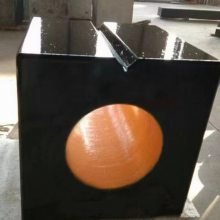
Precision Granite Components: Quality Control Key Points for the Finishing Stage
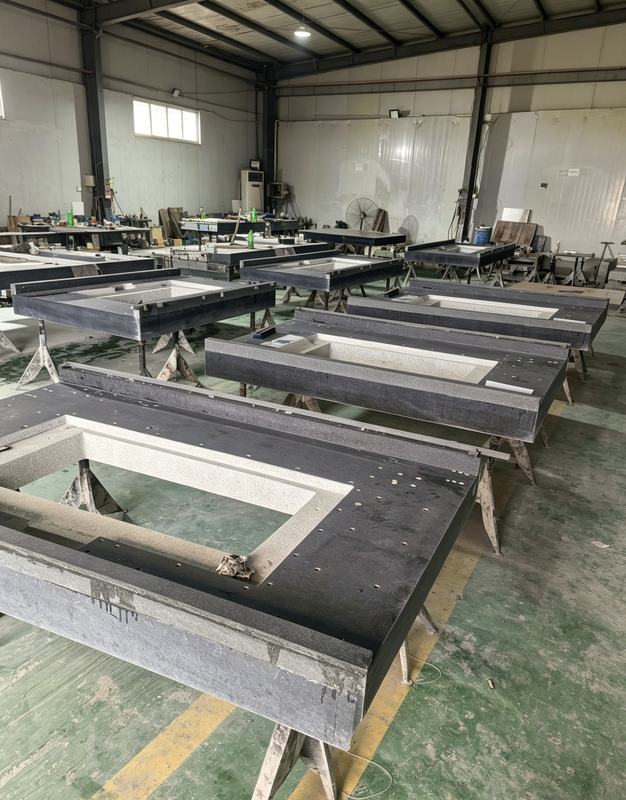
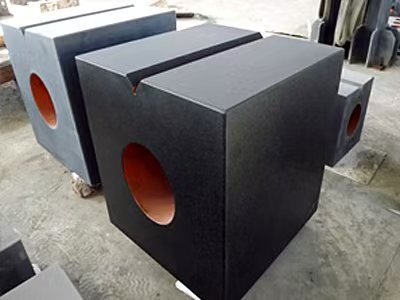
Finishing (fine milling, fine grinding, ultra-precision grinding, polishing, hole finishing, and insert assembly) is the core process that determines the final precision, surface quality, and operational stability of the finished product. For five-axis machine tool granite bases / large bases, the implementation key points are organized across seven dimensions: environment, equipment, tooling, process, inspection, operation, and protection, balancing micron-level precision control with batch consistency.
I. Environmental Control (Prerequisite Foundation, Top Priority)
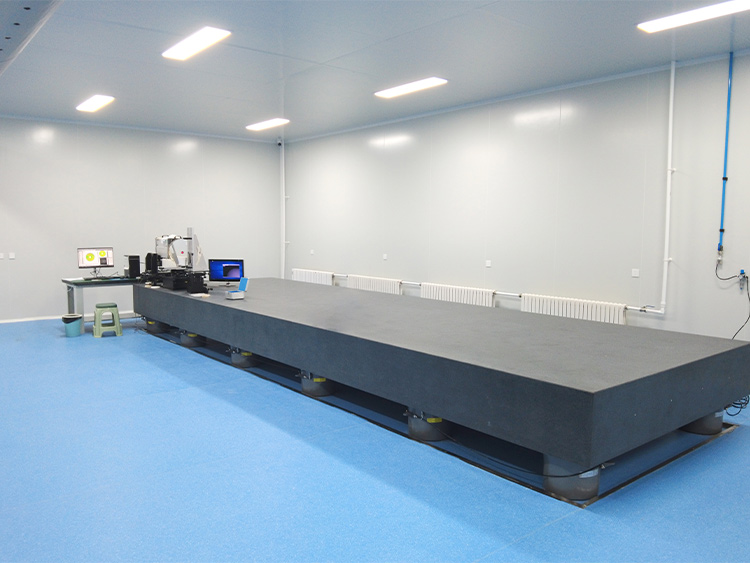
Constant Temperature Control
The finishing, grinding, and inspection areas must strictly maintain 20±0.5°C, with real-time recording of temperature and humidity throughout the day; direct blowing of hot or cold air on workpieces is prohibited to avoid local temperature differences causing deformation and flatness out-of-tolerance.
Vibration and Dust Protection
The area must be independently isolated, far from strong vibration stations such as sawing and rough milling; the floor must be treated for vibration; the workshop cleanliness must meet standards to prevent dust from falling on the grinding surface and causing scratches.
Humidity Control
Relative humidity is controlled at 45%~65% to prevent moisture absorption by the micropores of the stone and failure of the protective layer.
II. Equipment Status Control
Equipment Precision Verification
Calibrate machine tool guide rails, workbench level, and grinding disc parallelism before every shift; regularly verify equipment straightness and positioning accuracy using a laser interferometer; equipment out-of-tolerance is prohibited from production.
Grinding Tool / Cutting Tool Management
Fine Grinding / Ultra-Precision Grinding: Use diamond grinding discs and abrasives according to process grades, strictly prohibiting grinding with skipped grit sizes; regularly dress the flatness of the grinding disc, and immediately replace it if there is wear, chipping, or uneven wear.
Fine Milling Cutters: Select dedicated diamond fine milling cutters with intact cutting edges without chipping to avoid tool marks and burrs.
Equipment Parameter Locking
Rotational speed, feed rate, grinding pressure, and reciprocating stroke are all solidified and archived; operators are not allowed to change them privately; parameter changes require dual approval from technical and quality departments.
III. Tooling, Clamping, and Datum Control
Datum Unification
The same set of process datums from semi-finishing is used throughout the finishing process, without arbitrarily changing the positioning surface, to eliminate cumulative errors caused by datum conversion.
Clamping Force Control
Granite is highly brittle; clamping force must be uniform and moderate, and single-point strong clamping is prohibited to prevent workpiece deformation, edge chipping, and hidden cracks under pressure.
Regular Tooling Verification
Positioning blocks, rulers, and special jigs are self-inspected daily; if geometric tolerances are out-of-tolerance or surfaces are scratched, they must be immediately repaired or replaced.
IV. Process and Process Control (Core Operational Key Points)
- Allowance Distribution Control
Fine milling leaves a uniform grinding allowance of 0.05~0.1mm across the entire surface, prohibiting local allowances from being too large or too small.
Ultra-precision grinding is carried out in multiple sequential steps, with the single-pass removal amount controlled at the micron level to avoid stress rebound caused by forced grinding. - Surface Quality Control
Hard impurities and iron filings are strictly prohibited from entering the grinding contact surface throughout the process to prevent deep scratches.
Slow down the feed rate / reduce grinding pressure at edges, hole openings, and step positions, focusing on preventing edge chipping, corner loss, and uneven chamfering.
The polishing process ensures uniform color and consistent mirror surface, without uneven surfaces or pits. - Hole and Insert Finishing
Precision mounting holes and threaded sleeve holes: Hole diameters must guarantee H7/H8 tolerances, with smooth hole walls without cracking; hole positions must strictly follow the drawings.
Steel sleeves / threaded inserts hot-fitting / press-fitting: Control assembly temperature and pressing force, ensure interference fits are compliant, and avoid loosening, tilting, or stone cracking. - Continuous Processing Stability
Maintain a consistent processing rhythm for workpieces of the same batch.
V. Layered Inspection and Control (Implementation of the Three-Inspection System)
Execute Self-inspection → Mutual inspection → Professional inspection. Every process must be inspected; non-conforming parts are strictly prohibited from moving to the next stage.
- Process Self-inspection (Operator)
After completing 1 piece / small batch, self-check:
Appearance: No chipped edges, cracks, scratches, or pits;
Simple geometry: Levelness, approximate flatness, chamfers, and hole opening condition. - Patrol Inspection / Professional Inspection (Quality Inspector, inspection in a constant temperature environment)
Core inspection items Acceptance standards (5-axis machine tool granite base)
Flatness: Regular precision machining 2~5 μm/m; Ultra-high precision semiconductor / optical grade ≤1 μm/m
Straightness, Parallelism, Perpendicularity: ≤2~3 μm/m
Critical dimensions / Steps: Tolerance ±0.005 mm ~ ±0.01 mm
Hole position tolerance: ≤0.005 mm
Surface roughness: Precision ground surface Ra ≤0.2 μm; Ultra-precision polished surface Ra ≤0.02 μm
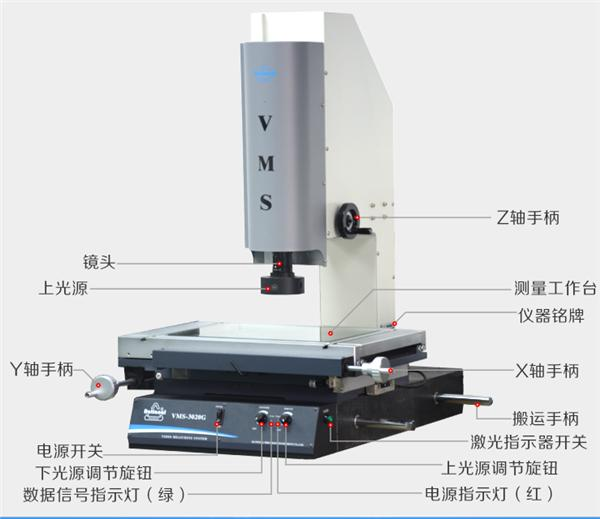
Inspection tools: Flat crystal, laser interferometer, high-precision level, dial indicator, CMM, roughness tester.
All inspection data are recorded piece by piece and archived for traceability. - Mandatory First-Article Inspection
After every shift, material change, tool change, or process adjustment, a full-item inspection of the first article must be performed. Mass production can only proceed after it passes.
VI. Personnel Operation Control
Precision machining and ultra-precision grinding are certified workstations, operated by fixed skilled personnel.
Standardized operation: Handle workpieces gently; use flexible lifting tools and soft pads for transfer; strictly prohibit impact and dragging.
Prohibit direct bare-hand contact with high-precision reference surfaces to prevent sweat and oil from penetrating pores.
VII. Post-Completion Protection, Transfer, and Isolation Control
Immediate Cleaning
After precision machining, thoroughly clean surface grinding powder and oil stains with anhydrous ethanol lint-free cloth, then dry at low temperature.
Surface Sealing Protection
Timely apply a special penetrating protective agent to seal the micro-pores of the stone, preventing water absorption, oil penetration, and contamination to ensure long-term precision.
Zoned Storage
Precision-machined finished products are placed in a separate zone with flexible isolation pads, ensuring no contact between workpieces; strictly prohibit mixing with rough-machined semi-finished products.
Temporary Protection
Temporarily cover precision reference surfaces and guide rail installation surfaces with protective film to prevent bumps and friction during the entire transfer process.
VIII. Common Defects & Prevention Measures (Practical for the Site)
Table
Common Issues Main Causes Prevention Measures
Flatness out of tolerance Environmental temperature difference, uneven grinding disc wear, uneven allowance Strictly control constant temperature, regularly dress the grinding disc, unify machining allowance
Surface scratches Dust, iron filings, abrasive particles Strengthen dust removal, clean workpieces and tools in advance
Chipped edges, broken corners Excessive clamping force, feed rate too fast, transfer bumps Reduce clamping force, reduce speed at edges and corners, use flexible tooling
Hole opening cracks Improper drilling / boring parameters, excessive insert pressing force Optimize drilling parameters, strictly control insert assembly pressure
Subsequent micro-deformation No protection after precision machining, moisture absorption Apply sealing protection immediately after completion, store in a dry environment