Industrial-Grade Precision Granite Platform Application Scenarios Detailed Description
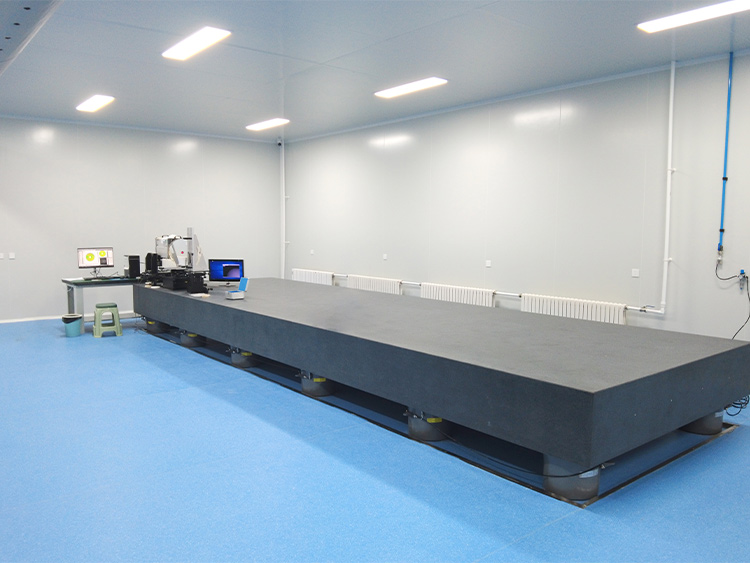
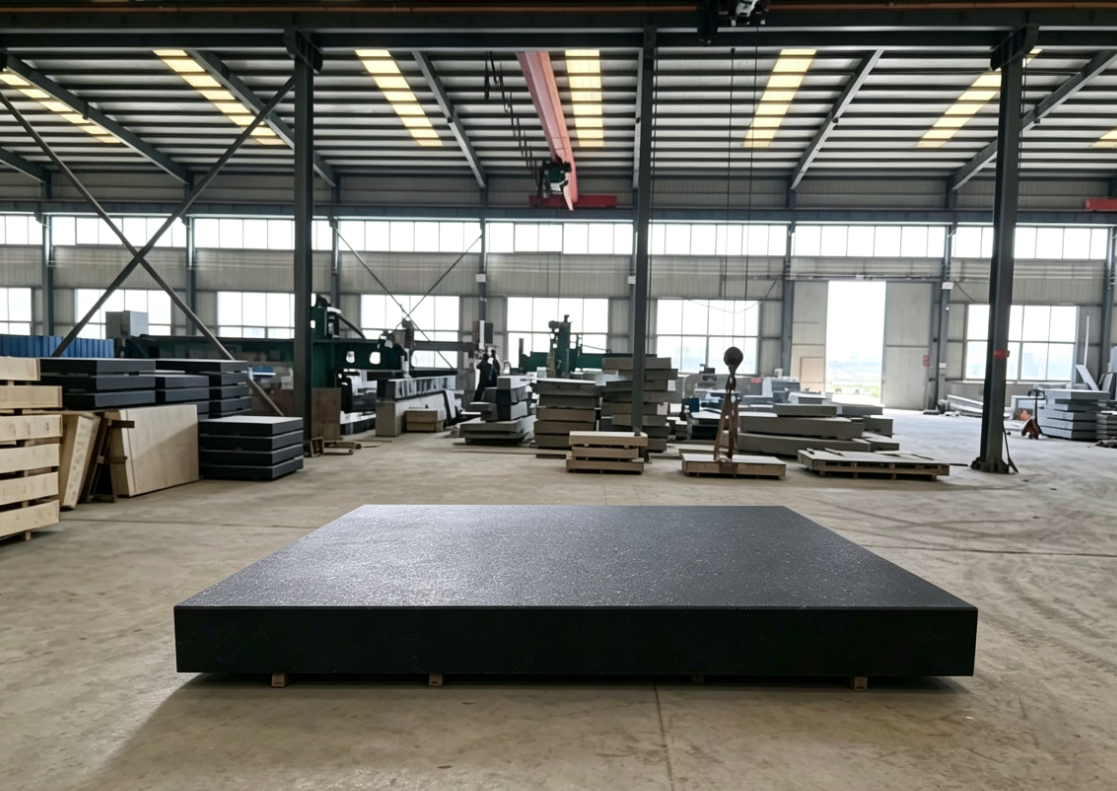
Relying on core characteristics such as excellent thermal stability, strong vibration absorption, long-lasting precision, wear and corrosion resistance, and non-magnetic properties, the precision granite platform has become the core reference carrier in high-end precision manufacturing, inspection, and scientific research fields. The following is a complete description categorized by industry, combined with working conditions, usage requirements, and product value, which can be directly used for product manuals, quotation materials, and business introductions.
I. Ultra-Precision Air-Bearing Motion Systems (Core Adaptation for This Air-Bearing Dedicated Platform)
This is the most mainstream application scenario for AA-grade ultra-high precision granite platforms, and is also an essential base for frictionless transmission equipment.
Air-Bearing Worktable / Air-Bearing Guide Rail Base
Air bearings rely on gas to form a floating gap to achieve zero-friction motion, which requires extremely high flatness of the reference surface, surface smoothness, and overall rigidity. The extremely low deformation rate and excellent vibration damping capability of the granite platform can ensure a uniform and stable air film, avoiding positioning deviations caused by table vibration, and are widely used in precision sliding stations and linear transmission modules.
Nano / Micron-Level Positioning Platforms
Applied in micro-displacement adjustment equipment, working with servo and linear motors to complete high-precision point control. The stone is unaffected by temperature and vibration interference, and can maintain micron or even nano-level repetitive positioning accuracy over the long term, making it the basic carrier for precision displacement systems.
High-Speed Precision Sliding Equipment
Equipment is prone to resonance during high-speed operation. The natural damping characteristics of granite can effectively absorb vibration and suppress resonance, ensuring the operational stability and precision of the equipment during high-speed operation.
II. Metrology, Inspection, and Quality Control Industry
As a standard reference gauge, it replaces traditional cast iron platforms and is mostly used in quality inspection rooms, metrology rooms, and third-party testing laboratories.
Coordinate Measuring Machine (CMM) Base and Worktable
CMM equipment relies on a reference plane to complete three-dimensional dimensional inspection. The granite platform does not deform and has long-lasting precision, which can ensure the installation level and reference uniformity of the entire machine, greatly improving the accuracy of component dimensional inspection, suitable for mold, automotive parts, and precision mechanical parts inspection.
Precision Gauge / Measuring Tool Calibration Table
Used for the calibration and verification of measuring tools such as calipers, dial indicators, spirit levels, and precision surface plates. The stable reference surface can ensure that the calibration data of the measuring tools is true and valid, making it the statutory standard reference platform for metrology rooms.
Comprehensive Component Inspection Platform
Used for flatness, parallelism, perpendicularity, and other geometric tolerance inspection of mechanical parts, optical components, and electronic accessories. The surface is wear-resistant and not easily scratched, making it suitable for high-frequency inspection operations.
Machine Vision / Image Inspection Equipment Base
Vision inspection has strict requirements for equipment posture and optical path stability. The platform can isolate ground vibration interference, preventing image shift and defocusing, and is applied in appearance defect detection, dimensional vision sorting, and other stations.
III. Ultra-Precision Machining Field
Mainly used as the supporting base for high-end machine tools and processing equipment, improving the overall machining precision and stability of the equipment.
Ultra-Precision Machine Tool Base
Including ultra-precision lathes, mirror grinders, coordinate boring machines, micro-hole machining machines, etc. The machining process of machine tools generates cutting vibration. Granite can quickly absorb vibration, reduce the micro-displacement of tools and workpieces, and ensure the finished quality of mirror machining, micro-hole machining, and ultra-precision cutting.
Five-Axis Machining Center Supporting Platform
Five-axis equipment is widely used for the machining of complex precision parts, requiring extremely high standards for installation datum and equipment leveling. Heavy-duty granite offer high rigidity and load-bearing capacity, providing stable support for the machine body, offsetting machining vibrations, and extending the equipment’s service life.
Precision Mold Fitting Platform
the mold assembly, trial, and repair processes, the platform’s standard flat surface is used to complete mold closing and gap adjustment. With high hardness and impact resistance, it is for heavy-duty operations in mold workshops.
IV. Laser, Optical, and Optoelectronic Industries
This industry is extremely sensitive to vibration and temperature changes, making it a key application area for granite platforms.
Bases for all categories of laser processing equipment
Covers equipment such as laser cutting, laser welding, laser marking, laser micro-engraving, and laser drilling. Once the laser optical path is shifted by vibration, it will directly lead to processing trajectory deviation. The strong vibration-damping performance of granite can lock the optical path accuracy, making it particularly suitable for precision small-part laser processing.
Optical benches / Vibration isolation platforms
The assembly, debugging, and optical experiments of optical lenses, lenses, and prisms must be completed in a vibration-free environment. High-density granite combined with vibration-damping structures can isolate external environmental vibrations, ensuring the stability of optical paths and imaging systems.
Bases for optoelectronic instruments and imaging equipment
Spectrometers, projectors, precision cameras, optical testing instruments, etc., utilize the high stability of the platform to avoid equipment displacement and angular deviation, ensuring testing and imaging effects.
V. Semiconductor and Microelectronics Manufacturing Industry
This belongs to an ultra-high precision application field, with industry-leading requirements for environment and equipment benchmarks.
Bases for wafer and chip processing equipment
Processes such as semiconductor wafer cutting, coating, photolithography, and etching rely entirely on micron-level precision control throughout the process. Granite is non-magnetic and has an extremely low coefficient of thermal expansion, so it will not interfere with electromagnetic equipment and precision circuits, while simultaneously isolating vibrations to ensure the yield of chip and wafer processing.
Chip packaging and micro-assembly stations
Microelectronic components are tiny in size; even slight vibrations during assembly, welding, and packaging can cause product scrap. The platform provides an absolutely stable working benchmark, adapting to fully automated micro-assembly production lines.
Semiconductor testing equipment platforms
Bearing bases for chip performance testing, circuit testing, and appearance sorting equipment, meeting the requirements of cleanrooms and high-precision operating environments.
VI. Automation and Robotics Industry
Applied in high-precision automated production lines and intelligent equipment to ensure motion repeatability accuracy.
Bases for high-precision industrial robotic arms
When multi-axis robotic arms and collaborative robots perform gripping, handling, and assembly actions, the platform can stabilize the body, offset vibrations generated by mechanical operation, and ensure precise arm positioning, suitable for precision assembly in electronics and auto parts.
Benchmark tables for non-standard automated equipment
Customized automated production lines, precision conveying stations, automatic screw-locking, and automatic dispensing equipment unify the equipment benchmark, improving the operational stability of the entire line.
Automatic assembly lines for miniature parts
For the fully automated assembly of small connectors, sensors, and precision hardware parts, the platform’s accuracy is relied upon to achieve station alignment and precise docking.
VII. Scientific Research Institutions and Laboratories
Widely used for precision experiments and new product R&D in universities, research institutes, and corporate R&D centers.
Experimental tables for physics and mechanics laboratories
Conducting scientific research projects such as mechanical testing, micro-deformation experiments, and precision mechanical calculations, the platform has high benchmark accuracy and stable performance, ensuring accurate and reproducible experimental data.
Micro-nano technology research platforms
Frontier microscopic technology R&D, new material testing, and precision instrument experiments, adapting to various high-precision scientific research equipment in laboratories.
Product prototype trial production platforms
Sample and prototype assembly, debugging, and performance testing during the corporate R&D stage; this AA-grade platform is particularly suitable for customer prototype trial production and small-batch trial production stages.
VIII. High-end Manufacturing such as Aerospace and Medical Devices
Aerospace Component Inspection and Assembly
Aero-engine parts and aerospace precision structural components have stringent tolerance requirements. The platform is used for component inspection and tooling assembly, meeting military-grade high-precision standards.
Precision Assembly of Medical Devices
Assembly and debugging of high-end medical imaging equipment, minimally invasive surgical instruments, and precision testing instruments. Equipment accuracy is directly related to operational safety, making granite platforms the preferred reference carrier.