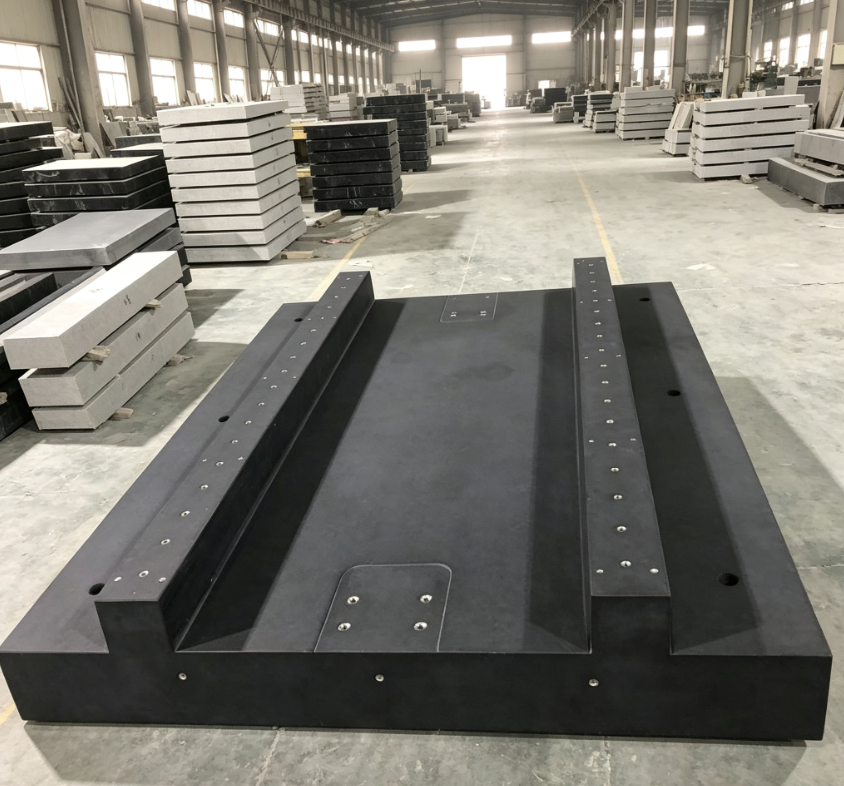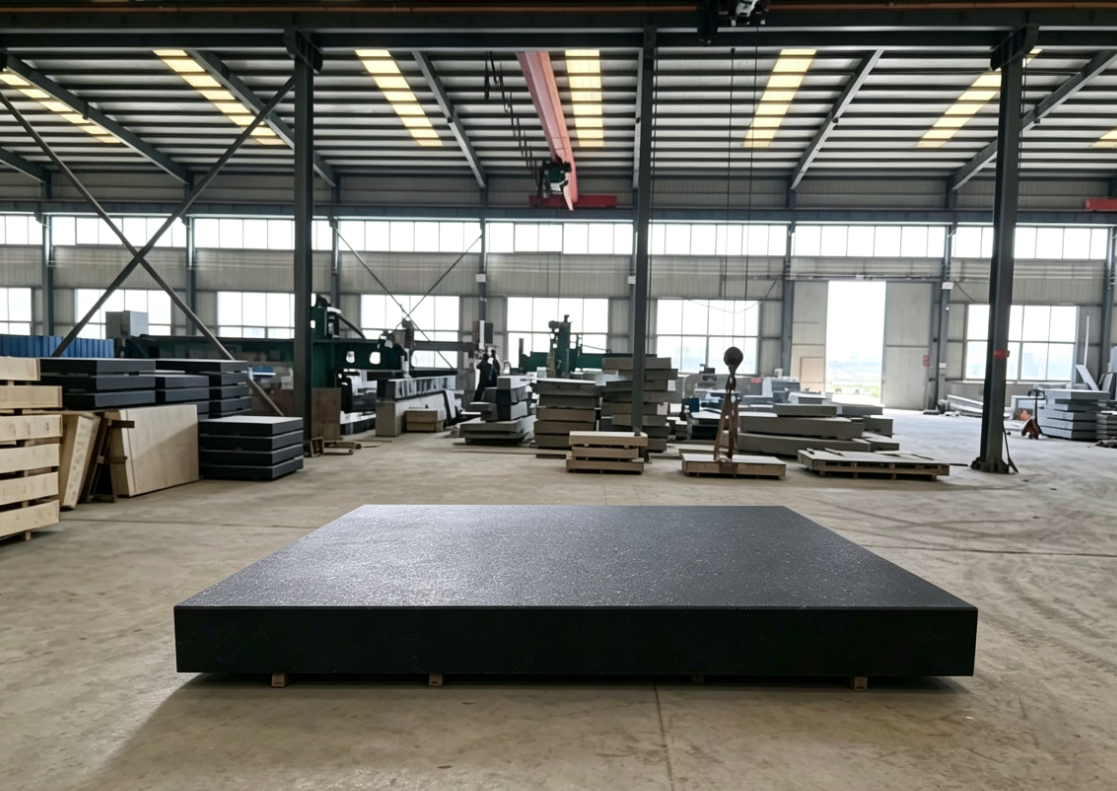
Основные моменты по установке, вводу в эксплуатацию и техническому обслуживанию направляющих для гранитных станков (гранитные направляющие)
Применимо к: гранитным направляющим «Jinan Qing», интегрированным направляющим с гранитным ложем, монтажным основаниям для воздушных подшипников, гидростатических подшипников и линейных направляющих; гранит отличается высокой хрупкостью и уникальными тепловыми характеристиками, а принципы его монтажа и технического обслуживания значительно отличаются от принципов, применяемых к чугунным направляющим.
I. Меры предосторожности перед установкой
- Требования к условиям эксплуатации объекта
Регулирование температуры
Гранит обладает низким коэффициентом линейного расширения, однако категорически запрещается допускать локальные перепады температуры. Направляющие не должны подвергаться воздействию прямых солнечных лучей или попадать под поток воздуха из кондиционера; неравномерная температура пола приведет к прогибанию и скручиванию направляющих.
Рекомендуемые условия эксплуатации: постоянная температура ±0,5–±1 °C, температурный градиент <0,3 °C/м.
Фундамент и вибрация
Необходимо использовать виброгасящие фундаменты / виброгасящие прокладки; хотя гранит обладает хорошими виброгасящими свойствами, внешние низкочастотные колебания всё равно будут влиять на точность;
Держите вдали от источников вибрации, таких как штамповочные станки, фрезерные станки и воздушные компрессоры;
Фундамент должен полностью осесть; фундаменты новых цехов необходимо оставить для оседания не менее чем на 30 дней перед началом монтажа.
Чистота
Место установки должно быть защищено от пыли; частицы металлического песка и цементная пыль, попадающие на рабочую поверхность направляющей, могут легко образовать необратимые вмятины. - Установка заготовок на месте (крайне важно)
Детали из гранита перед отправкой с завода проходят шлифовку при постоянной температуре, поэтому их нельзя устанавливать сразу же после доставки на объект:
Крупные направляющие / станины: оставить в цехе с постоянной температурой на 48–72 часа, чтобы температура камня и температура окружающей среды полностью уравновесились;
Запрещается проводить выравнивание сразу после перемещения прибора из низкотемпературной внешней среды в помещение с постоянной температурой; перепад температур приведет к временной деформации, и после выравнивания, когда температура установится, точность снова изменится. - Защита от подъема
Категорически запрещается непосредственно привязывать гранитные кромки стальными тросами; необходимо использовать мягкие стропы и резиновые угловые защитные накладки;
Запрещается подъем за одну точку, сильные удары и перекатывание; при ударах на камне могут возникать незаметные внутренние микротрещины, которые впоследствии приведут к постепенной деформации и сколам;
Поднимите прецизионно обработанную направляющую поверхность вверх, чтобы избежать трения и появления царапин на поверхности пола.
II. Основные технические требования к монтажу и выравниванию - Принципы оформления поддержки (высший приоритет)
Гранит обладает хорошей жесткостью, но низкой сопротивляемостью изгибу; при неправильной опоре легко возникают деформации под действием напряжений.
✅ Стандартный метод: трехточечная основная опора и вспомогательная опора (разгрузочная опора)
Трехточечная опора определяет опорную плоскость; не прижимайте все опоры одновременно;
Вспомогательные опоры выдерживают только собственный вес; не затягивайте их слишком сильно, так как чрезмерное усилие подъема приведет к принудительному скручиванию направляющей;
❌ Ошибка: затягивание всех многоточечных прокладок с максимальным усилием с целью “выравнивания” приводит к возникновению внутренних напряжений, что вызывает отклонение от заданной точности при изменении температуры. - Операция выравнивания
Для контроля следует использовать нивелиры и лазерные интерферометры; усилие нивелирования должно быть равномерным, постепенным и осуществляться в несколько циклов;
В ходе выравнивания проводите повторные измерения каждые 30 минут, чтобы снять незначительные напряжения в камне;
После завершения выравнивания не затягивайте гайки слишком сильно, чтобы избежать появления вмятин и деформаций из-за локального сжатия;
Конструкция соединения направляющих (сегментное соединение длинных направляющих)
Поверхность сращивания должна быть чистой и свободной от примесей; на ней не должно оставаться металлических частиц;
Контролируйте зазор в месте соединения и отрегулируйте высоту так, чтобы она была одинаковой; затягивайте болты равномерно по диагонали, чтобы избежать одностороннего сжатия, приводящего к выпуклости направляющей поверхности;
После завершения сращивания оставьте изделие на 24 часа в условиях постоянной температуры, а затем повторно измерьте его прямолинейность. - Сборка пар направляющих (три конструкции)
1) Рабочая поверхность из гранита, выполняющая функцию воздушного подшипника / гидростатической направляющей (без стальной направляющей, сверхточное оборудование)
Не допускается ударять по поверхности пола; не допускается прямой контакт с какими-либо твёрдыми инструментами;
Перед подачей воздуха тщательно продуйте воздушные камеры, чтобы предотвратить попадание твердых частиц в зазор воздушной пленки;
Герметик и клей для резьбы не должны попадать на рабочую поверхность направляющей.
2) Внешний стальной линейный профиль на гранитном основании
III. Оперативные табу
Не допускайте ударов твёрдых предметов по рабочей поверхности направляющей.
Падение гаечных ключей, заготовки или инструментов приведёт к появлению непоправимых вмятин и сколов по краям; если точность шлифовки гранитной поверхности нарушена, её можно восстановить только на заводе — ремонт на месте невозможен.
Следует избегать длительного пребывания вблизи локальных источников тепла.
Локальный нагрев с близкого расстояния с помощью сварочных горелок, тепловых пушек или мощных источников света вызывает локальное тепловое расширение, что приводит к необратимым микродеформациям направляющей.
Технические характеристики нагрузки
Не допускается сосредоточение точечного давления, превышающего расчетную нагрузку; чрезмерное локальное сжимающее напряжение приведет к образованию внутренних микротрещин.
Различия в средствах очистки
Поверхность гранитной направляющей с воздушной подушкой: категорически запрещается обливание водой в больших объемах! Влага, проникшая в микропоры камня, со временем приведёт к появлению внутренних пятен; водяной пар также может повредить подшипники с воздушной подушкой;
Для удаления небольших пятен слегка протрите поверхность безворсовой тканью, смоченной в безводном этаноле или изопропиловом спирте.
IV. Подробная информация о ежедневном техническом обслуживании
- Чистка и техническое обслуживание
Ежедневно: сначала удалите витающую пыль щёткой без ворса, а затем протрите поверхность тканью без ворса;
Масляные пятна: протрите безводным этанолом; не используйте сильнощелочные или сильнокислые чистящие средства (они разъедают микрокристаллическую структуру поверхности камня, снижая блеск и делая её более подверженной загрязнениям);
Категорически запрещается обрабатывать поверхность направляющей стальными металлическими щётками, наждачной бумагой или лезвиями. - Цикл регулярных проверок
Ежедневно: визуально проверяйте рабочую поверхность направляющей на наличие неровностей, царапин или скоплений пыли; для моделей с пневматической подвеской проверяйте систему фильтрации подаваемого воздуха (в случае выхода фильтра из строя пыль, попадающая в воздушную подушку, будет непосредственно царапать направляющую);
Ежемесячно: повторно проверяйте уровень оборудования и отсутствие ослабления опорных прокладок;
Ежеквартально: с помощью лазерного интерферометра повторно измерять прямолинейность направляющих рельсов и точность их позиционирования; сравнивать результаты с исходными заводскими данными для отслеживания тенденций долгосрочной деформации. - Система смазки (по конструкции)
Гранитная направляющая с пневматической подвеской: смазка не требуется! Особое внимание следует уделить тому, чтобы источник сжатого воздуха был сухим и чистым, с трёхступенчатой фильтрацией (удаление пыли, воды и масла); масло, содержащееся в сжатом воздухе, проникает в поры камня, и его трудно удалить;
Гидростатическая направляющая: регулярно меняйте гидравлическое масло и используйте системы прецизионной фильтрации, чтобы предотвратить попадание примесей в пару трения;
Стальные линейные направляющие, установленные на гранитных опорах: регулярно наносите смазку в соответствии с техническими требованиями к стальным направляющим, стараясь не загрязнять гранитную опорную поверхность. - Защита от влаги
Гранит — это микропористый материал; в условиях длительного воздействия высокой влажности:
Регулировать влажность окружающей среды в диапазоне 40%–65%;
При длительном простое поверхность направляющей рельсы можно накрыть пылезащитной накладкой; не рекомендуется наносить большое количество машинного масла для герметизации (масло, проникшее глубоко в камень, удалить очень сложно).
V. Распространённые ошибки и запреты (краткий обзор типичных ошибок)
❌ Принудительное выравнивание с помощью прокладок и многоточечной опоры → Деформация под действием напряжений, отклонение точности при изменении температуры
❌ Непосредственная установка сразу после доставки без стабилизации температуры → Кратковременное соблюдение требований к точности, дрейф через несколько часов
❌ Удар твёрдого предмета по шлифовальной поверхности → Неустранимые дефекты, которые невозможно устранить на месте
❌ Очистка с использованием сильных кислот/щелочей и чрезмерное промывание → Повреждение микропор поверхности, что приводит к скоплению пыли
❌ Прямой подъем за край призмы с помощью стальных тросов → Отколы углов, скрытые внутренние трещины
❌ Отсутствие точной фильтрации источника воздуха (для направляющих с пневматической подвеской) → Появление длинных царапин на поверхности направляющей
❌ Бессистемное сверление и нарезание резьбы на гранитном корпусе → Повышенная вероятность появления трещин; для новых резьб необходимо использовать стальные резьбовые вставки
VI. Требования к длительному хранению
Удалите пыль и масло с направляющих;
Накройте пылезащитной крышкой;
Следует избегать резких колебаний температуры окружающей среды;
Не снимайте опорные прокладки, не ослабляйте все опоры, сохраняйте исходное несущее состояние;
Не укладывайте тяжёлые предметы непосредственно на поверхность направляющей.