I. Before Use: Eliminate “Sources of Error” First
- Temperature Equilibration (Mst Critical, Often Overlooked)
The granite square, the workpiece, and the measuring platform must be placed in the same environment for ≥2 hours.
Ideal temprature: 20℃±1℃
Strictly prohibited: Using items immediately after bringing them in from outdoors, warehouses, or vehicles; temperature differences will cause verticality and straightness to drift nstantly. - Clean Thoroughly
Wipe the working surface clean with a lint-free cloth alcohol / acetone.
Must not have: Dust, chips, oil stains, adhesiresidues, or fingerprints.
Dust can cause positional errors of 2–10μm; invisible to the naked eye but with significant impact. - Check the Square’s C
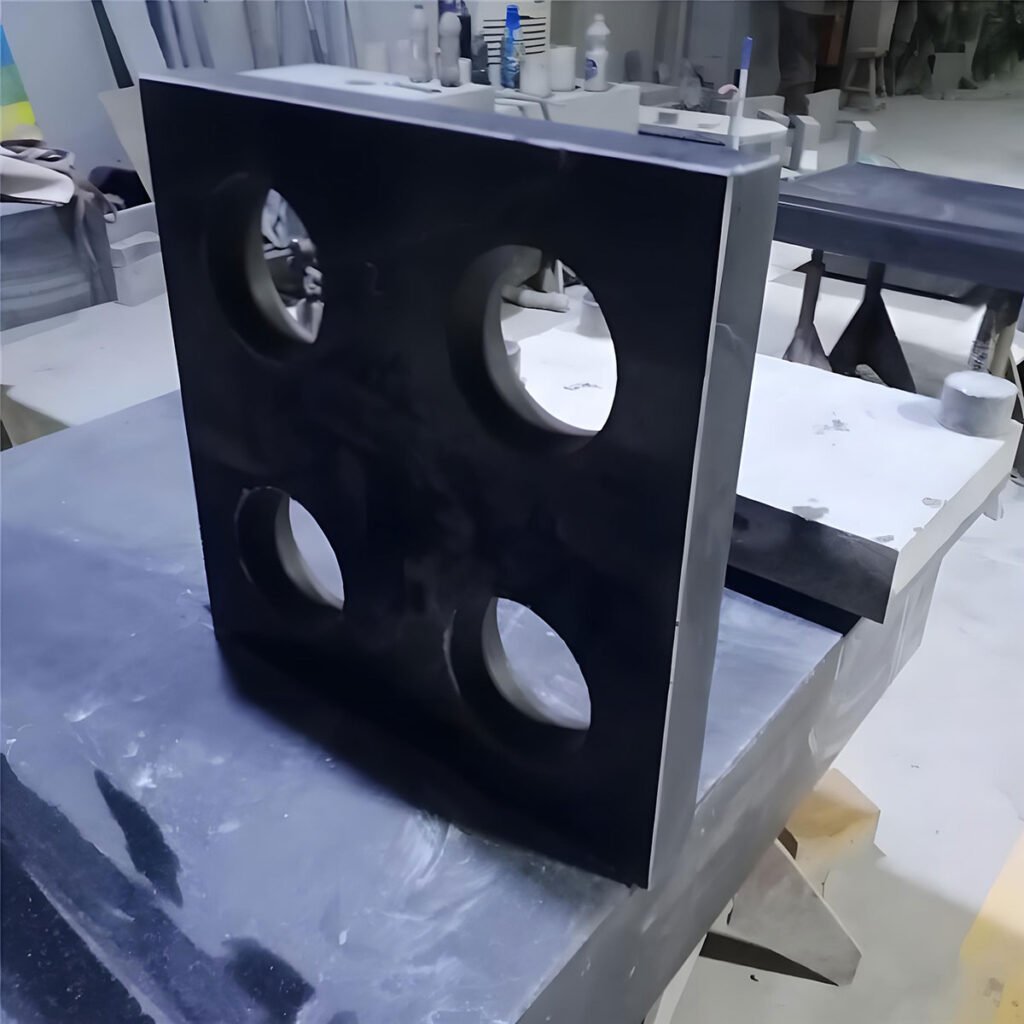
The working surface must be free of chipped edges, scratches, or dents.
Dents on non-working surfaces do not affect accuracy, but damage to the working surface requires immediate distinuation of use.
Regular calibration: Verticality and straightness, generally once every 6 months to 1 year.
II. During Use: Correct Operation to Reduce Huror
- Place and lean gently; do not bang or knock.
Granite is brittle; impact can cause micro-chipping and invisible cracks, resulting in permanent loss of accuracy.
When ing, let the bottom surface contact the platform first, then slowly lean towards the workpiece. - Use “Natural Contact”
Allow contact using only the square’s own weight; do noss with your hand.
Hand pressure causes the square to deform slightly, distorting verticality immediately.
Only an extremely thin layer of oil film or no oil is allowed between the measuring surface he workpiece. - Keep Measurement Position Consistent
Compare at the same height and position for every measurement.
Do not measure randomly at top, middle, and bottom; slight verticalityfferences in the square itself will be amplified. - Line of Sight and Reading Method
When using feeler gauges, keep your eyes level with the gap to avoid misjudnt caused by viewing from an angle.
Gap judgment criteria:
Just fits = Gap equals feeler gauge thickness
Slips in easily = Gap is too large
Does not fit is too small - Avoid Human Heat Conduction
Do not hold the working surface for a long time.
Body temperature causes local expansion, producing μm-level errors.
It is rended to hold the side or non-working surface.
III. Core Techniques to Reduce Error (Very Practical)
Reverse Measurement Method (To cancel out the square’s own error)
Fire: The front side of the square contacts the workpiece.
Second time: The square is flipped 180° and contacts again.
Take the average of the two results to significantly ee the square’s own verticality error.
Multi-point Verification
Measure verticality at top, middle, and bottom points.
Only if all three points are consistent is the result reliable; inconsisten indicates a problem with the workpiece or the square.
Rely on a High-Precision Platform
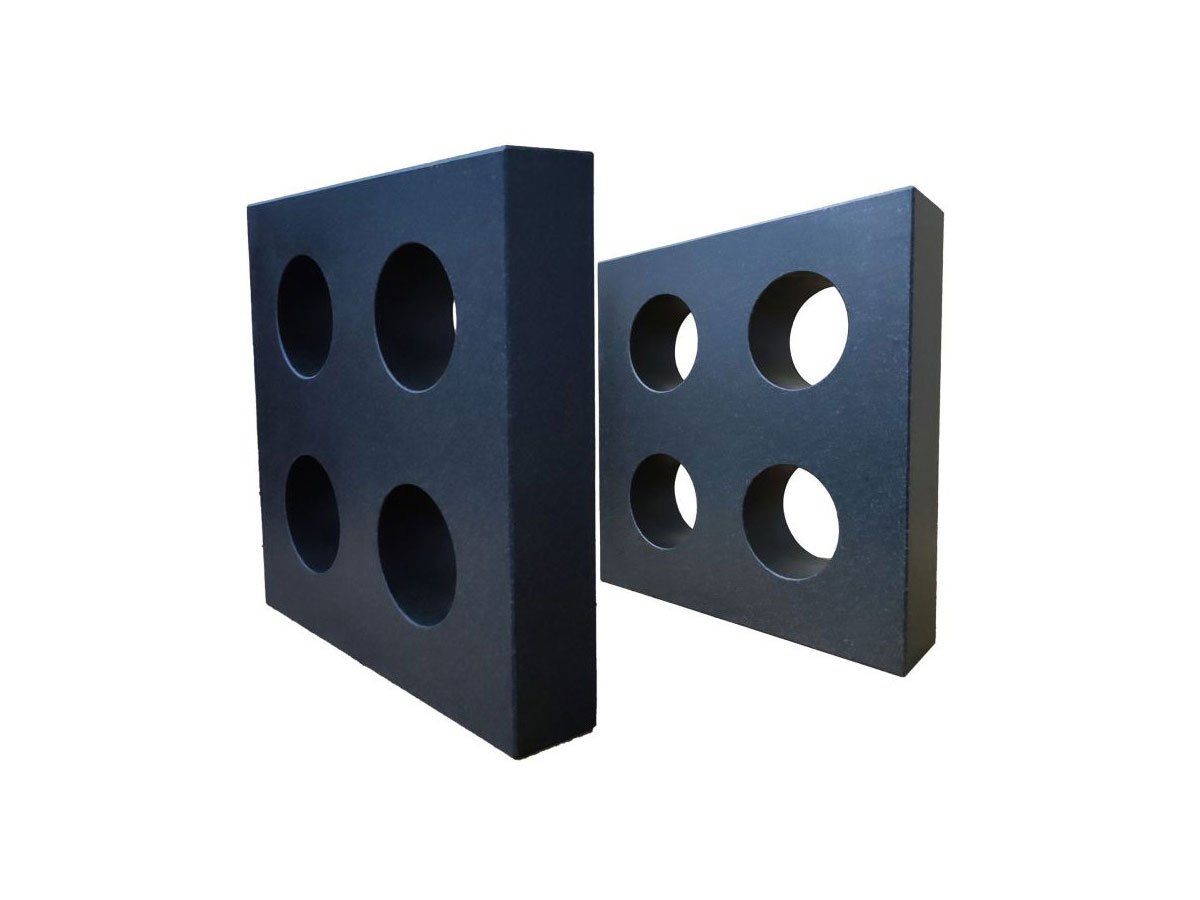
The granite square must be used in conjunction with a Grade 00 or higher grane platform.
If the platform is uneven, the square’s accuracy is useless.
IV. After Use: Protect Properly for Long-Term Accuracy
Wipe clean and apply a laf light rust preventive oil / stone maintenance oil.
Place in a dedicated wooden box / foam box, lay flat; do not place on its side or stack.
Keep away from vibration souect sunlight, and heat sources (radiators, machine tool exhaust vents).
Do not use as a hammer, spacer, or clamp.
V. Simple Summary (Remember Thes Points)
Equilibrate temperature for 2 hours before measuring.
Wipe clean, free of dust.
Place gently without pressing, natural contact.
Measure front and back, take therage.
Do not touch the working surface; store properly after use.
By operating in this manner, human error can generally be controlled within 1–3μm, approaching the square’s origory accuracy.