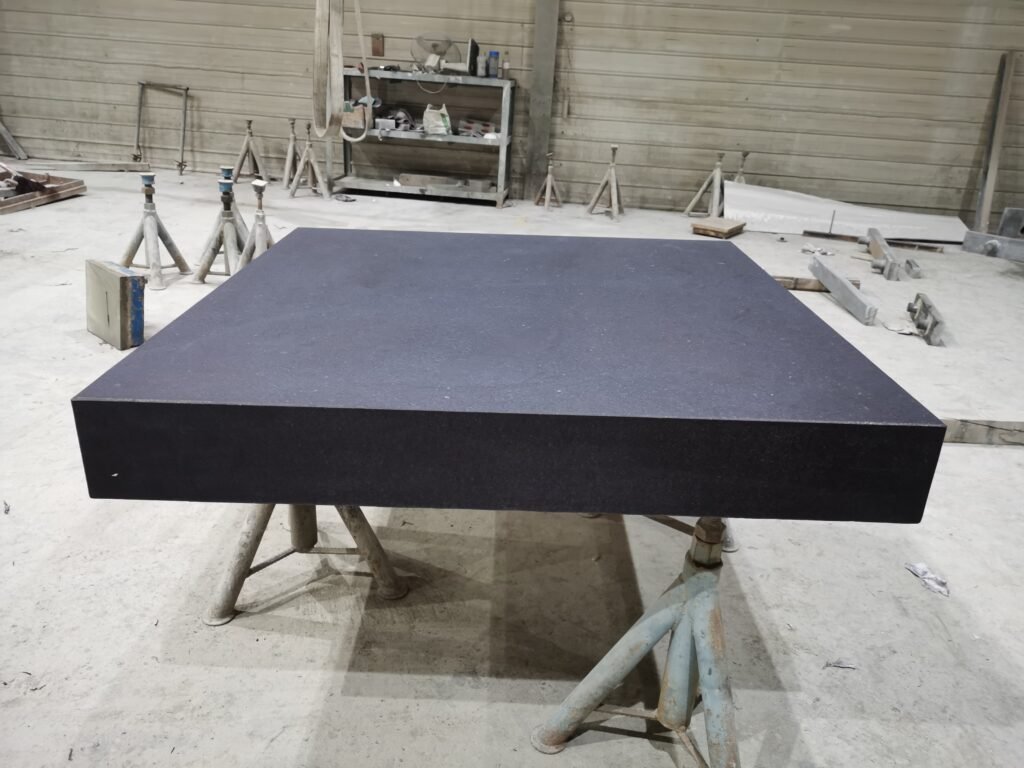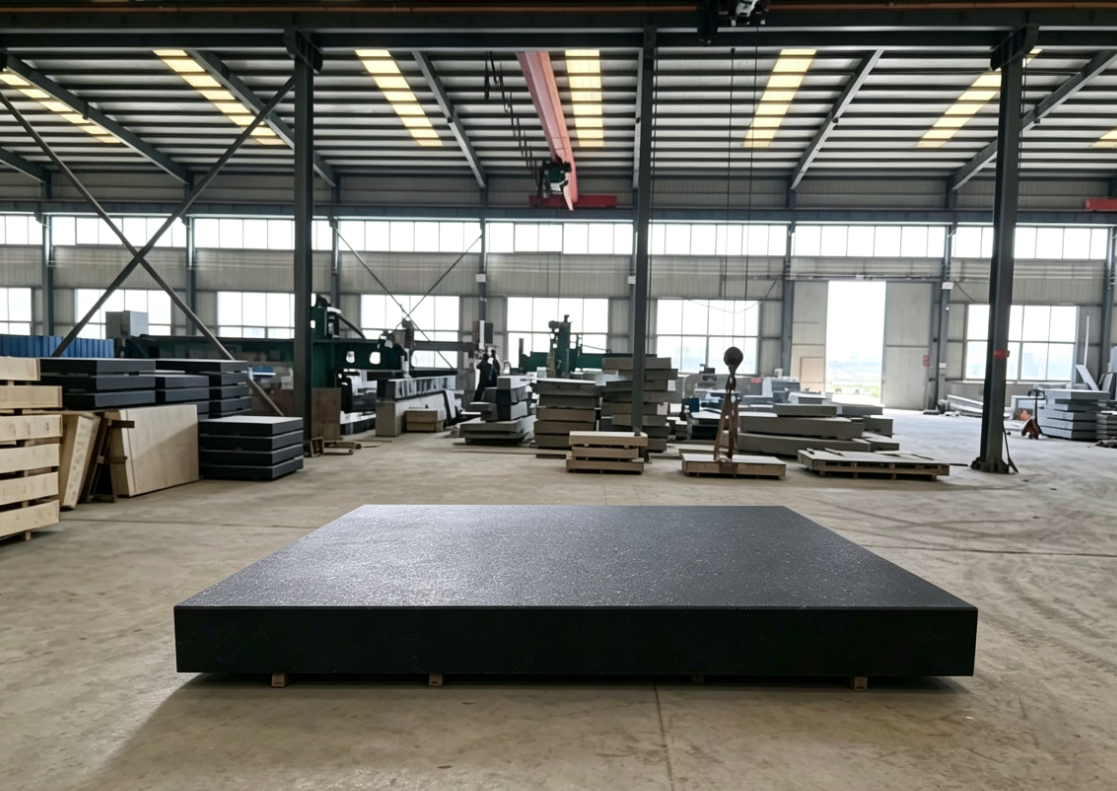
Principales ventajas del granito como base para una máquina de medición por coordenadas (CMM):
I. Excelente estabilidad térmica, que evita la variación dimensional provocada por los cambios de temperatura
El coeficiente de dilatación térmica lineal es estable (4,5~6×10⁻⁶/℃), muy inferior al del acero, el hierro fundido y las aleaciones de aluminio. La deformación provocada por pequeñas fluctuaciones de la temperatura ambiente es extremadamente mínima, lo que reduce la necesidad de compensación térmica en la máquina de medición por coordenadas (CMM) y garantiza la precisión continua de las mediciones.
El material presenta una buena uniformidad térmica general, lo que evita los problemas de deformación debidos a diferencias de temperatura locales que se dan en los metales; aunque su conductividad térmica es muy inferior a la del SiC, cumple plenamente los requisitos de inspección a nivel micrométrico en condiciones normales de taller a temperatura constante (20 ± 1 ℃).
El moldeado integral completo no presenta tensiones internas, presenta una deformación dimensional mínima tras un uso prolongado y ofrece una gran estabilidad para realizar mediciones repetidas a lo largo de los años.
II. Alto nivel de amortiguación y reducción de vibraciones, lo que elimina los errores de medición provocados por las vibraciones
La densa estructura cristalina del granito presenta unas propiedades de amortiguación muy superiores a las del acero y el hierro fundido:
Es capaz de absorber eficazmente las microvibraciones provocadas por las vibraciones del suelo, los compresores de aire, el funcionamiento de las máquinas-herramienta y el tránsito de personas;
La velocidad de atenuación de las vibraciones es rápida, lo que garantiza que no se produzcan sacudidas por resonancia de la mesa en el momento en que la sonda entra en contacto con la pieza de trabajo, lo que mejora significativamente la repetibilidad;
Para talleres pequeños y medianos que no cuenten con cimientos independientes aislados de las vibraciones, la base de granito es la solución más rentable para reducir las vibraciones.
III. Rigidez extremadamente alta y baja deformación, lo que garantiza que la referencia no se deforme bajo carga
Con una dureza según la escala de Mohs de 6 a 7 y una elevada resistencia a la compresión, la superficie de la mesa no sufrirá deformaciones elásticas al soportar piezas de trabajo y accesorios;
El módulo de elasticidad es elevado y la deformación por flexión debida al peso propio y a la carga de la pieza de trabajo es mínima, lo que garantiza que la referencia de movimiento en los tres ejes X/Y/Z se mantenga recta;
Tras un mecanizado de precisión, la planitud, la rectitud y la perpendicularidad pueden alcanzar una precisión submicrométrica de grado 00/000, lo que permite que sirvan como superficie de referencia central estable a largo plazo para la máquina de medición por coordenadas (CMM).
IV. Resistente al desgaste, no magnético y resistente a la corrosión, con una buena retención de la precisión a largo plazo
El material de piedra en su conjunto no presenta ningún riesgo de corrosión del metal; la superficie de referencia no se oxidará ni se corroerá en entornos de taller húmedos ni por las salpicaduras de líquido de corte;
El material es denso y resistente al desgaste, por lo que el contacto prolongado con la sonda y los movimientos de empuje y tracción de las herramientas no provocan arañazos rápidamente. Tras el tratamiento de sellado de poros, puede mantener una superficie de trabajo de alta precisión durante muchos años;
Es totalmente no magnético, no atrae limaduras de hierro y no interfiere con las rejillas integradas ni con los elementos sensores ópticos de la máquina de medición por coordenadas (CMM), lo que lo hace adecuado para la inspección de piezas magnéticas.
V. Mecanizado y conformado sencillos, con capacidad para estructuras de referencia complejas y soporte completo para la calibración
Las ranuras en T, los salientes de posicionamiento, los orificios de montaje y las cavidades de reducción de peso pueden fresarse de forma integrada, y todas las ranuras y orificios cuentan con redondeos en R para evitar grietas, lo que permite satisfacer diversas necesidades de fijación de herramientas;
Se puede fabricar en serie en lotes estandarizados, y cada pieza cuenta con un certificado de calibración metrológica conforme a las normas ISO 8512 o JJG 117, reconocido por los clientes europeos y estadounidenses a efectos de adquisición y aceptación;
Permite realizar uniones de espiga y mortaja con piezas separadas para crear plataformas de CMM de gran tamaño, lo que resuelve las limitaciones de tamaño de los bloques en bruto individuales.
VI. Ventajas económicas generales, adecuadas para la mayoría de los escenarios de uso de máquinas de medición por coordenadas (CMM) en el ámbito industrial
En comparación con el carburo de silicio (SiC), el vidrio microcristalino de expansión cero (Zerodur) y los compuestos de fibra de carbono, los costes de la materia prima y del mecanizado del granito son considerablemente inferiores;
El plazo de entrega es corto, ya que siempre hay plataformas de tamaño estándar en stock, y los pedidos por lotes de 8 unidades pueden programarse rápidamente para su producción;
Los costes de mantenimiento son bajos; los pequeños golpes y las microfisuras pueden repararse mediante técnicas de reparación de piedra y, tras un nuevo pulido, se recupera la precisión sin necesidad de sustituirla por completo.
VII. Químicamente estable, resistente a las manchas de aceite y a la corrosión por ácidos y álcalis suaves
Tras el tratamiento de sellado del granito denso de grano fino, los poros internos quedan sellados:
Los fluidos de corte, los aceites lubricantes y pequeñas cantidades de productos de limpieza no penetran en el interior de la piedra ni provocan su expansión o abombamiento;
No se corroe fácilmente con ácidos y álcalis suaves, lo que lo hace adecuado para las estaciones de inspección con máquinas de medición por coordenadas (CMM) en los talleres de mecanizado.