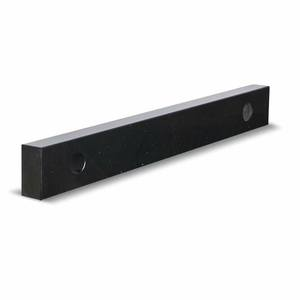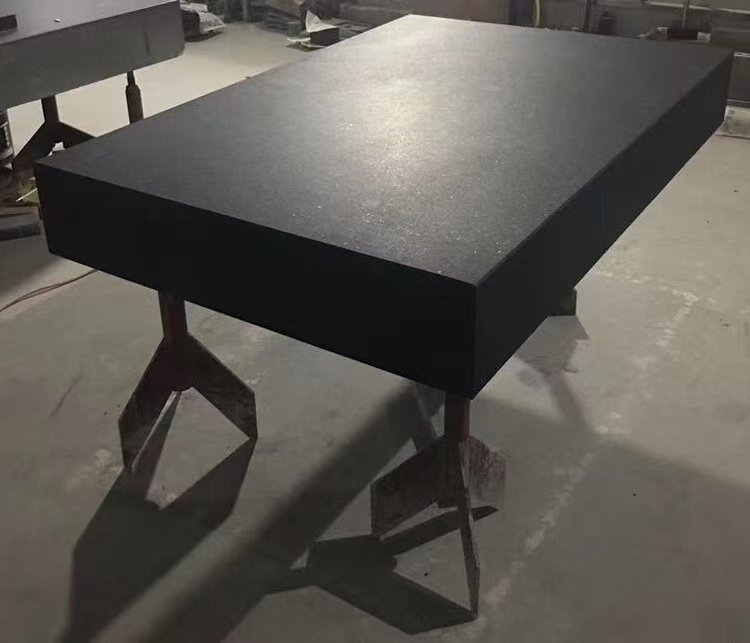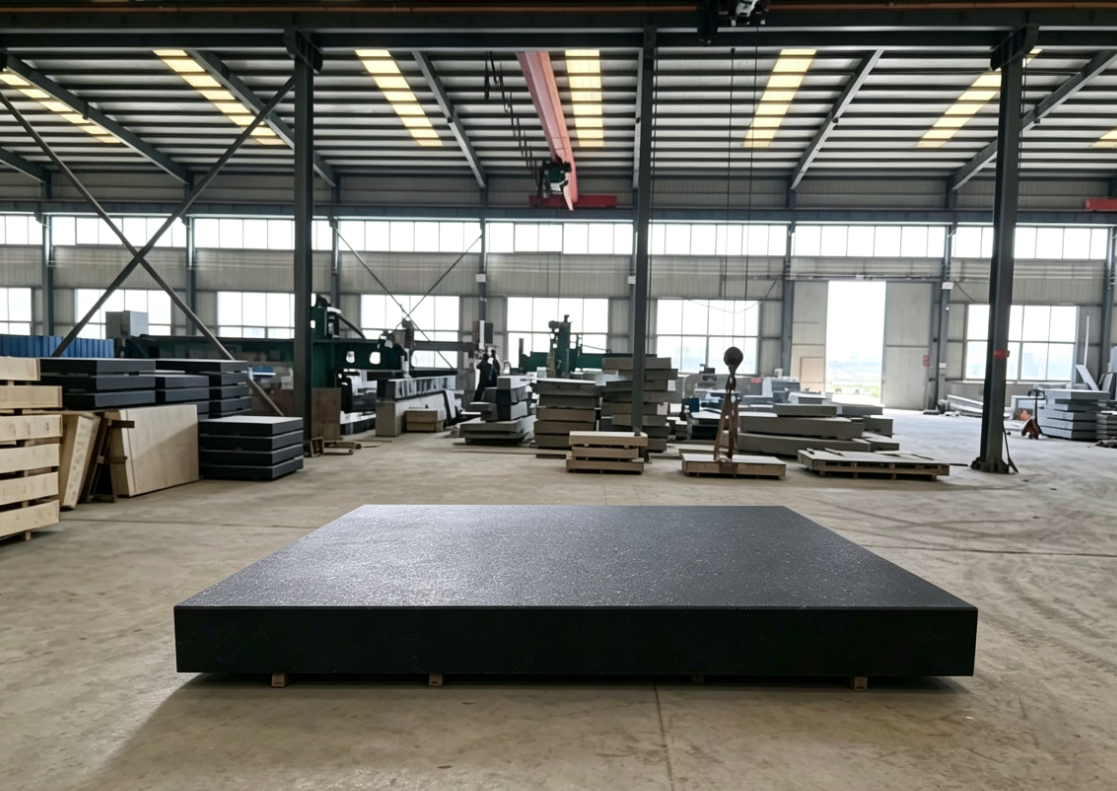
Granite parallel bars (also known as granite parallel gauges / flat bars) are high-precision reference measuring tools made of natural granite (such as Jinan Green) through precision machining and manual grinding. Used in pairs, they are primarily used for parallelism, straightness, and flatness inspection, as well as equipment calibration.
I. Core Features
Stable Accuracy: Natural aging over hundreds of millions of years completely releases internal stress, making them resistant to deformation; extremely low linear expansion coefficient ensures stable accuracy under temperature changes.
High Hardness and Wear Resistance: Shore hardness above HS70, wear-resistant working surfaces, and excellent long-term accuracy retention.
Superior Performance: Rust-proof, acid- and alkali-resistant, non-magnetic, and dust-resistant, suitable for harsh environments such as humidity and oil, with simple maintenance.
II. Main Application Scenarios
- Machine Tool Manufacturing and Inspection
Inspecting the straightness, flatness, and parallelism of machine tool worktables and guideways, such as the calibration of lathe, milling machine, and grinding machine guideways.
Calibrating the parallelism between the CNC machine tool spindle and worktable to ensure machining accuracy.
During machine tool installation and commissioning, checking the level of the bed and the parallelism of the guideways to ensure the geometric accuracy of the equipment. - Precision Machinery and Component Inspection
Inspecting the parallelism and flatness of the assembly surfaces of precision parts (such as gearboxes and engine cylinder blocks).
Used in conjunction with surface plates, micrometers, and spirit levels to measure the parallelism, perpendicularity, and straightness of parts.
Used as height blocks to support stepped or shouldered workpieces, facilitating inspection and scribing. - Metrology Calibration and Precision Instruments
Serving as reference measuring tools to calibrate the level and parallelism of coordinate measuring machines (CMM), laser interferometers, and optical platforms.
High-precision references in laboratories and metrology rooms, used for transferring accuracy to gauge blocks, surface plates, etc. - Electronics, Semiconductors, and Optical Fields
Inspecting the parallelism and positioning reference of wafer cutting equipment and photolithography mask aligners.
Calibrating parallel alignment and planar references during the installation of optical components (lenses, mirrors). - Large Equipment and Engineering Installation
During the installation of large machinery and equipment, checking the level and parallelism of bases and frames to ensure stable equipment operation.
Flatness and straightness inspection of large components (such as door and window frames, curtain walls) in construction and decoration.
III. Usage Advantages (Compared to Metal Parallel Bars)
Cuadro
Comparison Item Granite Parallel Bars Metal (Steel) Parallel Bars
Stability Almost no deformation, long-term stable accuracy Easily deformed by temperature and stress
Wear Resistance High hardness, long wear-resistant life Easily worn, requires frequent calibration
Corrosion Resistance Rust-proof, acid- and alkali-resistant, non-magnetic Easily rusts, requires rust prevention treatment
Maintenance Cost Maintenance-free, simple cleaning Requires regular oiling and calibration
IV. Accuracy Grade and Specifications
Accuracy Grade: Common grades include 00, 0, and 1, with Grade 00 being the highest (e.g., straightness ≤ 0.000025 inches per 6 inches).
Common Specifications (mm): 400×60×25, 630×100×35, 1000×160×50, 1600×250×80, 2000×300×100, etc.
V. Usage and Maintenance Key Points
Before Use: Clean the working surface with anhydrous ethanol to remove oil and dust, and avoid bumps.
Environment: Temperature 20±2℃, humidity 40%–60% RH, away from vibration sources, preferably used on an air-floating anti-vibration platform.
Storage: Store vertically in a dedicated wooden rack or horizontally with a dust cover; stacking is prohibited to prevent deformation.
Calibration: Re-inspect with a laser interferometer every 6 months; re-grinding is required if it exceeds the tolerance.