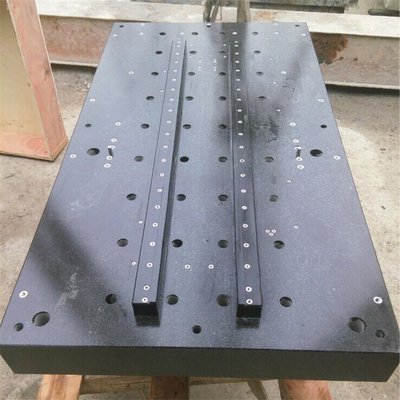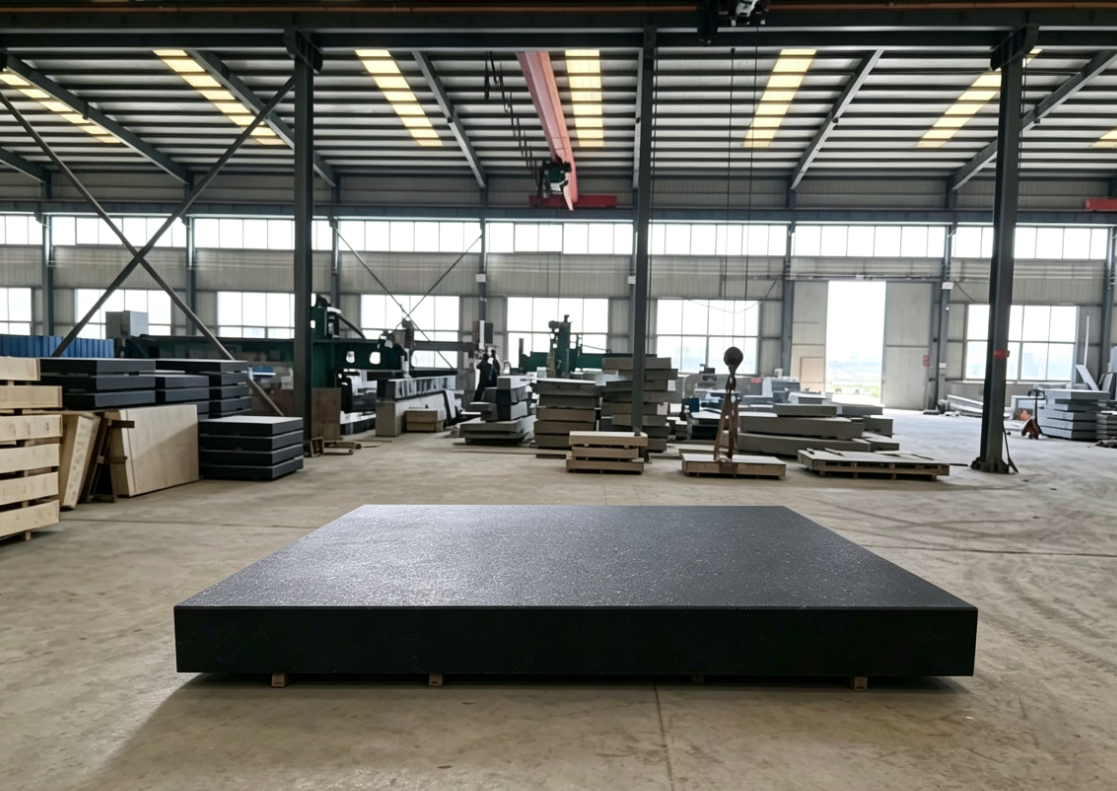
Standard practices are divided into two categories: precision adjustable bolt fixing (preferred) and pressure plate flexible cushion (secondary rigid deadlocking and direct steel-to-steel contact are strictly prohibited.
I. Preferred: Bolt Dowel Pin Adjustable Support (Industrial Precision Standard)
- Platform Machining: Pre-leave countersunk through holes/blind holes (M8–M16) on the bottom surface, hole spacing 300–600mm, mandatory at four corners; 45° chamfer at hole openings to prevent edge chipping.
- Frame Matching: Weld/install stainless steel threaded seats/embedded nuts on the top surface of the metal frame, corresponding to the platform hole positions.
- Connection Components:
- Bolts: Grade 8.8 high-strength bolts nuts spring washers.
- Vibration Isolation and Buffering: Lay a 3–5mm thick nitrile rubber/silicone pad between the platform and the frame (insulation vibration reduction, anti-electrochemical corrosion).
- Positioning: Equipped with 2–4 dowel pins (φ6–φ12) to prevent horizontal displacement.
. Leveling: Install adjustable feet/jacks on the frame (3-point main support 2-point auxiliary), calibrated with a spirit level to ≤0.0mm/m.
- Torque: Tighten evenly in steps, torque 25–45N·m (according to bolt specifications).
II.: Pressure Plate Fixing (Lightweight/Frequent Disassembly)
- Use L-shaped steel pressure plates bolts to symmetrically press the platform edges (distance from corners ≥0mm).
- Place rubber/polyurethane gaskets between the pressure plate and the platform to avoid local stress and edge chipping.
- Press only the edges, pressing the working is prohibited; bolt preload must be consistent to prevent deformation.
III. Strictly Prohibited Methods (Damages Precision/Cracks Platform)
- ❌ glue/Epoxy full bonding: Thermal expansion and contraction stress causes platform deformation and cracking.
- ❌ Steel-to-steel rigid welding/bolt deadlocking: No adjustment, vibration is transmitted to the platform.
- ❌ Single-point strong fixing: Uneven force distribution, long-term deformation exceeds tolerance.
IV. Standard (Ready for Implementation)
- Frame leveling → Lay flexible pad → Position platform → Insert bolts → Insert dowel pins.
- Initial nut tightening → Fine adjustment → Final tightening to standard torque → Re-check level and flatness.
- Add anti-vibration rings/bumpers around the perimeter to prevent collision displacement.
V. Scenario Selection Quick Guide
- CMM/Laser Equipment: Bolt Dowel Pin Adjustable Support Vibration Isolation Pad (Rigid Adjustable Vibration).
- Inspection Room/Measuring Tool Platform: Adjustable Support Bolt Fixing (Stable and easy to maintain).
- Lightweight/Temporary Workstation: Pressure Plate Flexible CushionConvenient and non-destructive).