Granite Equipment Base · Core Difficulties in Non-standard Machining
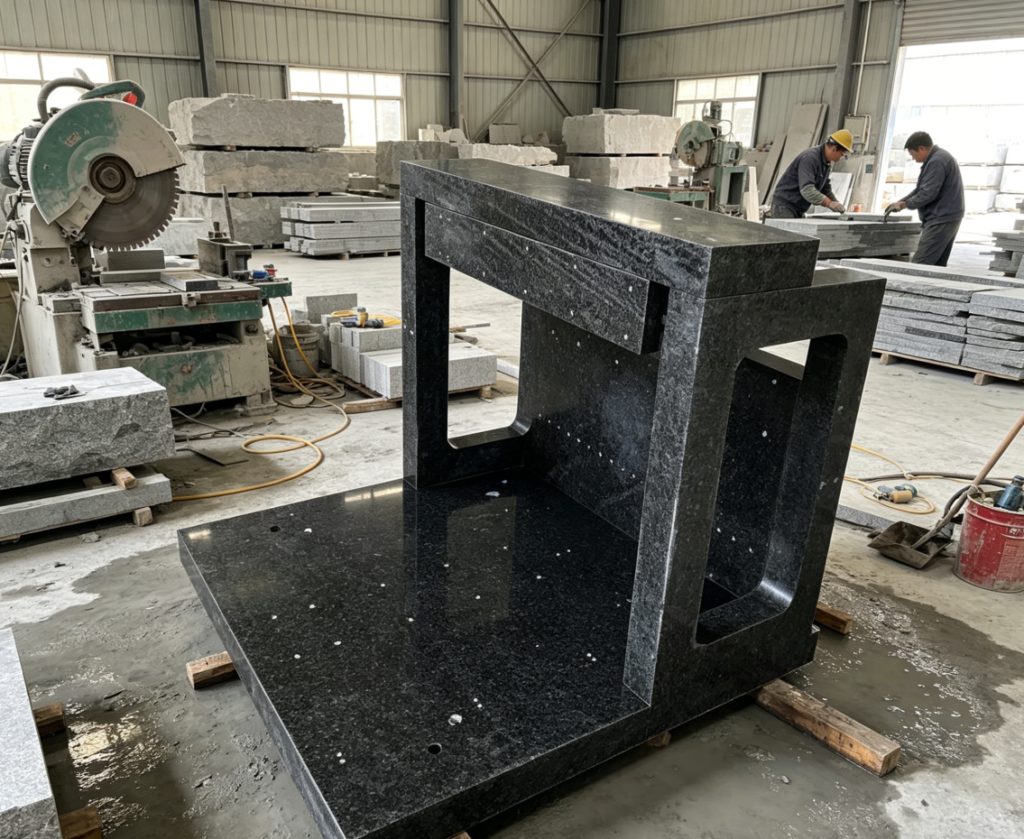
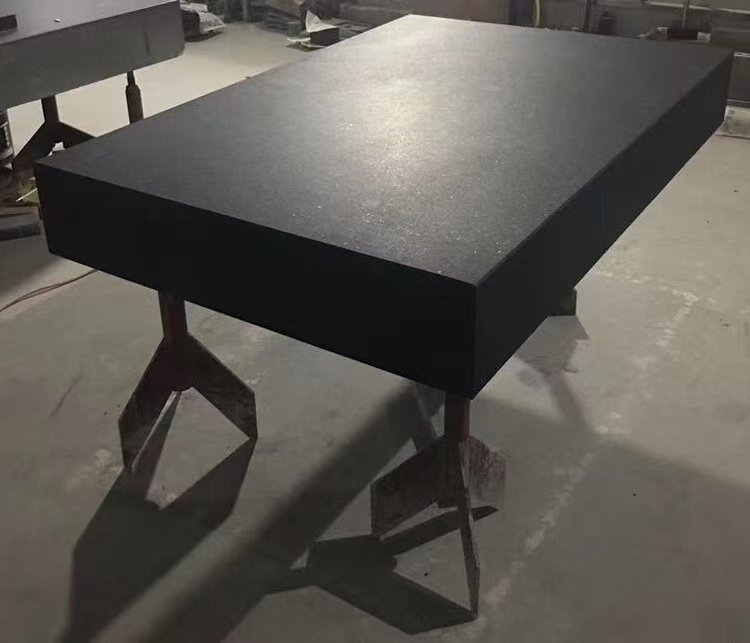
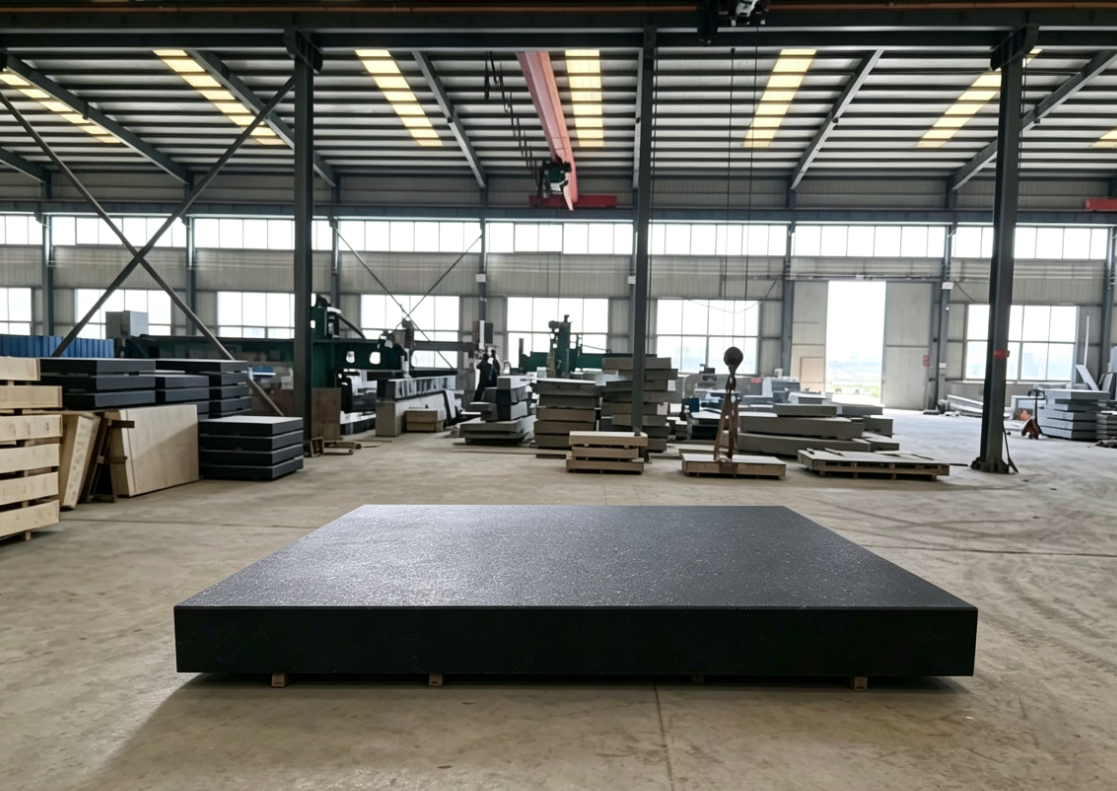
Combining Jinan Qing and Indian stone for machine tool bases, CMM bases, semiconductor equipment frames, cantilevers, hollowing, weight-reductislots, bevels, and non-standard parts with irregular guides, this document compiles the most critical and problematic difficulties, categorized by stone properties, structure, machining, precision, stresssembly, and cost for clarity and ease of understanding.
I. Inherent Difficulties Caused by the Physical Properties of the Stone
Hard and brittle, prone to chipping edes, corners, and hidden cracks
Granite has a high Mohs hardness and brittleness; during milling and drilling of irregular internal corners, thin walls, hollow sections, aes, chipping and breakage are very common. Invisible hidden cracks can crack during processing or later use.
Anisotropic, prone to deformation under uneven stress
Natural stone has direct grain; with varying thicknesses in irregular structures, inconsistent stress release after machining leads to warping and twisting.
Heat-sensitive, prone to thermal cracking during dry cutting
Heat concentrates during cutting egular slots and deep holes; excessive temperature directly causes micro-cracks.
II. Machining Difficulties Caused by Irregular Structure Design
Internal right angles and sharp corners ca be machined, resulting in inevitable chipping
Right-angle structures on drawings will chip when granite end mills attempt to clear corners; only R fillets are possible, conflicting with customerawings.
Cantilever, thin-wall, and hollow structures have poor strength
Weight-reduction slots, cantilever beams, and thin side walls are prone to breakage from vibration duriachining and easy to damage during transportation and lifting.
Bevels, multi-facets, and irregular guide surfaces are extremely difficult to grind
Ordinary large flat surfaces can be mahine-ground, but bevels, side faces, and irregular slots require manual hand grinding, resulting in low efficiency and poor consistency.
Uneven depth and thickness lead to significant differencress release
Thick and thin areas deform at different rates; insufficient aging leads to precision drift later.
III. Stress and Aging Control Difficulties (Most Affecting Finished Produ Stability)
Stress concentration after rough machining; deformation probability of irregular parts is much higher than standard platforms
Many slots, holes, and steps mean high cutting stress; without thermaing, warping is inevitable later.
Difficult to control constant-temperature thermal aging
Large irregular parts are hard to load into furnaces and arrange properly; uneven heating; slight temperature changes du heating and cooling cause cracking.
No aging after finish machining
Once grinding is completed, aging again ruins precision.
IV. Precision and Tolerance Control Difficulties (Core Pain Points f Equipment Bases)
Hard to guarantee perpendicularity, parallelism, and hole spacing precision
Irregular structures have many datum surfaces; positioning errors accumulate when changing faces, easily exceedintolerances.
Hard to control position precision of embedded threaded inserts, countersunk holes, and wiring holes
Drilling perpendicularity in granite is difficult; gluing and embedding inserts easily cases skewing, affecting equipment assembly.
Hard to unify micron-level flatness
Achieving 00 or 000 grade precision on both large flat surfaces and small irregular surfaces simultaneoual grinding has poor consistency.
V. Machining Process and Equipment Difficulties
High tool wear, hard to match cutting parameters
Diamond tools wear quickly; complex irregular paths mean imer speed and feed rates lead to chipping.
Difficult to position workholding
Irregular shapes cannot be fixed with conventional clamps or suction cups; unstable clamping causes tool vibration ane dimensions.
Poor chip evacuation, difficult cooling
Stone powder accumulates in deep slots and hollow sections, wearing tools and scratching machined surfaces.
VI. Challenges in Post-Use and After-Sales Service
Insufficient customer awareness of granite brittleness
Customers apply metal strength standards to caver and thin-walled components; however, granite is prone to chipping and damage.
Precision drift issues
Stress release is slow, leading to slight deformation after a few mof use, which easily results in quality disputes.
Extremely high rework costs
Granite is irreversible; chipped edges, cracks, and precision over-tolerance generally require scrappid remanufacturing.