La lógica fundamental a la hora de seleccionar una plataforma consiste en aclarar primero los requisitos del equipo y, a continuación, adaptar los materiales, la precisión, la estructura y las soluciones de apoyo, evitando así los errores de “malgastar dinero en una precisión excesiva” o “no poder utilizarlo debido a una precisión insuficiente”.”
I. Paso uno: En primer lugar, identifica tus requisitos fundamentales (establece la dirección)
Antes de solicitar un presupuesto o elegir un modelo, aclara primero estas cuatro cuestiones; esta es la base de todo proceso de selección:
¿Para qué se utilizará ese equipo?
Los requisitos de las plataformas varían considerablemente según el tipo de equipo:
Máquinas de medición por coordenadas (CMM) / Equipos de inspección de alta precisión: Requieren la máxima planitud y estabilidad;
Equipos para semiconductores: Requieren propiedades adicionales de no magnetismo, baja deformación térmica y alta pureza;
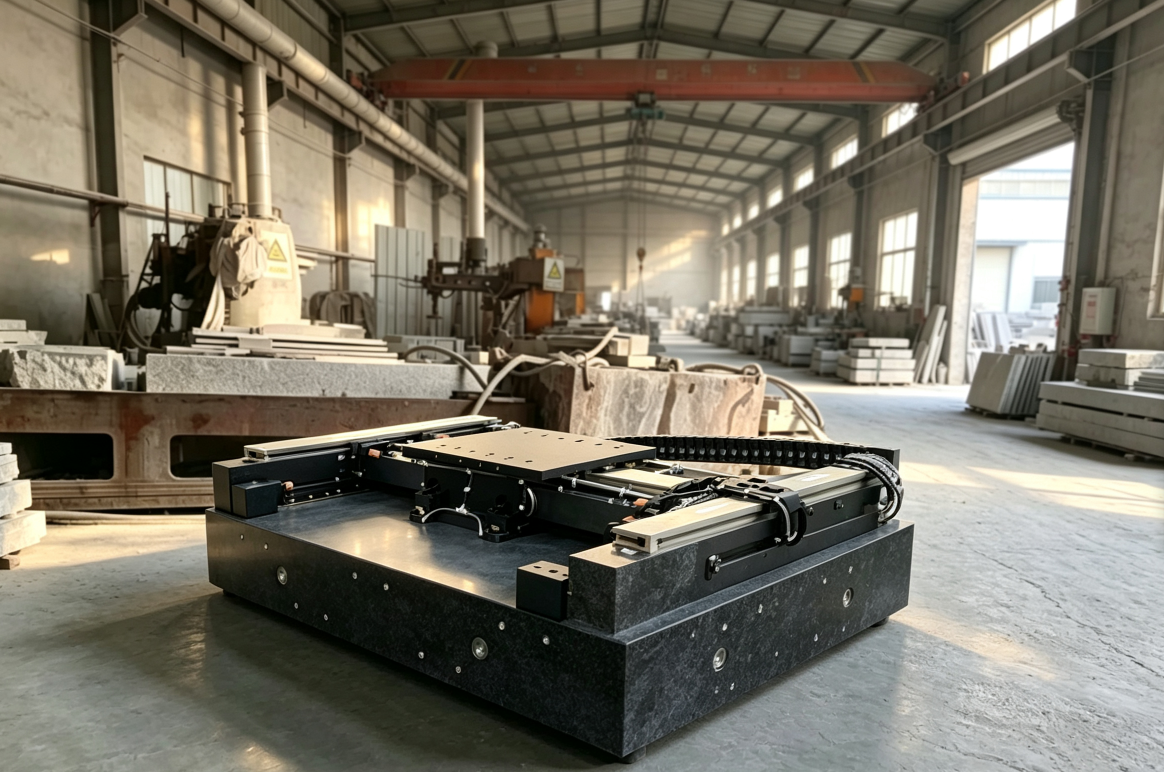
Equipos de corte y mecanizado por láser: dar prioridad a la rigidez, la amortiguación de vibraciones y los orificios de fijación a medida;
Herramientas y equipos de posicionamiento estándar: los requisitos de precisión son menores; basta con un modelo económico.
¿Cuál es el entorno de trabajo del equipo?
¿Hay fuentes de vibraciones en el taller (prensas, compresores de aire, grúas puente)?
¿Cuál es la magnitud de las variaciones de temperatura (±5 °C o más, en comparación con un taller a temperatura constante)?
¿Hay sustancias corrosivas, como ácidos, álcalis o manchas de aceite?
¿Cuáles son las dimensiones de instalación de la mesa y el peso total del equipo?
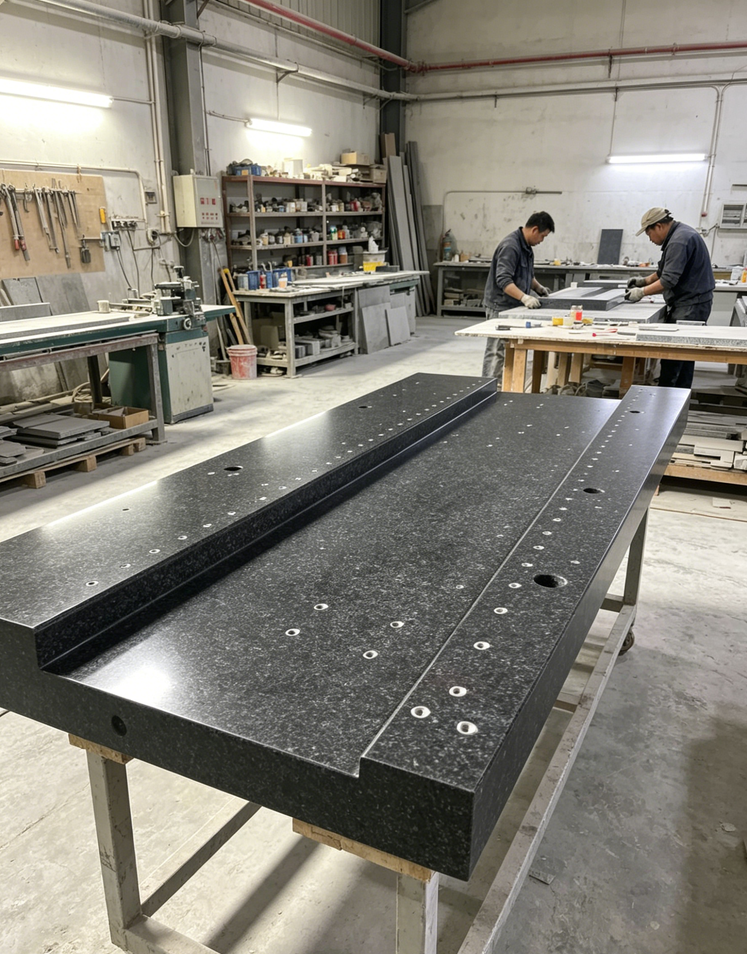
El peso total del equipo determina el grosor de la plataforma y el diseño de soporte de carga; las dimensiones de instalación determinan la longitud y el grosor de la plataforma, así como si se necesitan ranuras en T a medida o orificios de montaje.
¿Cuál es el presupuesto y el plazo de entrega que te parecen aceptables?
La precisión, la calidad del material y la complejidad del proceso influyen directamente en el precio y el tiempo; aclarar estos aspectos de antemano evita malentendidos.
II. Segundo paso: Selección de los indicadores clave de rendimiento (tener en cuenta los parámetros cuantitativos)
- Calidad de la piedra: elegir el “material” adecuado puede duplicar el rendimiento
Para las plataformas de amortiguación de vibraciones de granito, se prefieren granitos negros de primera calidad, como el Jinan Qing (negro de Shandong) y el negro de Shanxi. Prioriza los puntos de remolque:
Estructura mineral: cuanto más densos y uniformes sean los granos cristalinos, mejor; sin grietas, sin poros ni porosidad; una alta amortiguación interna garantiza unos efectos de vibración estables;
Densidad: ≥2,95 g/cm³; cuanto mayor es la densidad, mayor es la inercia del propio peso y mejor es el efecto de amortiguación de las vibraciones;
No magnético / Bajo nivel magnético: Los equipos de inspección óptica y de semiconductores deben utilizar granito no magnético para evitar que las interferencias magnéticas afecten a la precisión de las mediciones y del procesamiento;
Índice de absorción de agua: ≤0,11 TP3T; cuanto menor sea el índice de absorción, mayor será la resistencia a las manchas de aceite y a la corrosión, y menor será la probabilidad de que se deforme debido a la humedad. - Grado de precisión: Elige según tus necesidades; no te obsesiones con una precisión excesiva.
La precisión de la plataforma influye directamente en el rendimiento final del equipo. Los grados habituales son los siguientes (tomando como ejemplo la planitud):
Cuadro
Nivel de precisión en la planitud (ejemplo: plataforma de 1000 × 1000 mm). Situaciones de aplicación
Grado 00 (precisión ultraalta) ≤2 μm: interferómetros, máquinas de litografía y equipos de inspección de obleas
Grado 0 (alta precisión) ≤5 μm: sistemas de imagen, mesas de inspección de precisión, equipos de experimentos ópticos
Grado 1 (grado industrial) ≤10 μm: herramientas para máquinas-herramienta convencionales, bases de equipos de automatización, plataformas de posicionamiento
⚠️ Nota: Cuanto mayor sea la precisión, mayor será el precio y la dificultad de mecanizado. No elijas el Grado 00 a menos que sea necesario. Por ejemplo, una máquina de tallado CNC estándar es más que suficiente con una placa de Grado 0. - Dimensiones y capacidad de carga: Calcula si es “suficiente”
Dimensiones: La longitud y la anchura de la plataforma deben ser entre 100 y 200 mm mayores que las del equipo a cada lado, a fin de dejar espacio para la instalación y el funcionamiento;
Espesor: Determina directamente la capacidad de carga y la rigidez. Referencia general del sector:
Dentro de un espacio de 1000 × 1000 mm y con un peso total del equipo ≤ 500 kg: elegir un grosor de 150-200 mm;
1000-2000 mm, peso total del equipo: 500-1500 kg: Seleccionar un grosor de 200-300 mm;
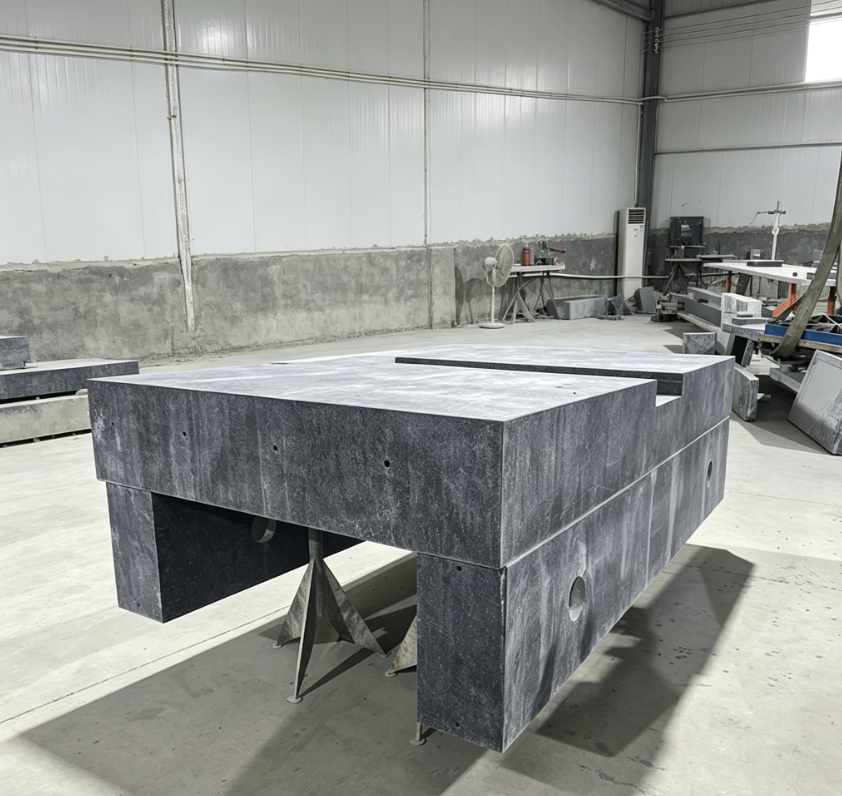
En el caso de equipos de gran tamaño o situaciones de carga pesada: se requieren nervaduras de refuerzo o estructuras tipo cajón para evitar la deformación bajo cargas prolongadas.
III. Paso 3: Personalización y componentes complementarios (adapta el sistema a tu equipo)
Una parte importante del valor de una plataforma de granito radica en su personalización. Debes confirmar los siguientes puntos con el fabricante:
Estructura de instalación y fijación
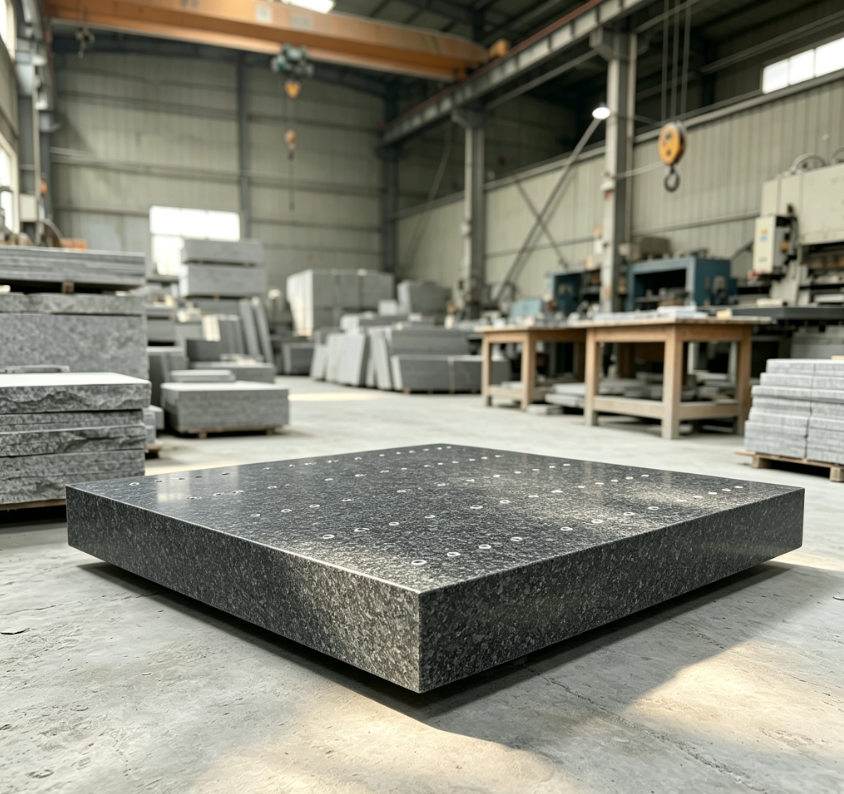
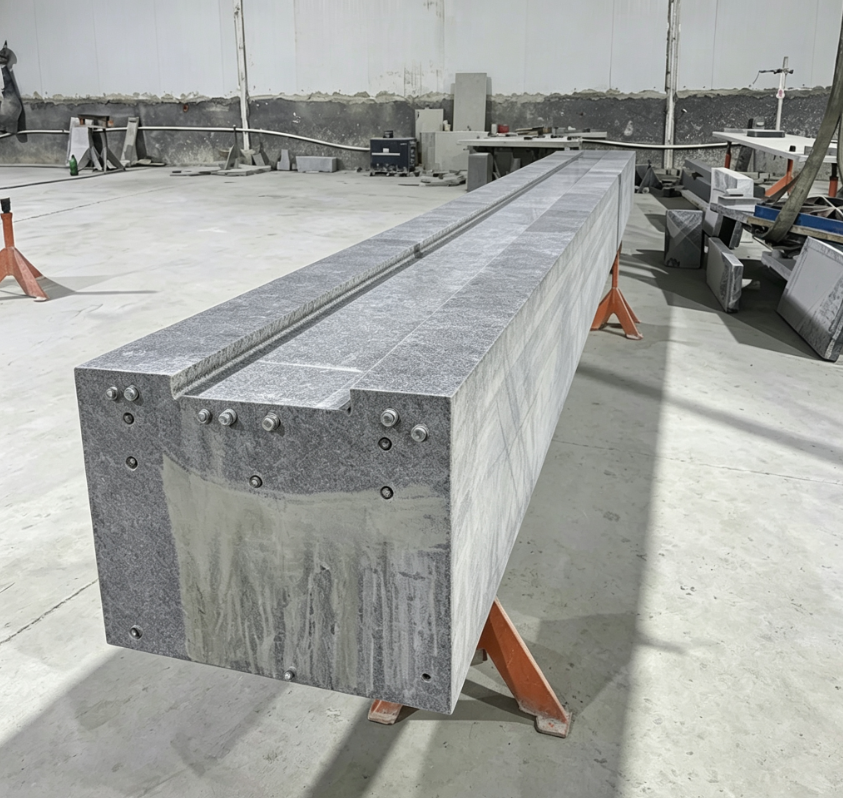
¿Necesitas ranuras en T, orificios roscados, orificios avellanados u orificios para pasadores de posicionamiento a medida? Las dimensiones de los orificios y las tolerancias de posición deben coincidir con la base de tu equipo 100%;
En el caso de equipos de gran tamaño, ¿necesitas una plataforma con juntas? La planitud y la estanqueidad de la junta deben controlarse rigurosamente.
Configuración del sistema de amortiguación de vibraciones
El efecto amortiguador de vibraciones de la plataforma se debe, en parte, a la propia piedra y, en parte, a los amortiguadores de soporte:
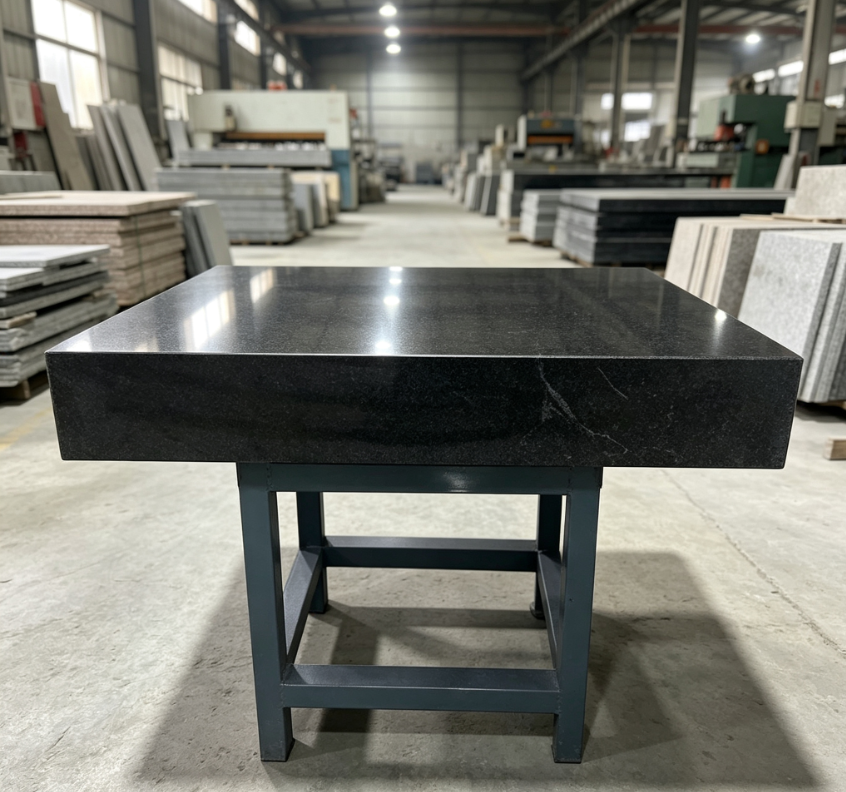
Talleres normales (sin vibraciones intensas): elegir almohadillas de goma amortiguadoras / patas niveladoras ajustables;
Fuentes de vibraciones intensas (prensas, compresores de aire): Es necesario seleccionar amortiguadores con cojinetes neumáticos o plataformas de aislamiento pasivo de vibraciones para impedir la transmisión de vibraciones a través del suelo;
Equipos ópticos y de semiconductores de alta precisión: Se pueden equipar con un sistema activo de aislamiento de vibraciones para hacer frente a las microvibraciones de baja frecuencia.
Tratamiento de superficies y requisitos especiales
Equipo estándar: solo requiere un rectificado de precisión y un tratamiento de sellado anticorrosivo;
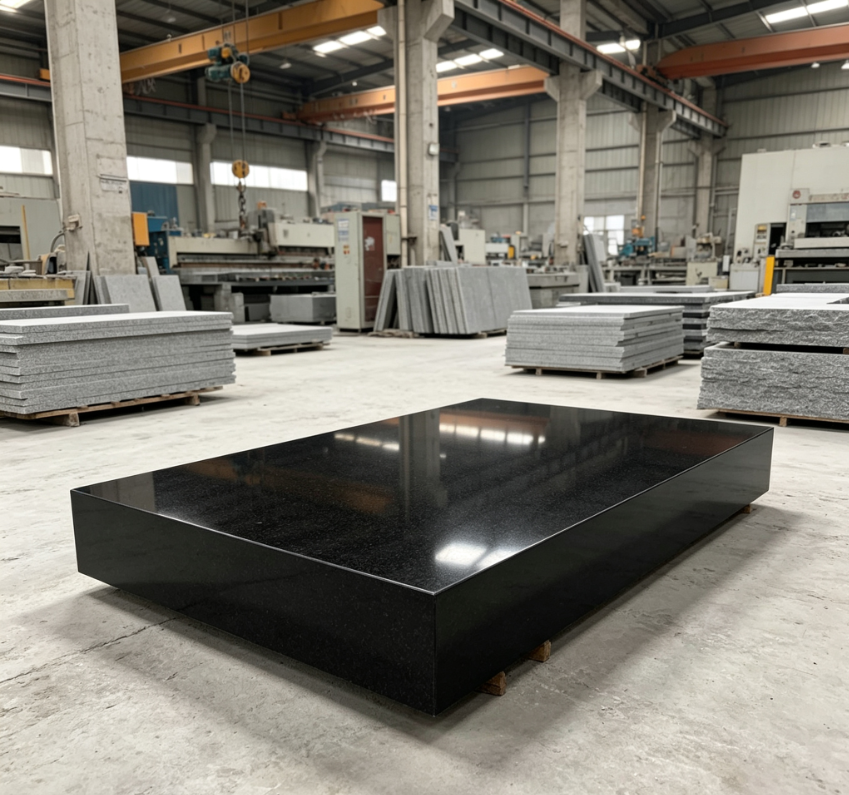
Salas blancas / Equipos de semiconductores: Requieren un pulido a espejo y un sellado limpio para evitar el polvo y los residuos de aceite;
Entornos especiales: Se pueden aplicar recubrimientos resistentes a los ácidos y a los álcalis para mejorar la resistencia a la corrosión.
IV. Paso 4: Garantía del fabricante y de la entrega (fundamental para evitar problemas)
Comprobar las capacidades de procesamiento y los informes de inspección
Solicitar al fabricante que facilite informes de inspección sobre la planitud, el paralelismo y la perpendicularidad de la plataforma; preferiblemente emitidos por un organismo de metrología independiente, para evitar adquirir productos que, según el fabricante, sean de “alta precisión”;
Comprobar el proceso de tratamiento del envejecimiento
Las plataformas de alta calidad se someten a un proceso de envejecimiento natural y artificial (vibración/tratamiento térmico) para eliminar las tensiones internas y evitar deformaciones posteriores; los productos de menor calidad no se someten a este tratamiento de envejecimiento y experimentarán una pérdida de precisión en el plazo de medio año;
Consulta los servicios posventa y de calibración
En el caso de las plataformas de alta precisión, se recomienda elegir fabricantes que ofrezcan servicios de calibración y mantenimiento in situ, especialmente en el caso de las plataformas de gran tamaño, ya que la calibración in situ garantiza la precisión de la instalación;
Comprobar el embalaje y el transporte
Las plataformas de granito son componentes de precisión propensos a sufrir golpes y roturas durante el transporte; por ello, es necesario que el fabricante utilice un embalaje de protección completo, con marcos de madera y almohadillas de espuma amortiguadoras, para evitar daños durante la entrega.
V. Ejemplos de selección rápida (comparación directa)
Cuadro
Tipo de equipo | Piedra recomendada | Grado de precisión | Referencia de espesor | Configuración de amortiguación de vibraciones
CMM (máquina de medición por coordenadas) | Verde de Jinan / Negro de Shanxi | Grado 00 | 200-300 mm | Amortiguador con cojinete neumático
Equipo de procesamiento con láser de femtosegundos | Granito no magnético | Grado 0 | 200-250 mm | Almohadillas pasivas de aislamiento de vibraciones
Base para máquina de grabado y fresado CNC | Granito negro común | Grado 1 | 150-200 mm | Patas de nivelación ajustables
Herramientas para líneas de montaje automatizadas | Granito negro común | Grado 1 | 100-150 mm | Almohadillas amortiguadoras de goma