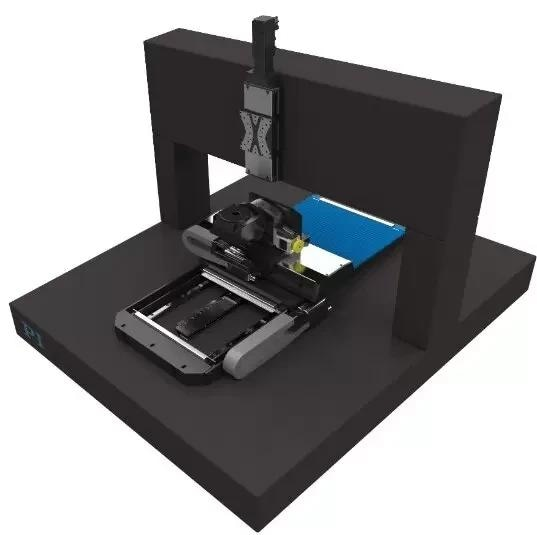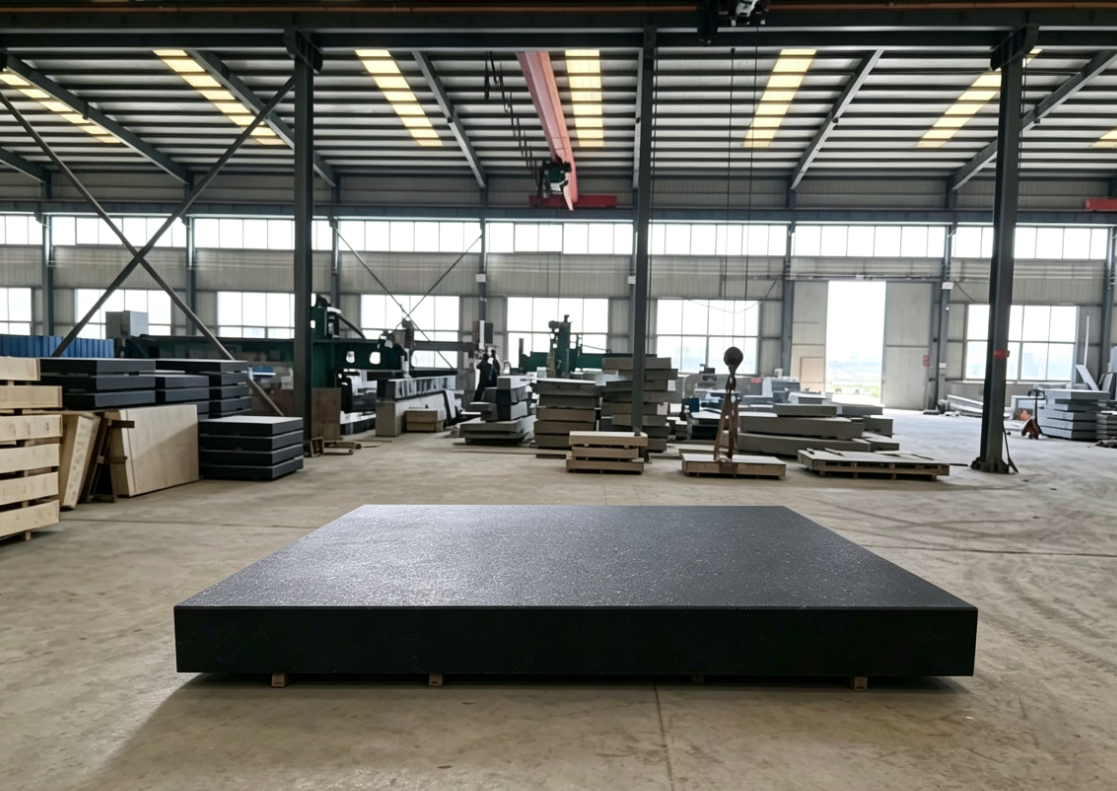
Complete Maintenance Plan for Marble (Granite) Motion Platform Base
Core Characteristics of Granite Base: High hardness, wear resistance, and good thermal stability, but high brittleness, susceptible to impact, acids/alkalis, and long-term water seepage into joints. Maintenance is divided into four parts: daily cleaning, periodic maintenance, protection taboos, and emergency damage handling.
I. Daily Cleaning (Daily / After Each Shift)
- Dry Dusting (Preferred, no corrosion risk)
First, use a lint-free brush or lint-free dusting cloth to lightly sweep dust, metal chips, and grinding powder off the tabletop;
Use a lint-free anti-static vacuum cleaner for fine dust; do not blow directly with high-suction industrial fans (dust may embed into installation threaded holes and guide rail reference slots);
For air-floating platforms, do not blow high-pressure air guns directly onto the tabletop at close range to prevent dust from being forced into the air bearing mating surfaces. - Wet Cleaning (Used when there are oil stains or cutting fluid residues)
Compliant Cleaners
Preferred: Neutral stone-specific cleaners, pure water a small amount of neutral dish soap (pH 6~8);
Alternative: Anhydrous ethanol (alcohol) for wiping small amounts of oil stains; it evaporates quickly and leaves no water stains.
Prohibited
Strong acids (hydrochloric acid, rust removers, etching liquids), strong alkalis (caustic soda, heavy-duty degreasers), acetone, banana oil, and oxalic acid. These will corrode the stone crystals, cause the surface to turn white and lose luster, and reduce precision.
Wiping Steps
Dip a lint-free non-woven cloth in diluted neutral cleaning solution and wipe in a single direction; do not scrub back and forth vigorously;
Use cotton swabs to spot-clean threaded holes, guide rail slots, and joints;
Immediately wipe dry with a dry lint-free cloth. Never let water stains remain on the tabletop for a long time. Water seeping into the stone’s micropores will cause internal efflorescence and surface pitting;
Any cutting fluid or coolant drips must be cleaned up during the shift; do not leave them overnight. - Additional Requirements for Cleanrooms
Platforms for semiconductor and optical equipment cleanroom standards: Only use lint-free paper deionized water for wiping. Once a week, use isopropyl alcohol for light degreasing, and blow dry slowly with clean air after wiping.
II. Periodic Maintenance (Weekly / Monthly / Yearly) - Weekly Inspection
Check the tabletop for fine scratches, chipped edges, and water stains or white spots;
Clean all threaded installation holes and positioning slots of accumulated dust to prevent expansion bolts from jamming;
Check sealant strips and joints for cracks or water seepage. - Monthly Protective Maintenance
After completely cleaning the tabletop, apply a thin layer of stone-specific penetrating protective agent (silicone-based waterproof and oil-proof agent);
Function: Seals the micropores on the granite surface, blocks oil and water vapor from penetrating, and extends the precision lifespan of the base material;
Apply the protective agent in a thin layer and let it sit for 30 minutes to absorb excess liquid. Do not let it accumulate into a film to avoid affecting the fitting precision of the guide rails;
Note for air-floating bases: The protective agent must not be applied to the air supply reference surface or the air bearing mating area. - Annual Professional Calibration and Maintenance
Re-measure flatness, straightness, and reference hole position accuracy, and record the data to compare the degradation over the years;
Disassemble guide rails and motor mounting seats, and clean the dust from the base contact surfaces;
Check the leveling bolts at the feet and re-calibrate the platform level to avoid long-term stress deformation;
If the tabletop shows large areas of loss of luster or micropore contamination, contact the manufacturer for light grinding and refurbishment.
III. Protection During Use (Avoiding Permanent Damage, Top Priority)
- Impact and Bump Prevention (The Main Cause of Stone Scrap)
Handle workpieces, tooling, and measuring instruments with care; prohibit metal workpieces from directly dropping onto the tabletop;
Place polyurethane soft rubber pads or felt pads under heavy workpieces; prohibit direct dragging of steel parts and hard fixtures;
Platform edges and right angles are the most fragile; install rubber anti-collision corner protectors; keep forklifts and tools away from the base sides;
When transporting the entire base, strictly follow the manufacturer’s lifting point markings; prohibit single-point lifting to avoid internal stress cracks. - Temperature and Humidity Control, Isolation from Corrosive Environments
Ideal environment: Constant temperature ±0.5~2℃, humidity 40%~60%;
Avoid direct sunlight and hot air from equipment blowing directly onto the base; large local temperature differences will cause micro-deformation, accelerating accuracy drift over the long term;
Install splash guards at machining stations; strictly prohibit cutting fluids, electroplating chemicals, and chemical reagents from flowing onto the stone surface;
Install dehumidifiers in high-humidity workshops to prevent long-term condensation and water accumulation on the tabletop. - مواصفات الحمولة
Place workpieces and fixtures evenly; avoid long-term single-point heavy pressure to prevent local compressive stress;
Do not exceed the platform’s rated design load; long-term overloading will cause irreversible micro-deformation. - Temporary Idle Protection
Downtime exceeding 3 days: Cover the tabletop with a dust-free and moisture-proof protective film; Long-term downtime (exceeding 1 month): Cover with a waterproof and dustproof cover, place desiccant, and close workshop doors and windows to reduce moisture and dust accumulation.
IV. Absolutely Prohibited Operations (Red Lines, Local Repair Impossible Once Damaged)
Prohibit using steel wool, sandpaper, or hard scrapers to polish the tabletop, as they will leave permanent deep scratches;
Prohibit cleaning with strong acids, strong alkalis, rust removers, or bleach;
Prohibit high-temperature welding slag and plasma sparks from directly falling onto the tabletop; high-temperature burning will cause the stone’s crystal phase to burst and create pits;
Prohibit direct grinding or cutting of workpieces on the tabletop; this causes double damage from metal debris scratches and high temperatures;
Prohibit direct rinsing of the entire base with a water hose; water entering the gaps will cause internal efflorescence and whitening.
V. Emergency Handling of Common Minor Damage
Surface oil stain penetration white spots: Multiple neutral cleaner protective agent sealing to slow diffusion; severe stains can only be repaired by factory regrinding;
Fine shallow scratches: Manual polishing with mild polishing paste and a soft cloth; if the reference accuracy is not affected, it can continue to be used;
Small chipped corners: Small notches that do not involve guide rails or measurement reference surfaces can be filled with stone-specific repair adhesive; if the reference surface is chipped, it must be sent back to the factory for regrinding;
Water stain white spots: Wipe dry immediately apply waterproof protective agent to prevent micropores from continuously absorbing water and expanding the damage.
VI. Simplified Maintenance Cycle Summary
Daily: Dusting immediate cleaning of stains;
Weekly: Check corners and edges, clean dust accumulation in grooves;
Monthly: Stone waterproof and oil-proof protection;
Annually: Accuracy re-measurement, leveling, and deep cleaning of the entire machine;
3~5 Years: Evaluate whether factory regrinding is needed to restore the tabletop reference based on the operating environment.