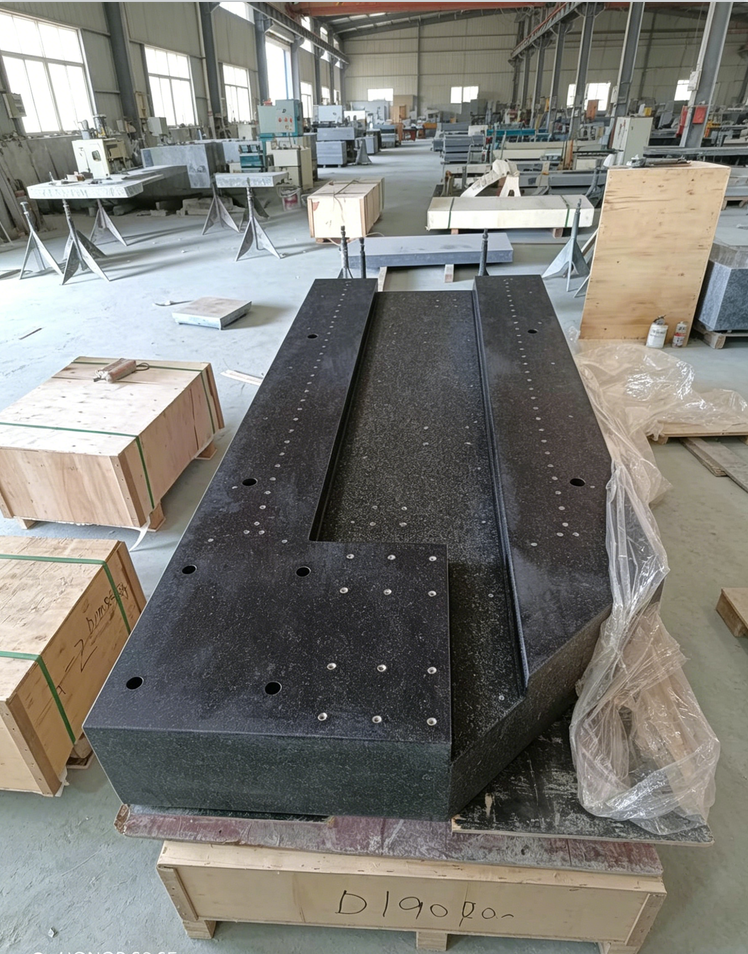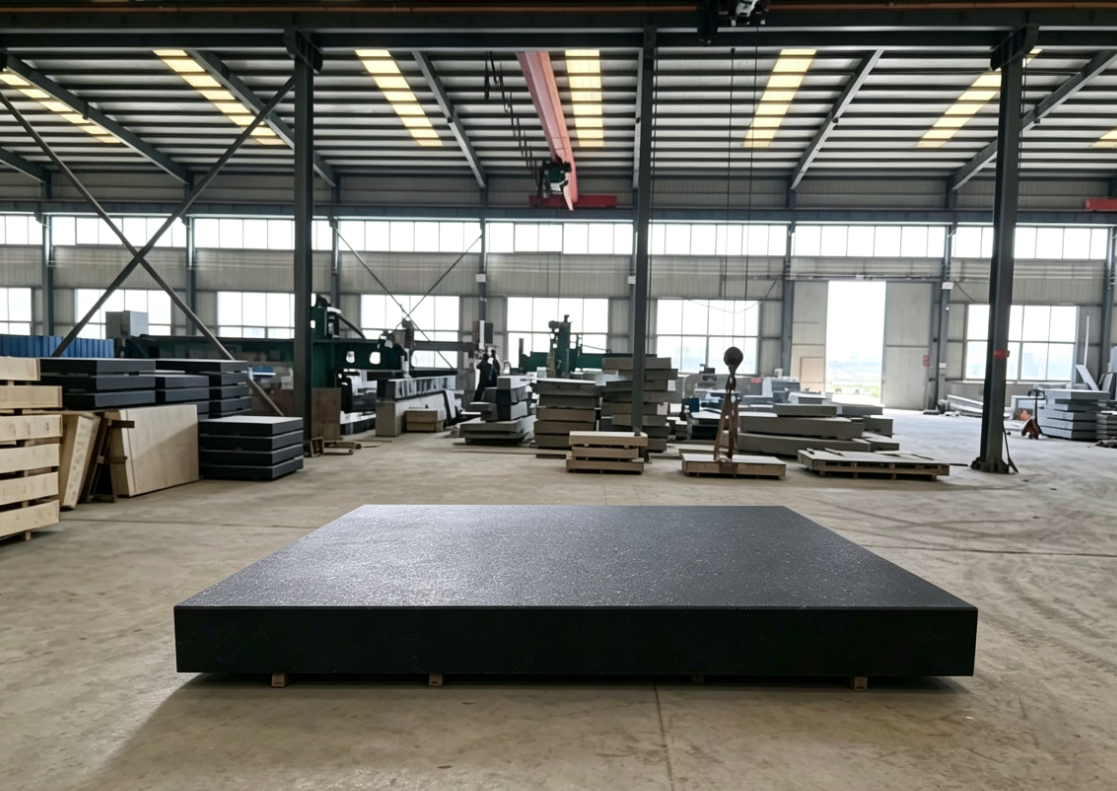
Granite Surface Plate vs. Cast Iron Surface Plate: Which is Better for Laboratory High-Precision Measurement?
Direct Conclusion: For laboratory precision measurement, prioritize the Granite Surface Plate, as its accuracy and stability comprehensively outperform the cast iron surface plate.
I. Core Key Comparisons (Points Affecting Measurement Accuracy)
- Temperature Deformation (Most Critical for Laboratories)
- Granite: Extremely low coefficient of thermal expansion; remains almost unchanged with minor temperature fluctuations, resulting in minimal thermal drift.
- Cast Iron: High coefficient of thermal expansion; undergoes slight expansion/contraction with room temperature changes, leading to significant precision drift with temperature.
- 👉 Even slight fluctuations in laboratory constant temperature disadvantage cast iron; granite is more stable.
- Long-Term Dimensional Stability
- Granite: Natural stone aged by nature over millions of years; free of internal stress, no creep, and permanent deformation resistance.
- Cast Iron: Contains internal stress from casting; undergoes slow stress release and gradual warping over time, leading to precision degradation after a few years of use.
- Vibration Damping and Shock Resistance
- Granite: High damping coefficient due to crystalline structure; strong shock absorption and vibration reduction; external vibrations do not affect measurement readings.
- Cast Iron: Hard but rigid; strong transmission of vibration; even slight vibrations can interfere with precision detection and cause dial indicator needle jumping.
- Surface Precision and Wear Resistance
- Granite: Extremely high hardness and wear resistance; can be ground to ultra-high flatness and high surface finish; resistant to scratches and burrs.
- Cast Iron: Average hardness; prone to dents and wear; the reference surface easily loses accuracy with long-term use.
- Rust and Maintenance
- Granite: Non-rusting, non-magnetic, oil-resistant, and cutting fluid resistant; no need for rust prevention maintenance.
- Cast Iron: Extremely prone to rust; requires regular application of rust-proof oil or paint; rust spots directly destroy flatness accuracy.
- Structural Uniformity
- Granite: Dense and uniform material, free of pores and sand holes; good consistency across the entire plate’s reference surface.
- Cast Iron: Prone to pores, shrinkage porosity, and material inhomogeneity; local precision varies.
II. When Can a Cast Iron Surface Plate Be Used?
Only Suitable For:
Ordinary workshop layout, tooling assembly, rough inspection, and heavy-duty knocking operations.
Not Suitable For:
Laboratories, metrology rooms, CMMs, and precision instrument calibration.