I. Mineral and Chemical Basic Properties
Chemical Composition
SiO₂ content 65%–78%, high-silica acidic rock; Al₂O₃ 12%–17%, rich in potassium and sodium; ferromagnesian dark minerals <10%, overall light-colored rock system.
Mineral Proportion
Feldspar 40%–60%, quartz 20%–40%, mica/amphibole <10%; uniform grain size, granitic crystalline structure, no bedding (distinguishes it from marble).
Structural Texture
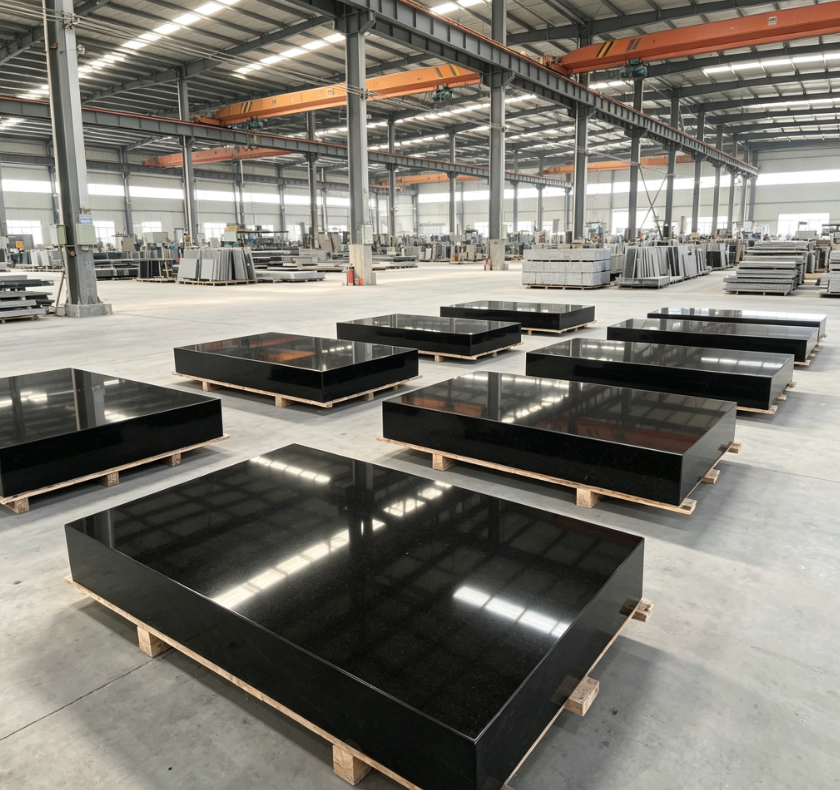
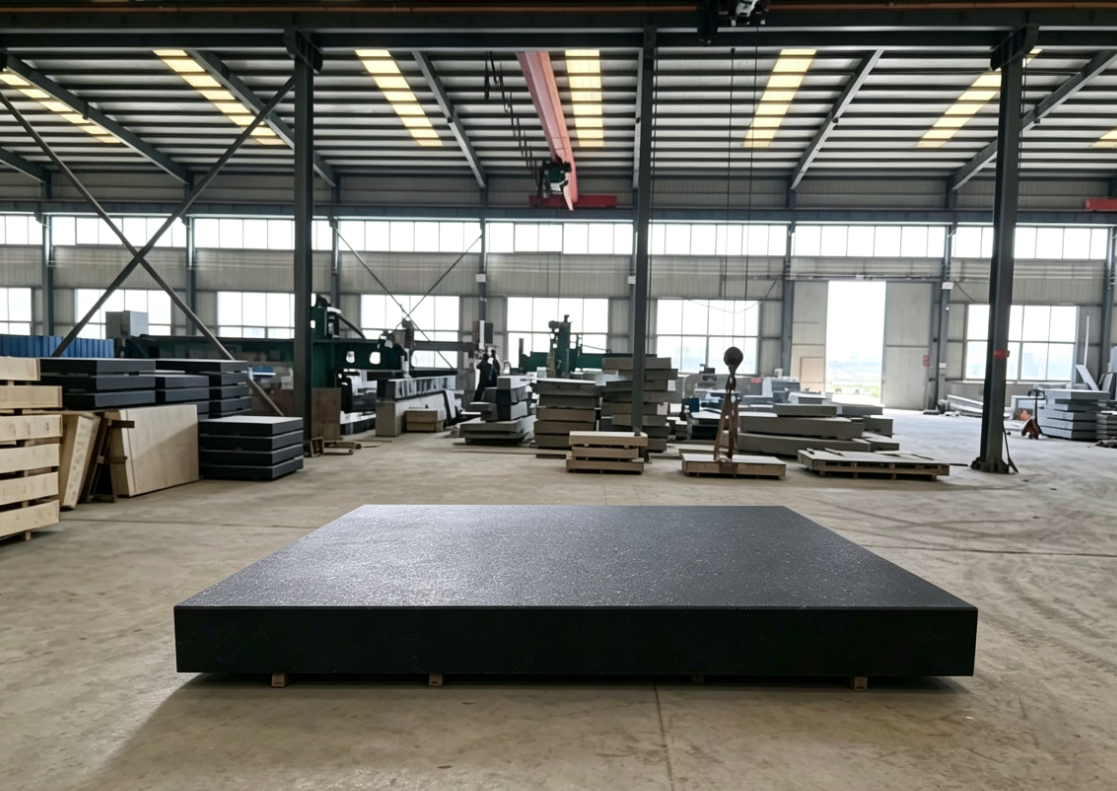
Dense massive, no fissures, no flaky bedding; divided into fine-grained, medium-grained, and coarse-grained; fine-grained granite has the best dimensional stability (used for machine tool measuring platforms).
II. Core Physical Properties (Most Prominent Advantages)
- Extremely High Hardness and Wear Resistance
Mohs hardness 6–7, higher than marble (3), ordinary steel, and ceramic tiles; daily tools and keys cannot scratch the surface.
Shore hardness 71–79, minimal wear from long-term foot traffic and friction, suitable for plazas, driveways, and kitchen countertops. - High Strength and Deformation Resistance
Compressive strength: fine-grained 147–284MPa, medium-grained 117–147MPa, coarse-grained 78–98MPa, extremely strong load-bearing capacity.
Minimal elastic deformation, extremely low coefficient of thermal expansion (4.7–9×10⁻⁶/℃), dimensions remain almost unchanged with temperature fluctuations, making it a core material for precision CMMs and inspection platforms.
Density 2.6–2.8g/cm³, high self-weight, good stability, and anti-overturning. - Low Water Absorption, Waterproof and Frost-Resistant
Porosity 0.04%–2.8%, water absorption rate only 0.11%–0.7%, almost no water or oil seepage.
Freeze-thaw resistance: can withstand 200 repeated freeze-thaw cycles at -40℃ without cracking; long-term use in outdoor cold regions without cracking or crumbling. - Thermal Stability and Temperature Difference Tolerance
Does not easily crack under sudden cooling or heating at room temperature; however, continuous high temperatures above 800℃ will cause quartz crystal phase transformation and overall shattering, so it cannot be baked over an open flame for long periods. - Processing and Surface Effects
Polishing can achieve a high mirror gloss; can be processed with flamed, leather, brushed, or antique finishes; good performance in cutting, drilling, and grooving.
III. Chemical Corrosion Resistance
Extremely strong acid and alkali resistance: ordinary hydrochloric acid, sulfuric acid, strong alkalis, and acid rain do not corrode, whiten, or dissolve the surface upon long-term contact;
Only weakness: hydrofluoric acid (HF) will corrode quartz, so use with caution in chemical environments containing HF;
Weathering and oxidation resistance: does not discolor or powderize after decades of outdoor exposure; ancient buildings and stone tablets can be preserved for a thousand years.
IV. Appearance, Color, and Texture Characteristics
Color tones are determined by minerals: feldspar is whitish/flesh-red, mica has black spots, and iron oxides appear red; common colors include sesame white, sesame gray, black gold sand, Indian red, green diamond, etc.;
Every slab has a unique texture, natural speckled crystalline texture, with no repeating patterns;
After polishing, the crystal reflection is delicate, with a heavy and premium texture.
V. Safety and Radioactivity
Natural stone contains trace amounts of uranium and thorium; Class A granite has extremely low radioactivity and is suitable for both indoor and outdoor use; Class B and C are only restricted to exterior walls; products that pass regular testing are harmless to the human body.
VI. Summary of Advantages and Disadvantages
Advantages
Hard and wear-resistant, pressure-resistant without deformation, strong dimensional stability;
Waterproof and frost-proof, acid and alkali resistant, extremely long outdoor weather resistance;
Natural and beautiful texture, good polished texture;
Low thermal expansion, non-magnetic, rust-proof (core advantage for industrial measurement platforms);
Non-combustible, resistant to aging, oil-resistant and easy to clean.
Disadvantages
High brittleness, prone to chipping and cracking under violent impact;
Relatively heavy, high handling and installation costs;
May crack at high temperatures (800°C );
Some dark-colored / red varieties have relatively high radioactivity and require testing;
Processing and cutting difficulty is greater than marble, with higher costs.
VII. Additional Characteristics of Industrial Granite (Machine Tools / Measurement Platforms)
Non-magnetic, does not attract metal chips;
Fully released internal stress, does not deform during long-term use;
Better vibration damping performance than cast iron, stable measurement accuracy;
Corrosion-resistant, does not rust or corrode the surface when long-term immersed in cutting fluid.