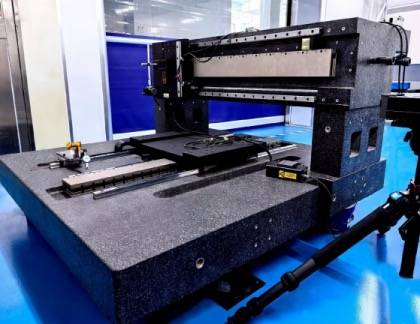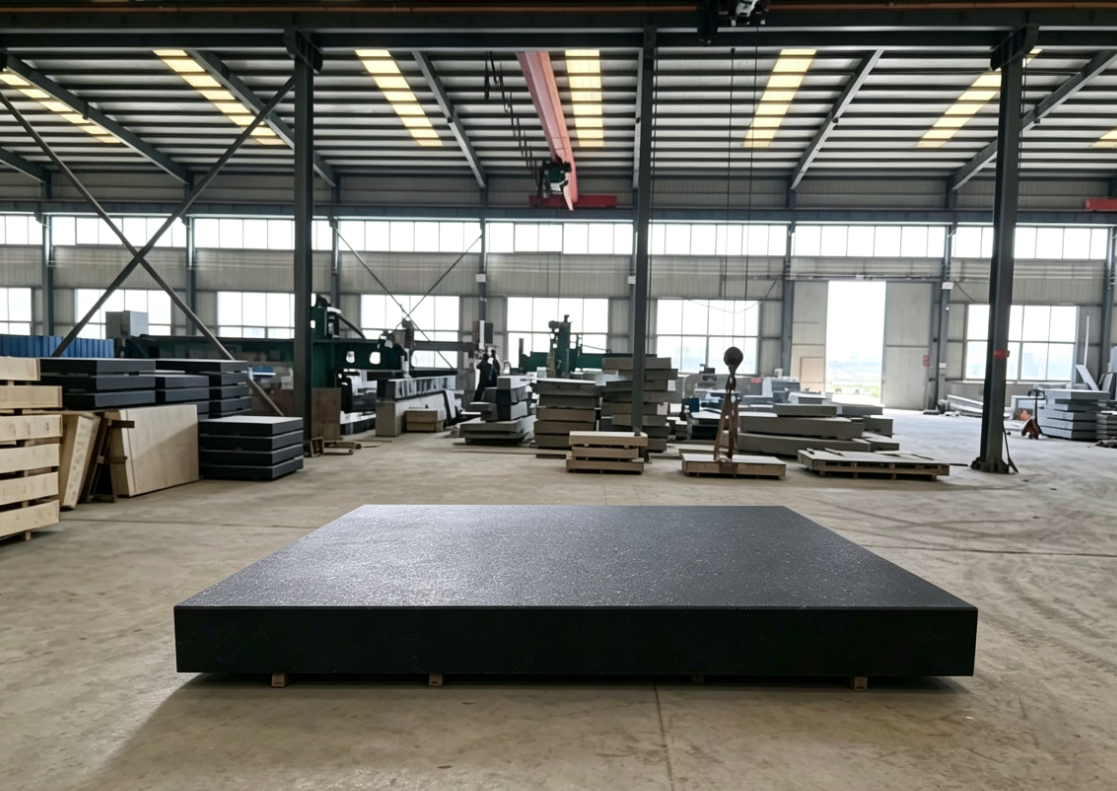
Emergency Handling Plan for Various Damages to Marble and Granite Motion Bases
Categorized by damage severity into six major types: slight stains and white spots, shallow scratches, small chipped edges and corners, oil and stain penetration, micro-cracks, and severe damage to the reference surface. Distinguishes between temporary emergency repairs (does not affect accuracy, allows temporary production) and permanent curative solutions.
I. Water Stains / Oil Penetration White Spots, Surface Efflorescence (Most Common Mild Damage)
Emergency Temporary Treatment (Quick on-shift handling)
Wipe the white spot area repeatedly with a lint-free cloth dipped in neutral stone cleaner deionized water;
Wipe with anhydrous ethanol to dissolve surface oil stains, immediately wipe completely dry with a dry cloth to eliminate residual moisture;
Use cotton swabs to absorb water from threaded holes and joints, and let dry thoroughly for 30 minutes.
Short-term Protective Repair
After drying, apply a thin layer of stone penetrating waterproof and oil-repellent agent to seal micropores, prevent water vapor and oil stains from further penetrating inward, and stop the white spots from expanding.
Permanent Cure
Large-area deep white spots cannot be completely wiped away and can only be returned to the factory for re-grinding of 0.05~0.1mm of the surface to remove the contaminated layer.
II. Shallow Fine Scratches on the Tabletop (Caused by dragging metal debris, no indentation)
Emergency Treatment (Operable on-site, no factory return)
Clean dust and oil from the scratched area and dry thoroughly;
Use stone-specific soft polishing paste lint-free felt cloth, manually polish in small circular motions;
Polish until the scratches fade to the naked eye and there is no resistance when touched by hand; do not polish forcefully to avoid causing tabletop collapse;
Wipe clean after polishing and apply a thin layer of protective agent.
Note
Deep scratches (noticeable unevenness by touch, width > 0.1mm) cannot be repaired on-site. Forced polishing will destroy the flatness and requires factory re-grinding.
III. Small Chipped Edges and Corners (Non-guide rail / Non-installation reference areas)
Applicable to: Small gaps, not on the module fitting reference surface, and equipment urgently needed for production temporary remedy.
Emergency Repair Steps
Clean dust and oil from the gap, wipe with alcohol, and dry completely;
Select a same-colored granite-specific epoxy repair adhesive (mineral-filled type), and fill the gap in small amounts in multiple stages;
The adhesive surface should be slightly lower than the tabletop by 0.02~0.05mm to avoid protruding adhesive affecting tool placement;
Cure at room temperature for 2~4 hours, then gently sand smooth with fine felt after curing;
Apply protective agent separately to the repaired area to reduce the rate of stain absorption.
Taboos
If the damaged area is the guide rail mounting surface, air-float fitting datum, or grating datum edge, on-site glue repair is prohibited. The hardness of the glue is inconsistent with the stone, which will create height differences after movement. It must be returned to the factory for precision grinding.
IV. High-temperature burn pits and local burn craters
Emergency treatment
Clean the carbonized powder at the burn site with a brush, and degrease and dry with alcohol;
Shallow pits: Locally polish flat with polishing paste to seal micropores;
Small deep pits: Fill and level with stone repair glue of the same material for temporary use;
Explanation
High-temperature burning changes the crystal structure of the stone surface, making it highly susceptible to absorbing dirt and turning white. It can only be covered in the short term, and long-term accuracy will be affected. For mass production, it is recommended to return to the factory for grinding.
V. Micro-cracks on the tabletop / base (caused by impact or hoisting stress)
Emergency protection (to prevent crack expansion)
Immediately reduce the load in the area, and prohibit heavy pressure of workpieces on the crack location;
Wipe dry all moisture, and strictly prohibit cutting fluid or water from seeping into the gaps;
Thinly brush transparent stone penetrating glue into the gaps to seal them and prevent water vapor from expanding the cracks;
Reduce sudden acceleration during equipment start-stop to lower vibration impact.
Judgment criteria
Fine surface hairline cracks, non-penetrating: Can be used temporarily for a short period, with regular re-inspection;
Penetrating cracks, or cracks extending to the guide rail mounting position: Stop the machine immediately, prohibit use, to prevent base fracture and complete loss of accuracy.
VI. Cured residue of glue and sealant
Emergency removal
Small amount of uncured glue: Wipe directly with a lint-free cloth dipped in alcohol;
Completely cured thin glue marks: Gently scrape off with a soft plastic scraper (steel scrapers are strictly prohibited), combined with slight polishing using polishing paste;
Large areas of thick glue clumps: Do not force-scrape, as it will peel off the stone crystals. Contact the manufacturer for local grinding.
VII. Severe damage to the datum surface (chipping / deep scratches on guide rail surface, air-float surface, or mounting datum)
Emergency plan: No on-site repair methods, only temporary damage control
Stop the machine, remove the corresponding linear module and air-float slider to avoid wearing out matching accessories;
Cover the damaged area to prevent dust and cutting fluid from entering the damage gaps;
Arrange to return to the factory for re-grinding the datum surface. In severe cases, the entire surface needs to be re-milled and calibrated for flatness and straightness.
Key reminder: Once the datum surface is damaged, any on-site repair glue or polishing will destroy the micron-level flatness accuracy. Temporary repair is only applicable to non-working surfaces.
VIII. General important rules for emergency treatment
All surfaces must be completely degreased and dried before any repair; repair glue adhesion will fail if water or oil is present;
Only soft consumables should be used for repair and polishing; sandpaper, steel wool, and hard grinding tools are prohibited;
After repair, apply stone protective agent to all areas to reduce subsequent contamination and corrosion;
Emergency repairs are only for short-term transitional use. For high-precision testing and semiconductor equipment, datum damage must be returned to the factory for precision grinding to avoid mass product defects.
Damage Quick Handling Reference Table
Table
Damage Type On-site Emergency Treatment Long-term Permanent Solution
Water stains and white spots Neutral cleaner waterproof protective agent Manufacturer grinds the surface layer
Shallow fine scratches Manual light polishing with polishing paste No need to return to factory
Small chipped corners (non-datum) Leveling with stone epoxy repair glue Return to factory for edge repair if appearance requirements are high
High-temperature burn pits Polishing sealing micropores with glue Return to factory for grinding to remove the burn layer
Surface micro-cracks Sealing gaps with penetrating glue, reducing load Replace / overhaul if cracks deepen
Datum surface chipping and deep scratches Only cleaning and protection, repair prohibited Return to factory for overall grinding and calibration