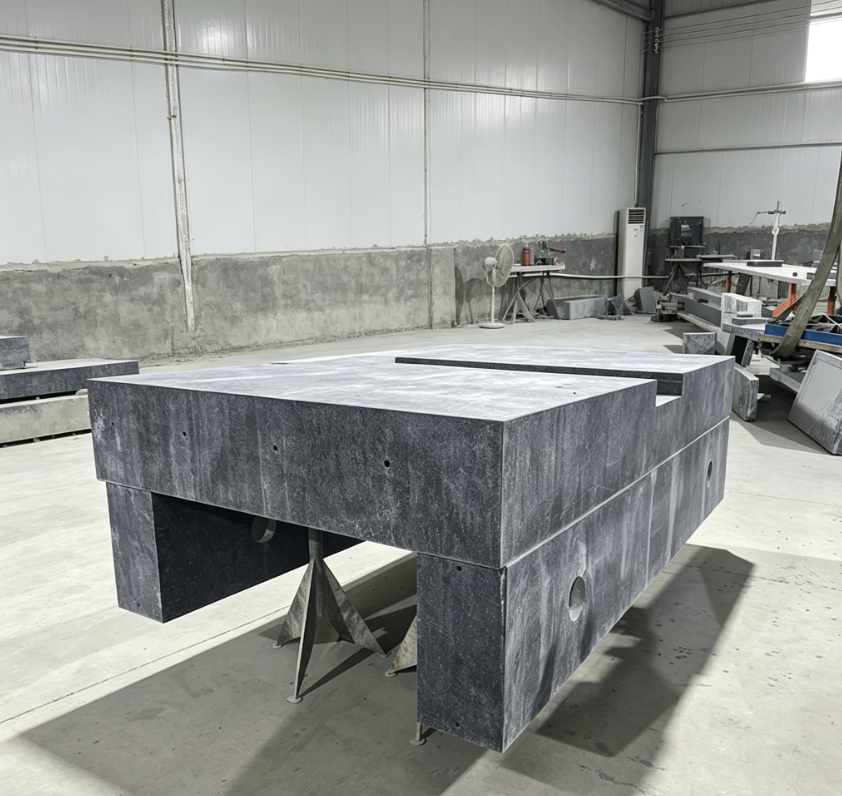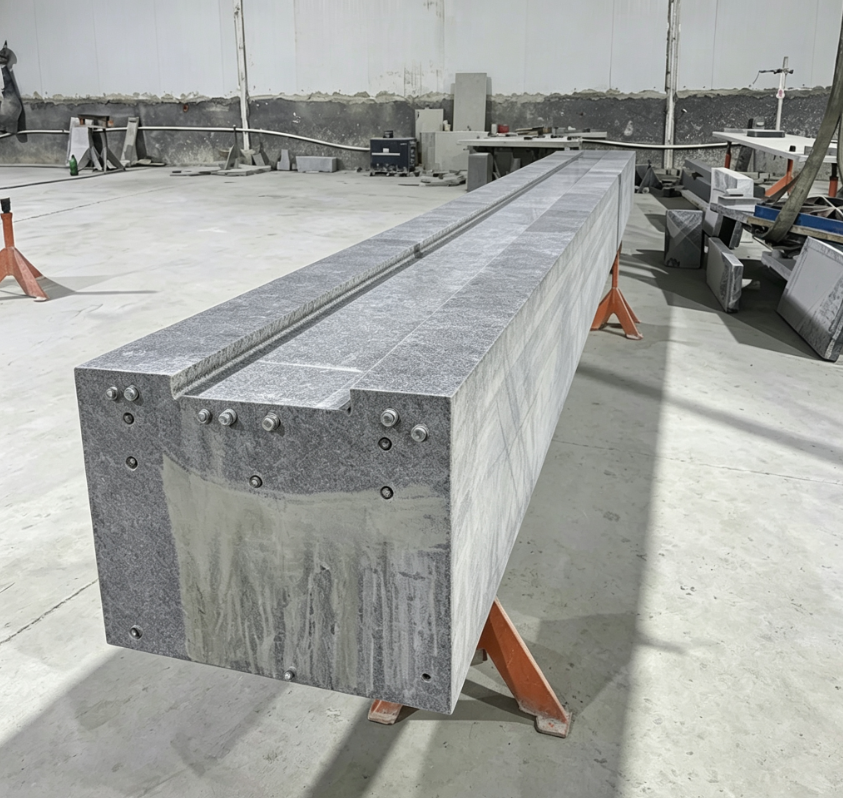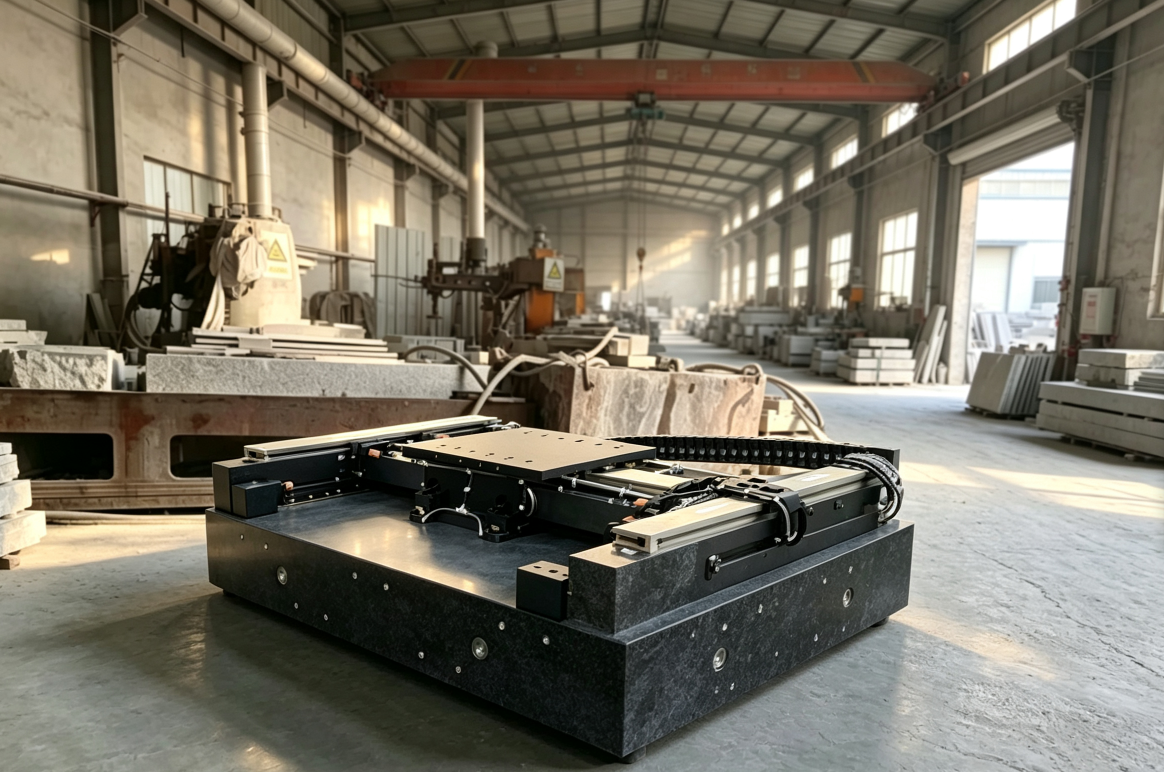
I. Inspect Appearance (Most Intuitive)
Water marks or damp stains appear on the surface.
Local color darkens, becomeull, or mottles, looking significantly different from dry areas.
If the stains reappear shortly after wiping dry, it indicates internal moisture return.
Mold spots, white frost, or black ots appear.
Black spots, white fuzz, or pale green mold grow on edges, corners, the back, or near screw holes.
White powder effloresces from poresalkali efflorescence), indicating severe moisture absorption.
Sides or bottom feel damp and shiny.
The bottom or sides of the platform feel dull and have a water sheen ttouch, which is a typical sign of moisture absorption.
II. Feel the Texture (Simplest Method)
The surface feels cool, sticky, or wet.
Normally, dry granite is ol and dry.
When damp, it feels sticky, cold and wet, and sticks to the hand.
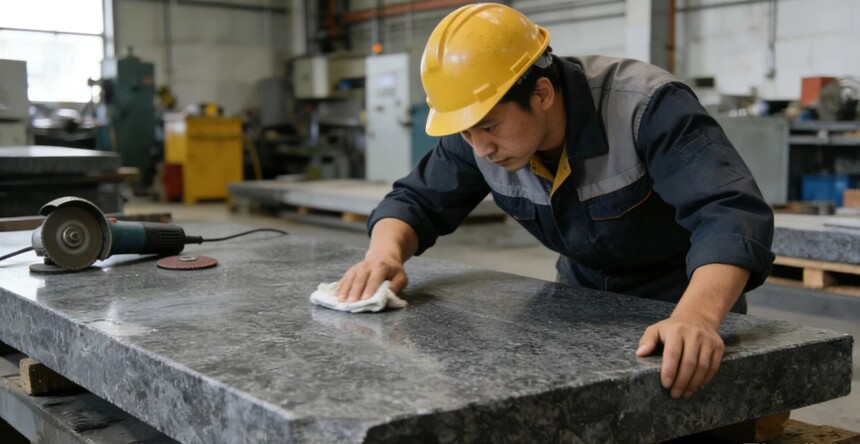
Press with a dry tissue or white cloth.
Press on the back, edges, orners of the platform for 10 seconds.
If the tissue becomes damp or shows water marks → Confirms moisture absorption.
III. Observe Environment and Symptoms (Auxiliary Judgment)
High etal humidity
Continuous rain, no dehumidification in the workshop, or moisture rising from the floor → The platform is likely damp.
Moisture in the bottom supports oe the wooden crate
Open the wooden crate or check the support feet:
If there are water droplets, fog, or mold on the wood → The platform is definitely damp.
Suddenstability in precision
Flatness, parallelism deteriorates for no reason, or there is excessive runout; after ruling out stress, suspect micro-expansion due to moisturet.
IV. Precise Judgment (Suitable for Quality Control / Acceptance)
Moisture Tester (Stone Moisture Meter)
Test the back or sides:
<2%: Noral and dry
2%–5%: Slightly damp
5%: Clearly damp
Weight Comparison
If a platform of the same specification is significantly heavier → It has absorbed water