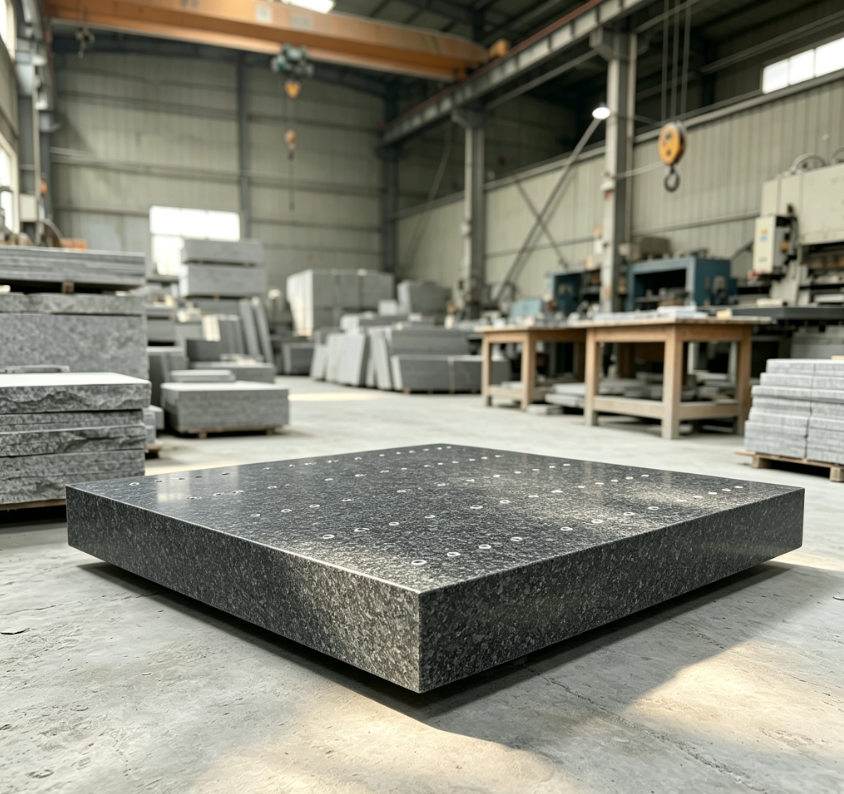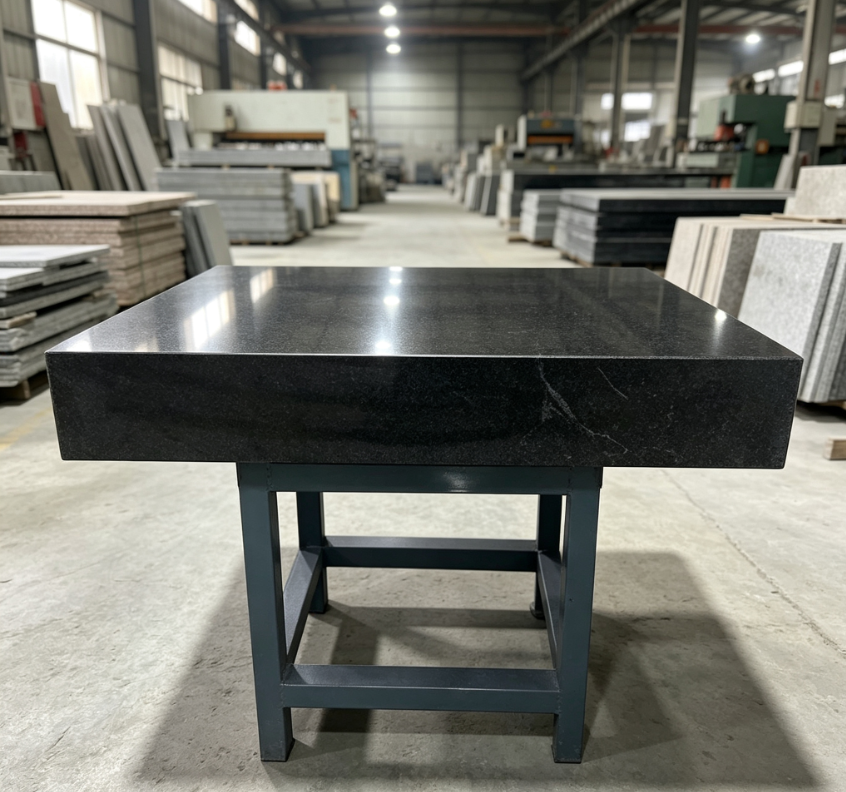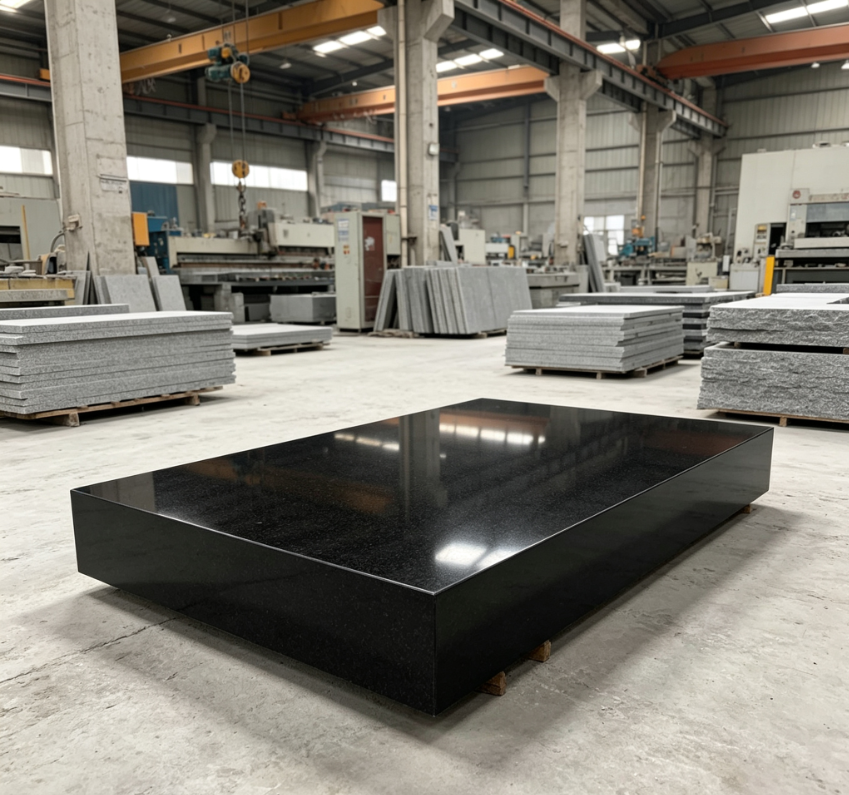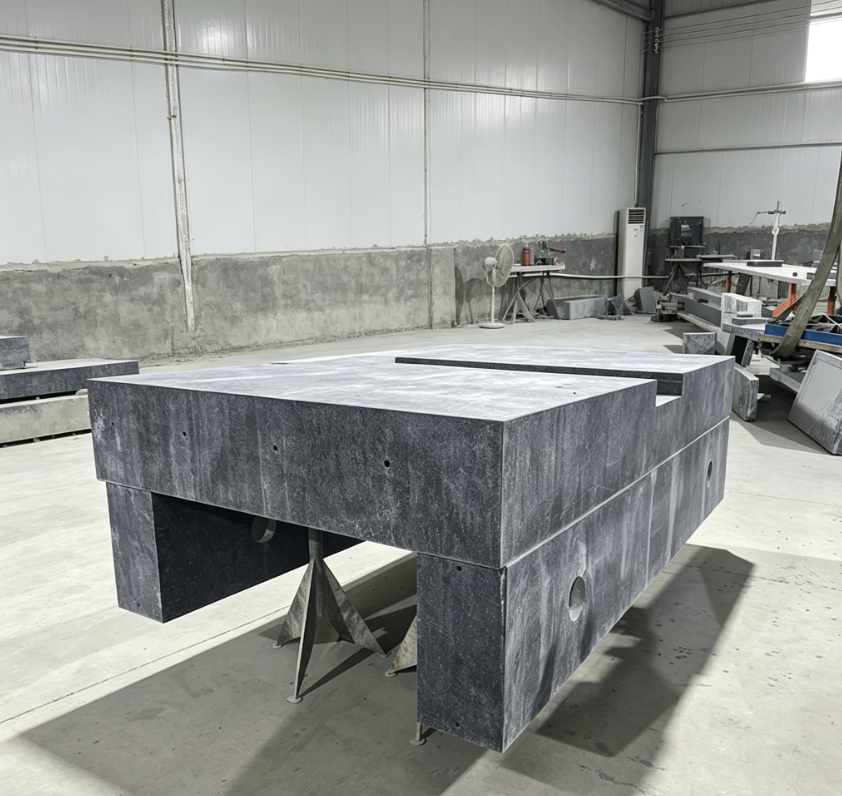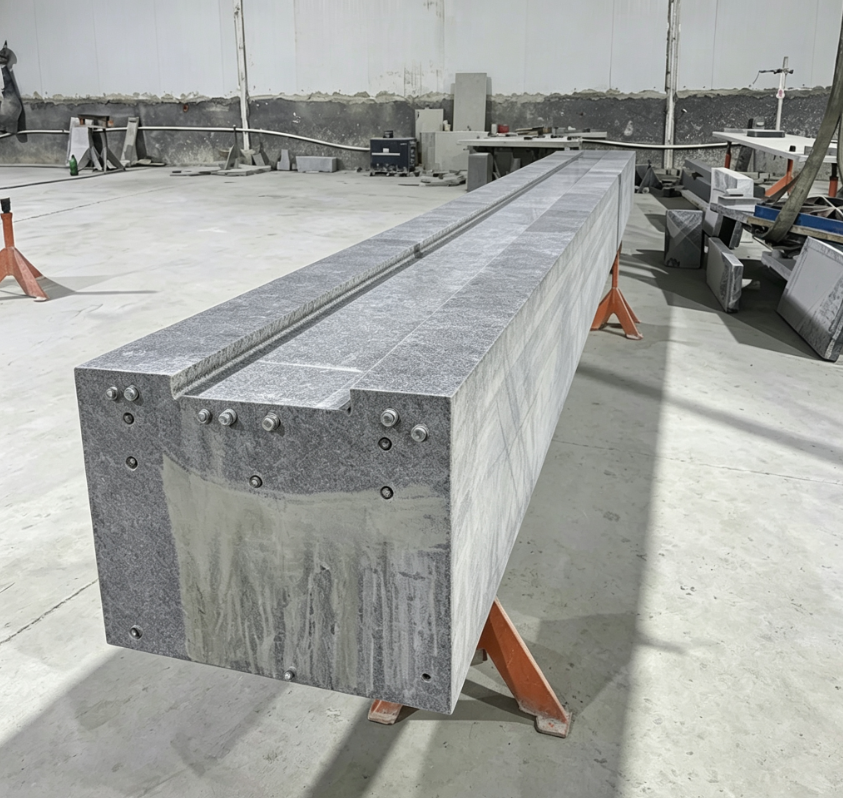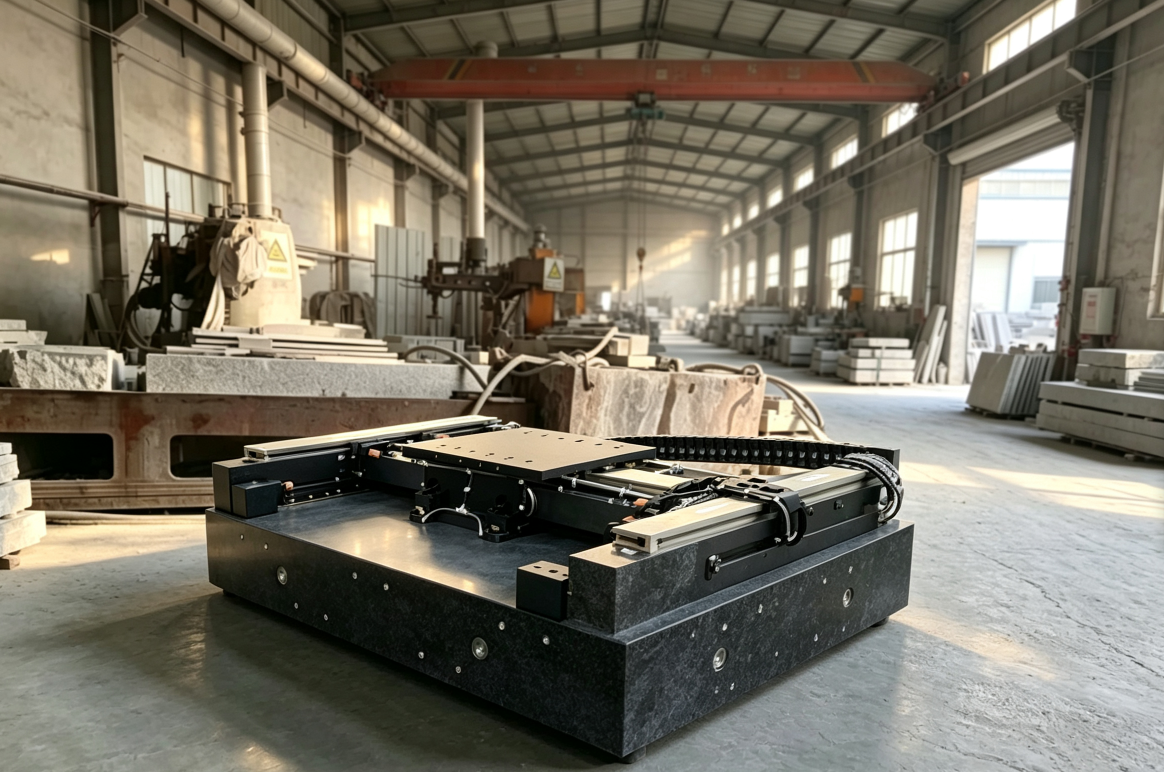
The core of the maintenance of granite bed (precision platform/base) is to prevent acid andali, waterproof, prevent physical damage, prevent temperature difference, and prevent pollution. The following are the top 8 common misconceptions and correct practices:
- Cleaning and Protection Misconceptions
- Misunderstanding: Granite is hard, so it can be washed directly with water / soaked.
Harm: Granite has microp, which are prone to water stains, efflorescence, yellowing, uneven internal stress, and precision drift after absorbing water. Moisture also breeds mold in a humid environment
Correct: Use neutral cleaners slightly damp soft cloth to wipe, immediately wipe dry with a dry cloth, and strictly prohibit water accumulation and long-term moisture.
2 Misunderstanding: Use any cleaner (vinegar, toilet cleaner, laundry powder, strong alkali)
Harm:
Acid (pH < 4): Oxid pyrite in granite, causing yellowing and surface corrosion. Alkali (pH > 10): Destroys the feldspar / quartz grain boundaries, grain shedding, loss of gloss, and precision decrease.
Experiment shows: Contact with cleaners with pH < 4 or > 10 for 10 minutes can reduce hardness by 30%–50%.
Correct: Only use pH 6–8 neutral precision cleaners / industrial alcohol, and strictly prohibit the use of strong and alkalis and cleaners with unknown ingredients. - Misunderstanding: Waxing / polishing agents can protect the surface
Harm: Ordinary wax contains acid alkali, which block micropores, form wax scale, yellowing, and affect flatness and measurement precision.
Correct: Precision beds do not require waxing; protection is needed, use special stone protection agents (penetrating type) that do not change the surface precision. - Physical and Usage Misconceptions
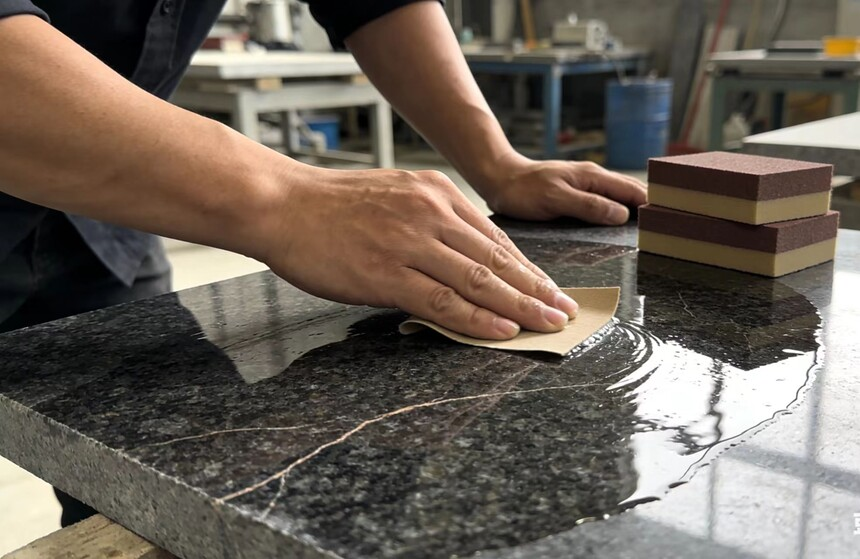
4.understanding: Use steel wool, hard brush, or sandpaper to clean
Harm: Although granite is hard (Mohs 6–7), hard tools will micro-scratches, which will increase roughness, reduce gloss, and deteriorate precision after accumulation.
Correct: Only use soft cloth, sponge, and lintfree cloth; for stubborn stains, use special stone cleaners and gently wipe. - Misunderstanding: Collision with hard objects / heavy pressure / direct cutting / grinding on surface
Harm: Granite is brittle, and local impacts are prone to hidden cracks, chipping, and block falling, directly damaging the flatness and precision.
rect: It is strictly prohibited to strike; place heavy objects gently; when processing / cutting, a special pad must be used to avoid direct contact with the bed.
6.understanding: Cover with debris / carpet / workpieces for a long time
Harm: It hinders the “breathing” of micropores, and the moisture at bottom cannot evaporate, resulting in uneven internal humidity, deformation, precision drift, efflorescence, and rust spots.
Correct: Do not cover for a long time; you need to place temporarily, lift regularly for ventilation and keep the surface dry and breathable. - Environmental and Maintenance Cycle Misconceptions
- Misunderstanding Granite is stable, so there is no need to consider temperature difference / humidity
Harm: Thermal expansion and contraction can cause changes in flatness, internal stress, and cracking; sudden changes in humidity affect dimensional stability.
Correct:
Avoid direct sunlight, direct air conditioning, and proximity to heat sources.
Maintain a stable environment±1–2℃) and humidity (40%–60%).
Install with reserved expansion joints to avoid rigid constraints. - Misunderstanding: Surface / scratches are not important, only precision matters
Harm: Micro-scratches can hide dirt and accelerate corrosion, affecting the measurement and machining datum, and leading an irreversible decrease in precision over time.
Correct:
Minor scratches: Use special polishing agents soft cloth for light polishing, without changing the flatness
Deep damage: Return to the factory for repair, and strictly prohibit self-grinding (which can easily damage precision).
Regular (every 1–2 years professional precision testing and maintenance.
IV. Summary: Key Points for Proper Maintenance
Cleaning: Neutral cleaner slightly damp soft cloth → wipe dry immediately → polish with a dustfree cloth.
Protection: No wax, use penetrating protectant; avoid contact with acidic or alkaline chemicals.
Usage: Prohibit impacts, heavy pressure, direct machining; do not cover for long periods.
Environment: Control temperature, humidity, avoid heat sources, and direct sunlight.
Cycle: Daily cleaning regular precision professional maintenance.