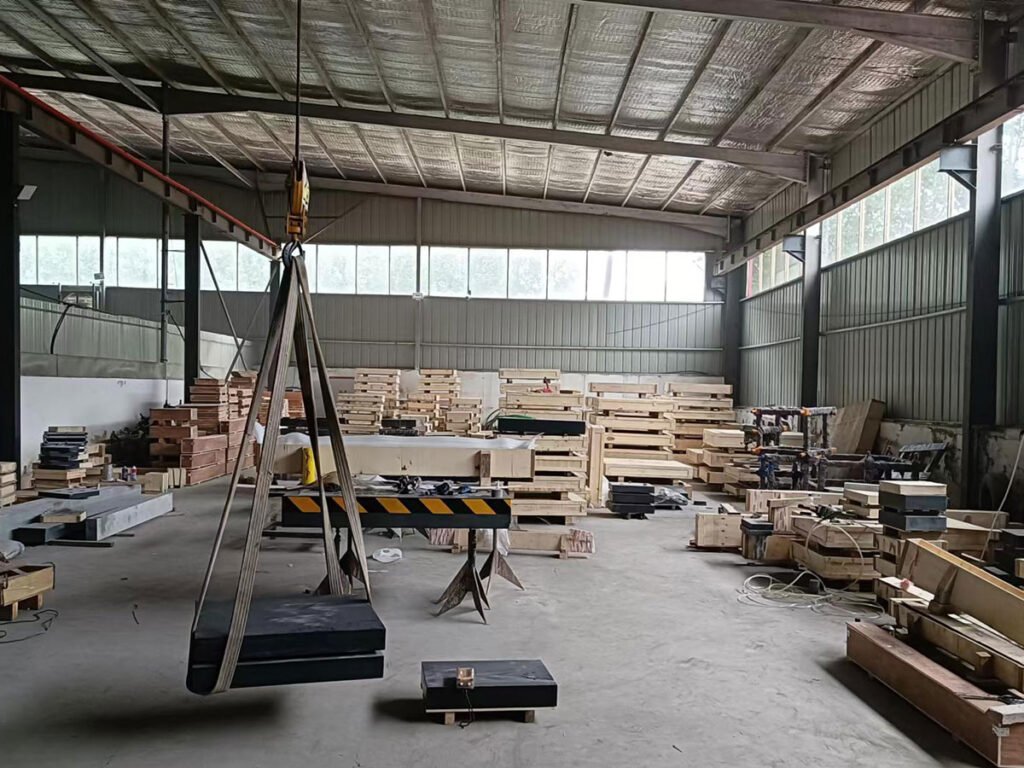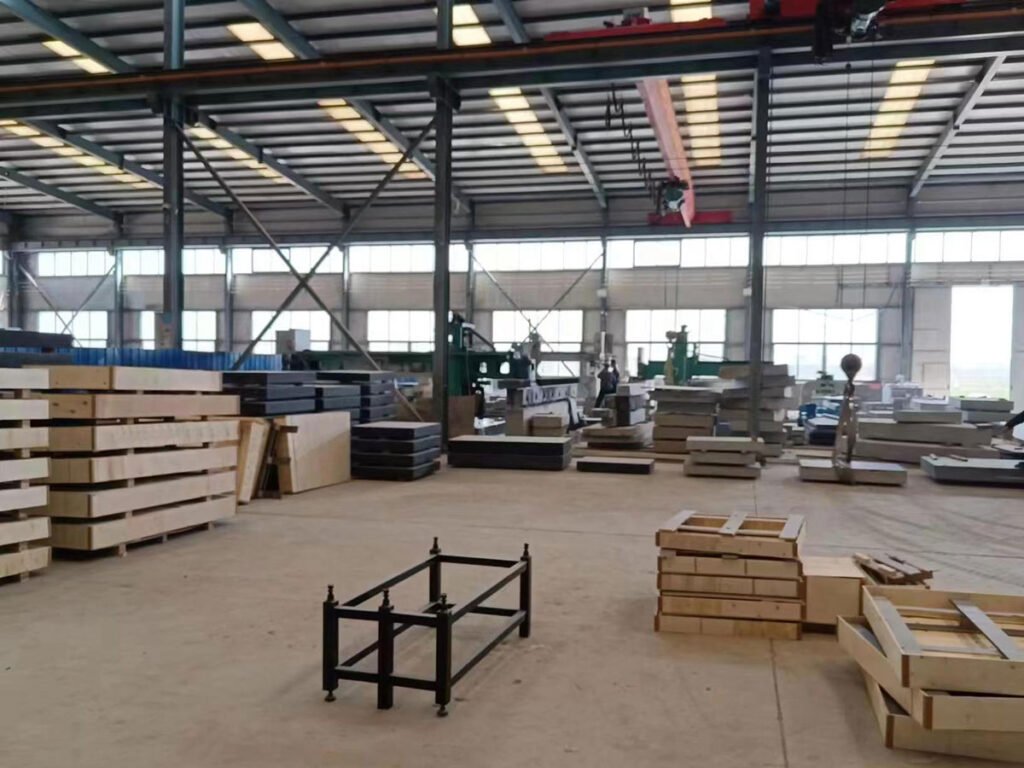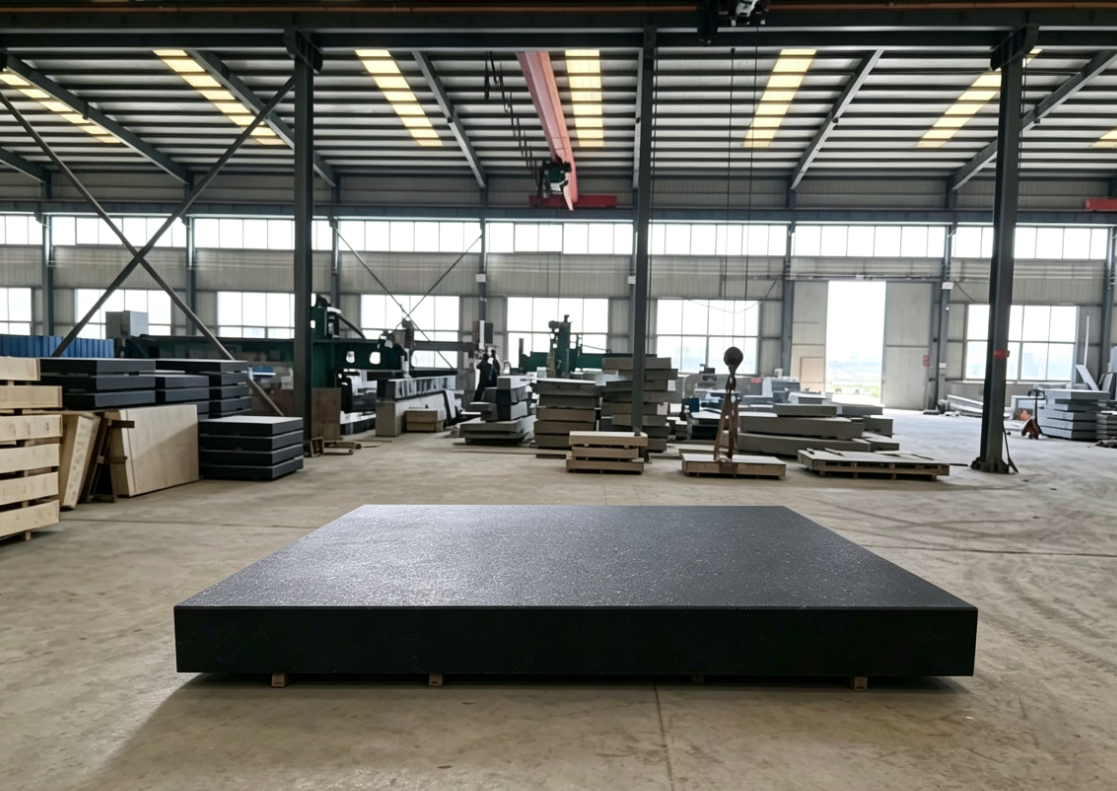
In the field of precision manufacturing, granite components play a crucial role in numerous industries due to their unique performance advantages. When custom production of granite components is required, sng the right supplier is critical. The following provides you with some purchasing guidelines from various aspects.
Industry Advantages
The custom production industry for granite components has developed rapidly in recent years, demonstrating significant advantages. With continuous technological advancements, the demand f instruments and equipment across various industries is growing. As a critical component of precision equipment, granite components possess characteristics such as stability and high precision, which meet the stringent requirements of theseustries. For instance, in scenarios such as precision instrument calibration and the support and guidance of precision equipment, granite components provide a precise foundation for stable equipment operation, helping customers enhance the precon levels of product processing and measurement. Furthermore, the application scope of granite components is extensive, covering fields such as aerospace, automotive manufacturing, semiconductors, and university research, ofbroad market prospects.
Características
Inherent Material Advantages: Granite possesses low expansion and resistance to thermal deformation, with a coefficient of thermal expansion ≤3×10⁻⁶/℃, which is only 1/3 to 1/4 that of metal. Precision drift over 5 years is ≤0.2μm, effectively reducing accuracy deviations caused by temperature changes. Furthermore, granite undergoes stress release over hundreds of millions of years underground, eliminating the need for stress relief treatment during use, resulting in excellent physical stability. Additionally, its dense crystalline structure offers vibration damping capabilities exceeding cast iron by 40%, providing natural vibration isolation for stable machining without the need for additional dampening devices. With a Mohs hardness of 6-7, it achieves a surface roughness of Ra0.02μm after grinding. It is immune to metal fatigue, with wear of less than 0.3μm over 10 years, ensuring high hardness and wear resistance to maintain precision.
Performance Adaptability and Upgrades: Tailored to meet demands transitioning from micromachining to nanomanufacturing, it enables ultra-high precision. For instance, a 1500mm straightedge customized for Zhejiang University achieves flatness, parallelism, and perpendicularity all ≤1μm. Simultaneously, granite components can be machined into complex structures and are compatible with diverse scenarios. They meet the low-stress base requirements of university laboratories while also being suitable for industrial laser equipment and coordinate measuring machines. Its natural insulation properties also protect against electromagnetic interference, making it ideal for semiconductor equipment.
Price
Price is one of the key factors to consider when selecting a custom granite component supplier. Generally, the price of granite components is influenced by variactors, such as material quality, size specifications, and the complexity of processing. High-quality granite materials have relatively higher costs, but in the long run, their total lifecycle cost is actuallower due to their long service life and low maintenance costs. For instance, after a car manufacturer adopted a granite inspection platform, the annual maintenance frequency decreased from 4 timo 1, and the cost dropped from 80,000 to 15,000; with a lifespan exceeding 30 years (compared to an verage of 15 years for metal), the total lifecycle cost was reduced by 45%. When selecting a supplier, one should not focus solely on price but should also consider the product’sity and cost-effectiveness comprehensively.
Marca
A supplier with a good brand reputation usually implies reliable product quality and guaranteed service. In the custom production industry of granite components, well-known brands are oftenme-tested by the market, having accumulated rich experience and a good reputation.
Reputation is one of the key indicators for evaluating a supplier. You can understand a supplier’s reputation by checking customer reviews and case studies.