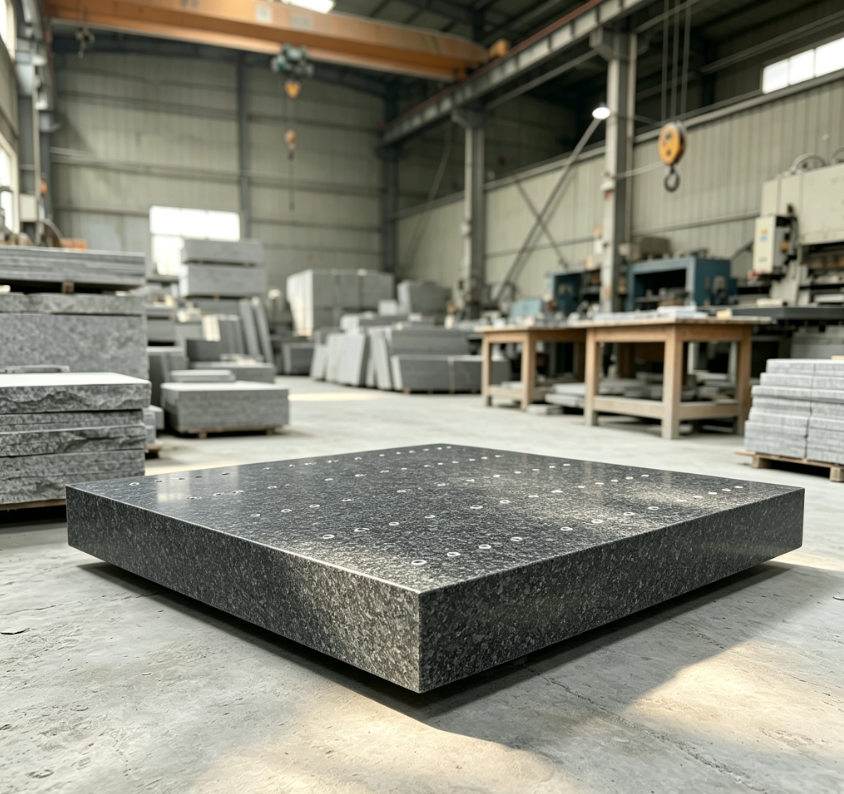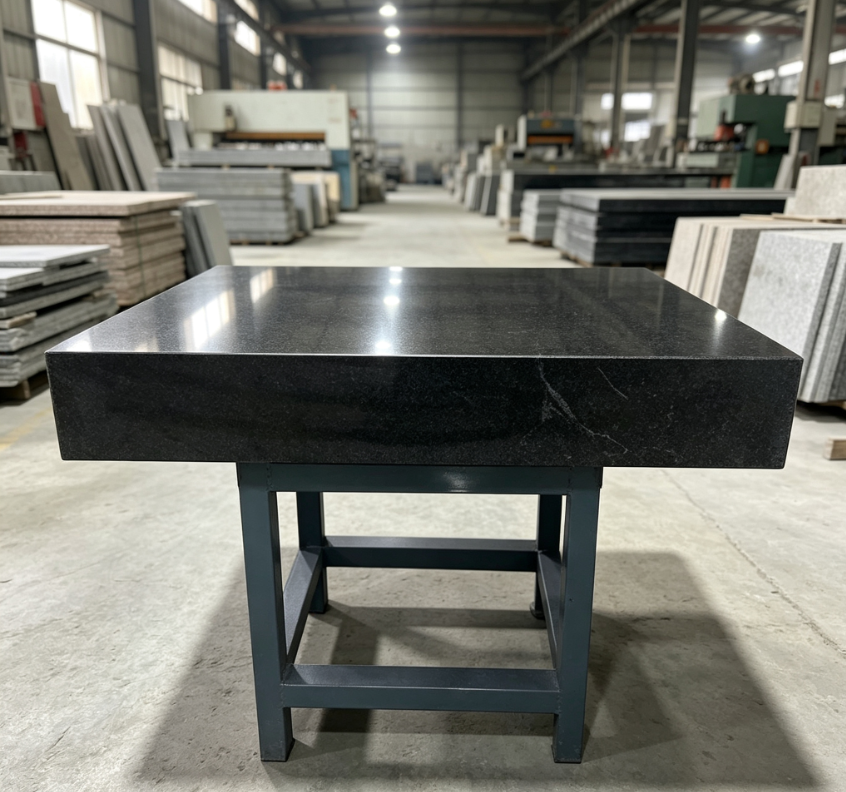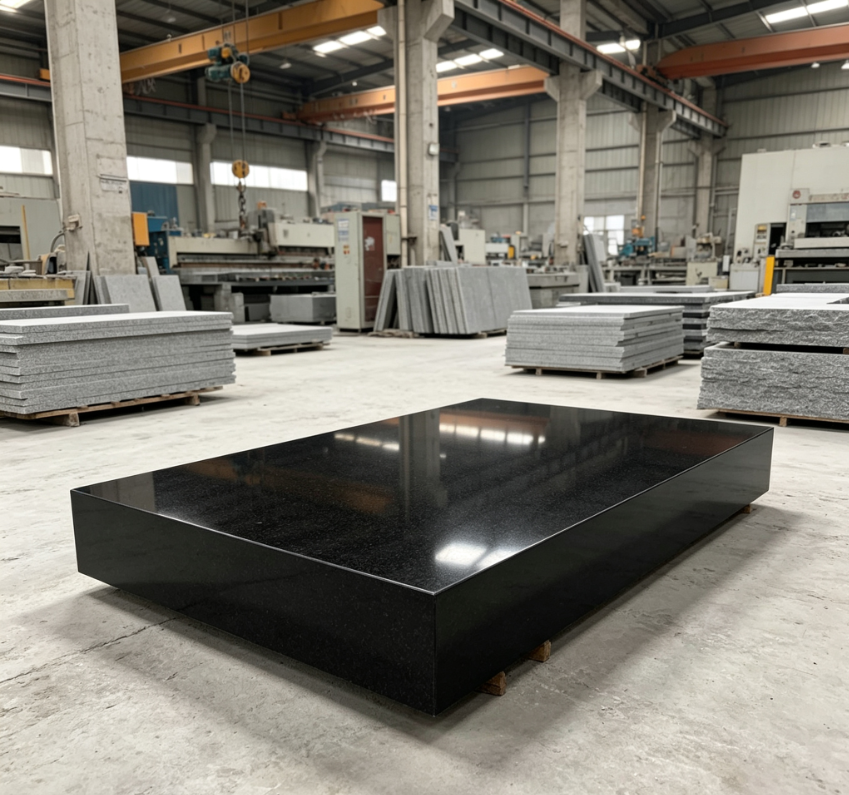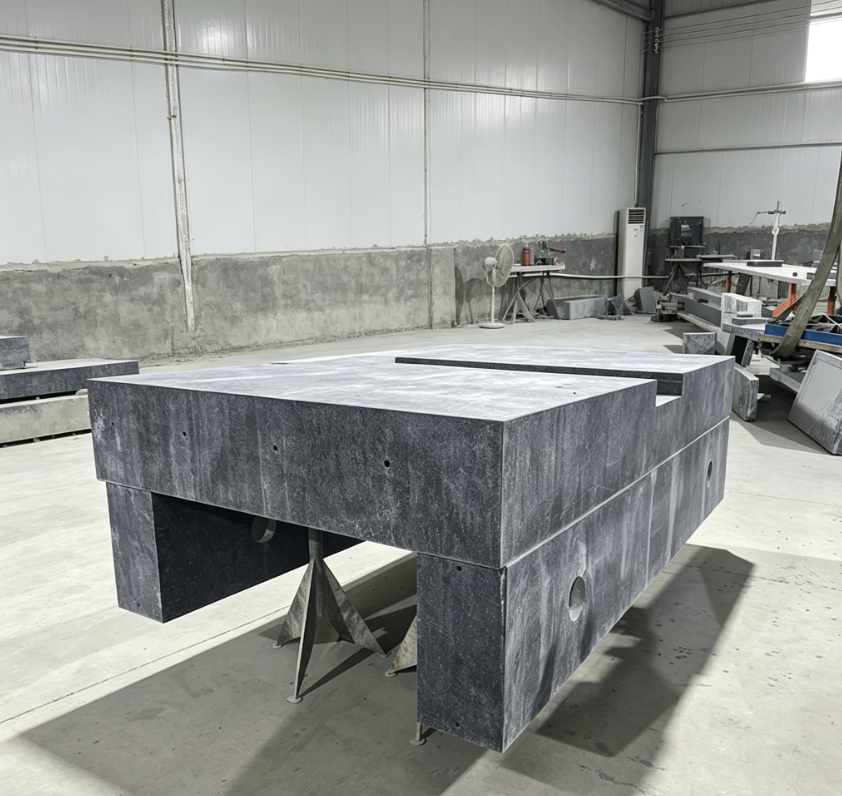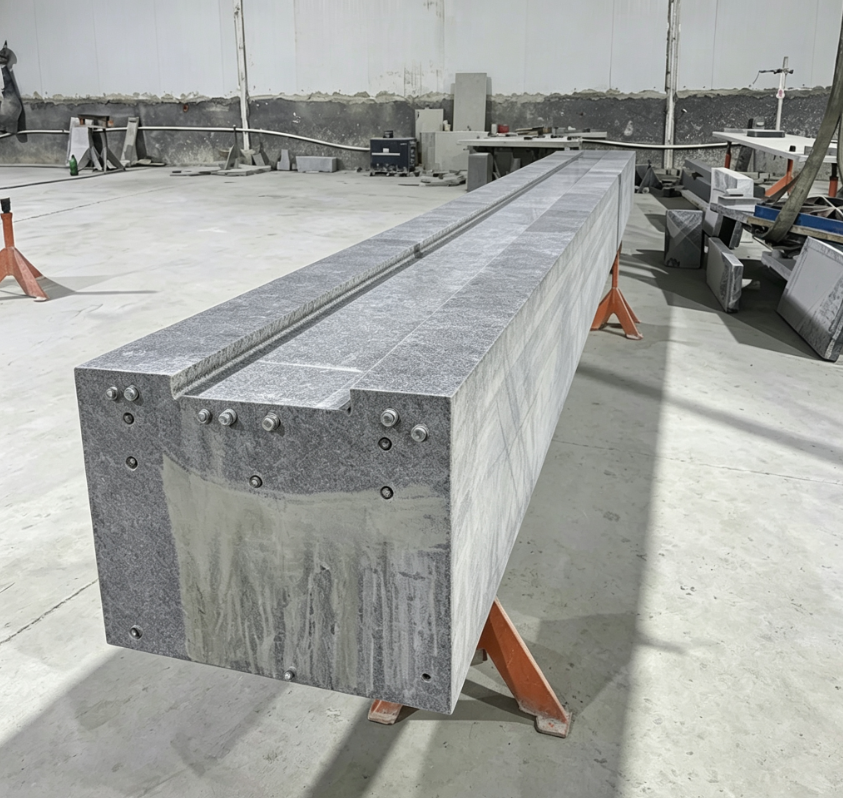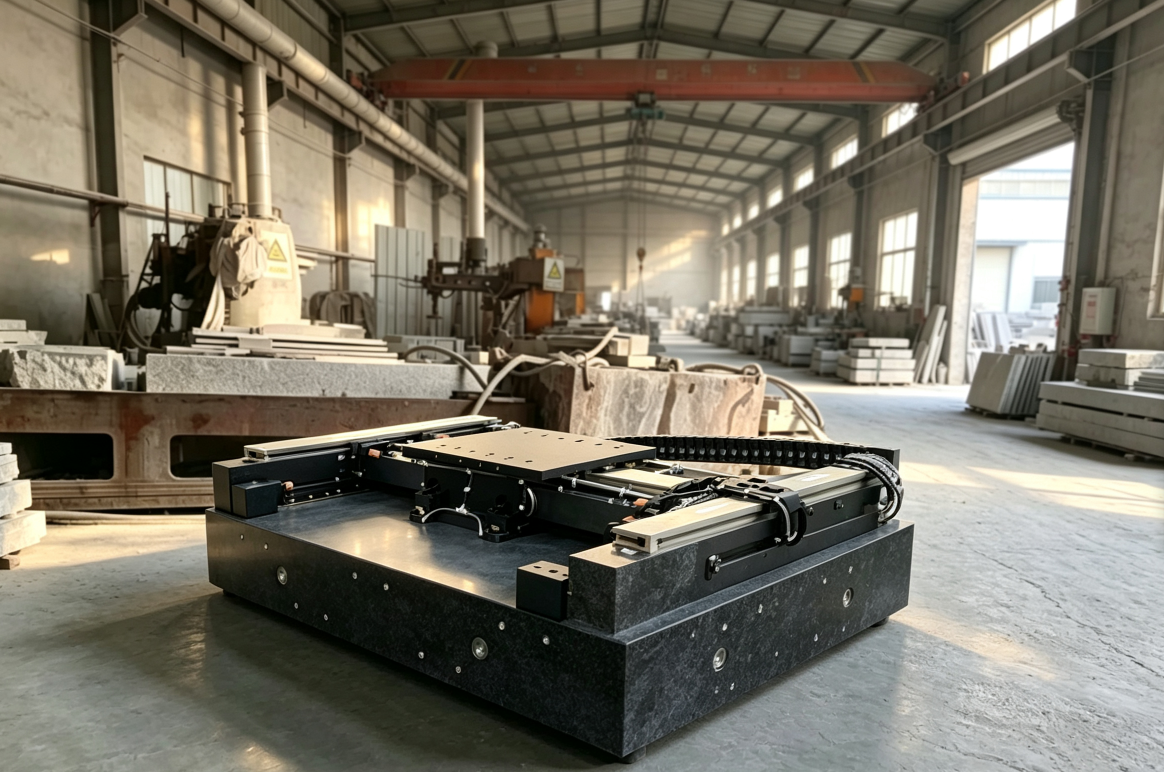
Las herramientas de medición de granito han demostrado ventajas significativas en el campo de la medición de precisión debido a sus propiedades materiales únicas. A continuación se exponen sus principales ventajas y análisis específicos:
- Alta precisión y estabilidad a largo plazo
Precisión de mecanizado a nivel de micras:
Después del procesamiento mecánico y el rectificado manual de precisión, el error de planitud del granito se puede controlar dentro de ± 0,01 milímetros (precisión de nivel 00), y la rugosidad de la superficie puede ser tan baja como Ra 0,32 μ m, cumpliendo con los requisitos de medición de ultra precisión en la industria aeroespacial, instrumentos ópticos y otros campos.
Índice de deformación extremadamente bajo:
El coeficiente de dilatación lineal es de sólo 4,6 × 10 -⁶/℃, comparable al del acero al indio, y se ve mínimamente afectado por las fluctuaciones de temperatura. Bajo una diferencia de temperatura de ± 2 ℃/24h, la deformación puede ignorarse para garantizar la fiabilidad a largo plazo de los resultados de medición.
Liberación total del estrés:
Tras miles de millones de años de tratamiento de envejecimiento natural, la tensión residual interior ha desaparecido por completo, la estructura organizativa es densa y uniforme, y no se deforma tras un uso prolongado. La retención de precisión supera con creces la de las herramientas de medición metálicas. - Excelente resistencia al medio ambiente
Gran resistencia a la corrosión:
Estabilidad química, resistencia a la corrosión ácida y alcalina, sin óxido, sin necesidad de mantenimiento con aceite. En condiciones duras, como talleres químicos y entornos marinos, puede seguir manteniendo una superficie lisa y una precisión de medición, con una vida útil de varias décadas.
Antiinterferencias magnéticas:
Como material no metálico, no reacciona a la magnetización y puede evitar los errores de medición causados por la magnetización en las herramientas de medición metálicas. Es adecuado para escenarios como la detección de componentes electrónicos y el procesamiento de materiales magnéticos que requieren el aislamiento de campos electromagnéticos.
Aislamiento eléctrico:
Su propiedad no conductora lo hace seguro y fiable en entornos sensibles a la alta tensión o la electrostática, evitando que los resultados de las mediciones se vean afectados por interferencias de corriente. - Durabilidad y bajo coste de mantenimiento
Gran dureza y resistencia al desgaste:
La dureza Mohs alcanza 6,5, la resistencia al desgaste es 5 veces superior a la del hierro fundido, y la superficie tiene una fuerte resistencia al rayado tras el rectificado, lo que la hace adecuada para el uso a largo plazo en entornos de cargas pesadas.
Baja tasa de absorción de agua:
El índice de absorción de agua es de sólo 0,13%, lo que dificulta la adherencia de polvo o líquidos, es fácil de limpiar y los arañazos superficiales o ligeras protuberancias no afectan a la planitud general, lo que se traduce en bajos costes de mantenimiento.
Resistencia al envejecimiento:
Resistencia a los rayos UV, gran resistencia a la intemperie, no es fácil que envejezca y se agriete en exteriores o a altas temperaturas, y gran adaptabilidad. - Uniformidad estructural y resistencia sísmica
Estructura cristalina densa:
Formado por la distribución uniforme de minerales como el feldespato y el cuarzo, sin defectos internos, tiene mejor resistencia al impacto que la fundición y es adecuado para escenarios industriales con altas vibraciones.
Rendimiento de absorción de impactos:
Las características de amortiguación natural pueden absorber eficazmente la energía de las vibraciones, reducir los errores causados por las vibraciones del equipo durante el proceso de medición y mejorar la estabilidad de los datos. - Protección del medio ambiente y seguridad
No tóxico e inocuo:
El granito es un material inorgánico natural que no contiene sustancias nocivas y cumple los requisitos de protección del medio ambiente. Es adecuado para entornos de salas blancas en industrias como la alimentaria y la médica.
Prevención de incendios y explosiones:
Las características de no combustible y no explosivo lo hacen seguro y fiable en entornos de alta temperatura o inflamables y explosivos, reduciendo el riesgo de accidentes. - Economía y aplicabilidad
Bajo coste a largo plazo:
Aunque el coste inicial de adquisición es superior al de las herramientas de medición de metales ordinarias, debido a su larga vida útil, menor mantenimiento y menor coste global, son especialmente adecuadas para escenarios de uso muy frecuente.
Adecuado para múltiples escenarios:
Se puede procesar en varios tipos, como plataformas de inspección, reglas cuadradas, reglas cuadradas y reglas planas para satisfacer las necesidades de medición de diferentes industrias, como la calibración de máquinas herramienta, pruebas de moldes, experimentos de investigación científica, etc.