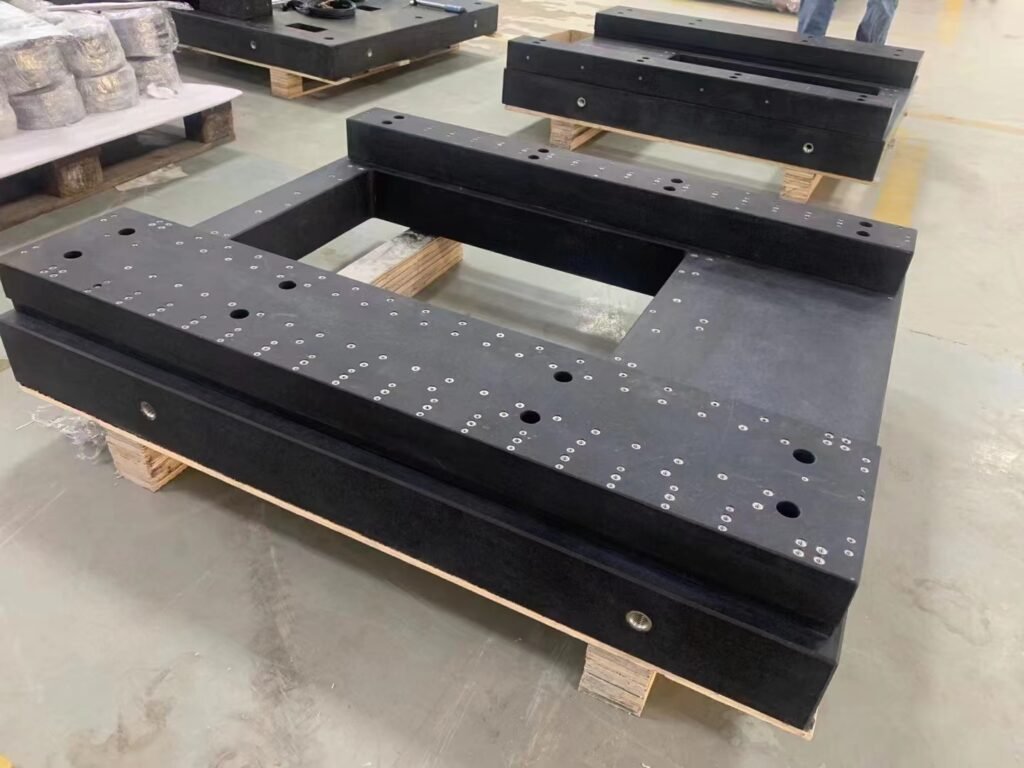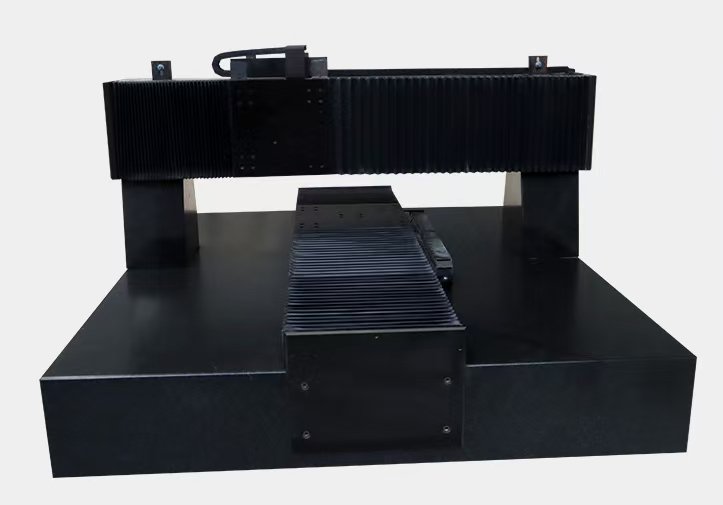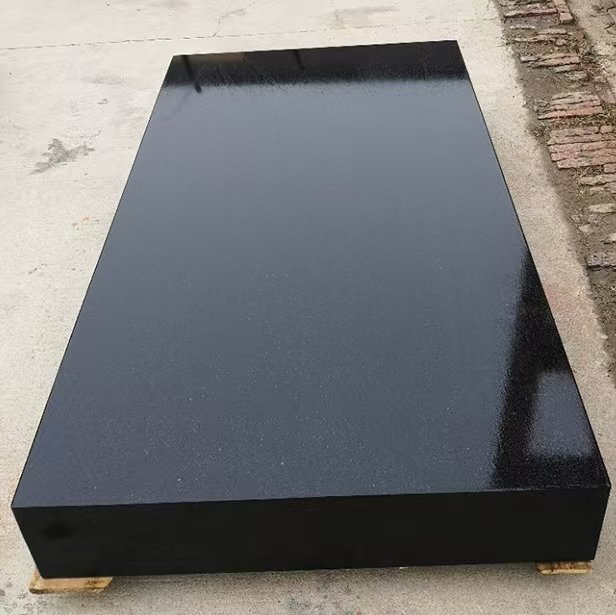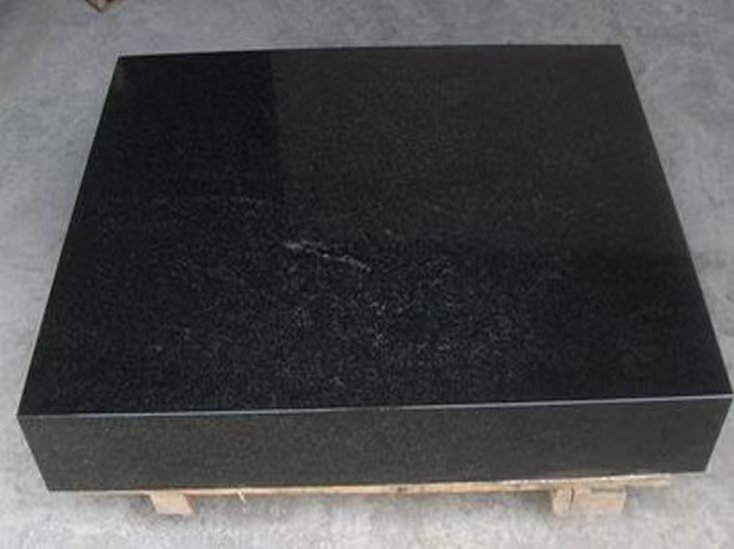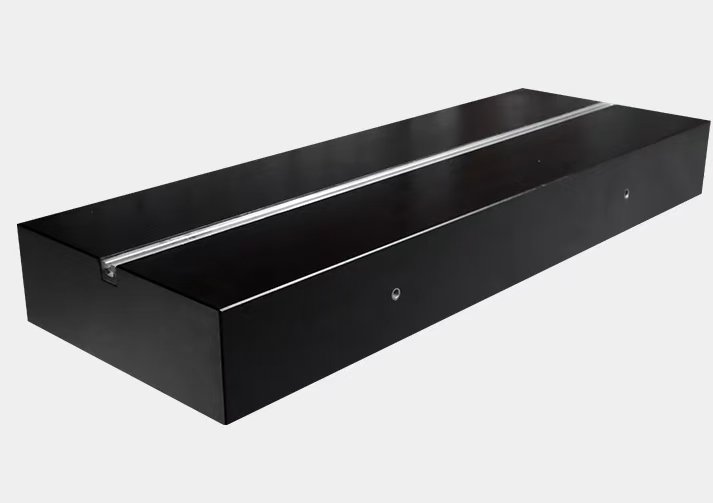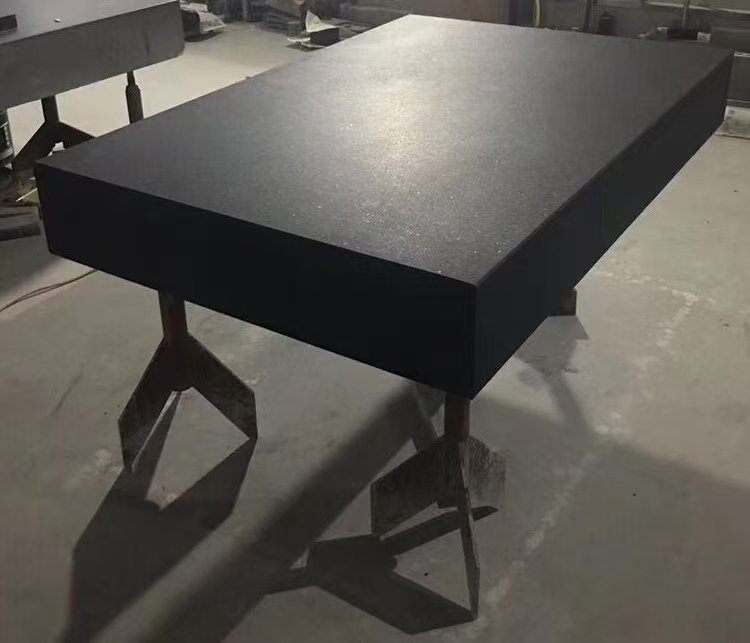
The hidden value of granite prices lies in the fact that through three dimensions—material stability, machininecision, and long-term reliability—it directly determines the instrument’s static datum precision, dynamic disturbance resistance, and long-term precision retention, serving as the underlying guarantee for precision instruments to achievon/nanometer-level stable measurements.
I. Core Hidden Value Behind the Price (Directly Affects Precision)
- Material Quality: Inherent stability determines the upper limit of precisioniced granite typically comes from high-quality ore sources and undergoes strict screening and testing; its physical properties directly determine the instrument’s baseline precision.
Thermal Stability (Most Critical)
lity granite has a thermal expansion coefficient of ≤0.8–3×10⁻⁶/℃ (only 1/3–1/4 that of steel).
idden Value: Minimal dimensional deformation during temperature fluctuations. For example, with a temperature difference of 5℃, a 1m length deforms by nly 0.001μm, far below the 0.003μm of ordinary materials, avoiding datum drift caused by thermal expansion and contraction.
Precision Impact: The instrument maintains micron-level measurementistency even under workshop/laboratory temperature fluctuations.
Structural Stability (No Internal Stress)
High-quality granite has undergone hundreds of millions of years of geological action, with internal stress ful eliminating the need for artificial aging treatment.
Hidden Value: No warping or deformation during long-term use; 5-year precision drift is **≤0.al typically ≥1μm).
Precision Impact: The instrument’s datum surface remains stable long-term, extending calibration cycles from half a year to 2 years, significantly reducing maintenance costs acision risks.
Density and Uniformity
Density *≥2.7g/cm³*, with a dense and uniform crystal structure.
Hidden Value: High rigidity and resistance to deformatiotion damping capability is 40% better than cast iron.
Precision Impact: Reduces errors caused by external vibrations and self-motion, improving dynamic measurement stability. - Machin Process: Acquired precision determines the instrument’s datum
High-precision machining is a major component of the price and directly determines the instrument’s geometric precision.
Precision Grades and Processes
Fdinary Grade B to metrological Grade AA, prices increase exponentially.
Hidden Value: Flatness/parallelism/perpendicularity reaches 0.1–1μm/m, with sce roughness Ra≤0.02μm.
Precision Impact: As the datum platform/bed for CMMs, lithography machines, and inspection equipment, it directly determines te precision of measurement and processing.
Constant Temperature and Humidity Machining Environment
High-priced products undergo final grinding in workshops with a constant temperature of **±0.Hidden Value: Eliminates thermal deformation during machining, ensuring final precision and consistency with factory specifications.
Precision Impact: No secondary precision adjustments are required after installation; the instrument reaches precision immeupon startup. - Long-Term Reliability: Precision guarantee throughout the entire lifecycle
The hidden value of high-priced granite lies in its non-decaying precision during lose, reducing overall costs.
High Hardness and Wear Resistance
Mohs hardness 6–7, with wear of ≤0.3μm over 1ears, and no metal fatigue.
Hidden Value: Surface precision remains almost unchanged during long-term high-frequency use.
Precision Impact: The instrument does not require replacement of datum componets for 10–20 years, avoiding precision degradation caused by wear.
Corrosion Resistance and Maintenance-Free
Does not rust, is non-conductive, and is resistant to acids and alkHidden Value: No need for rust prevention or lubrication; maintenance costs are reduced to 1/3 that of metal.
Precision Impact: Reduces disassembly and assembly errors caused by maintenance, maintaining long-term precision stability.
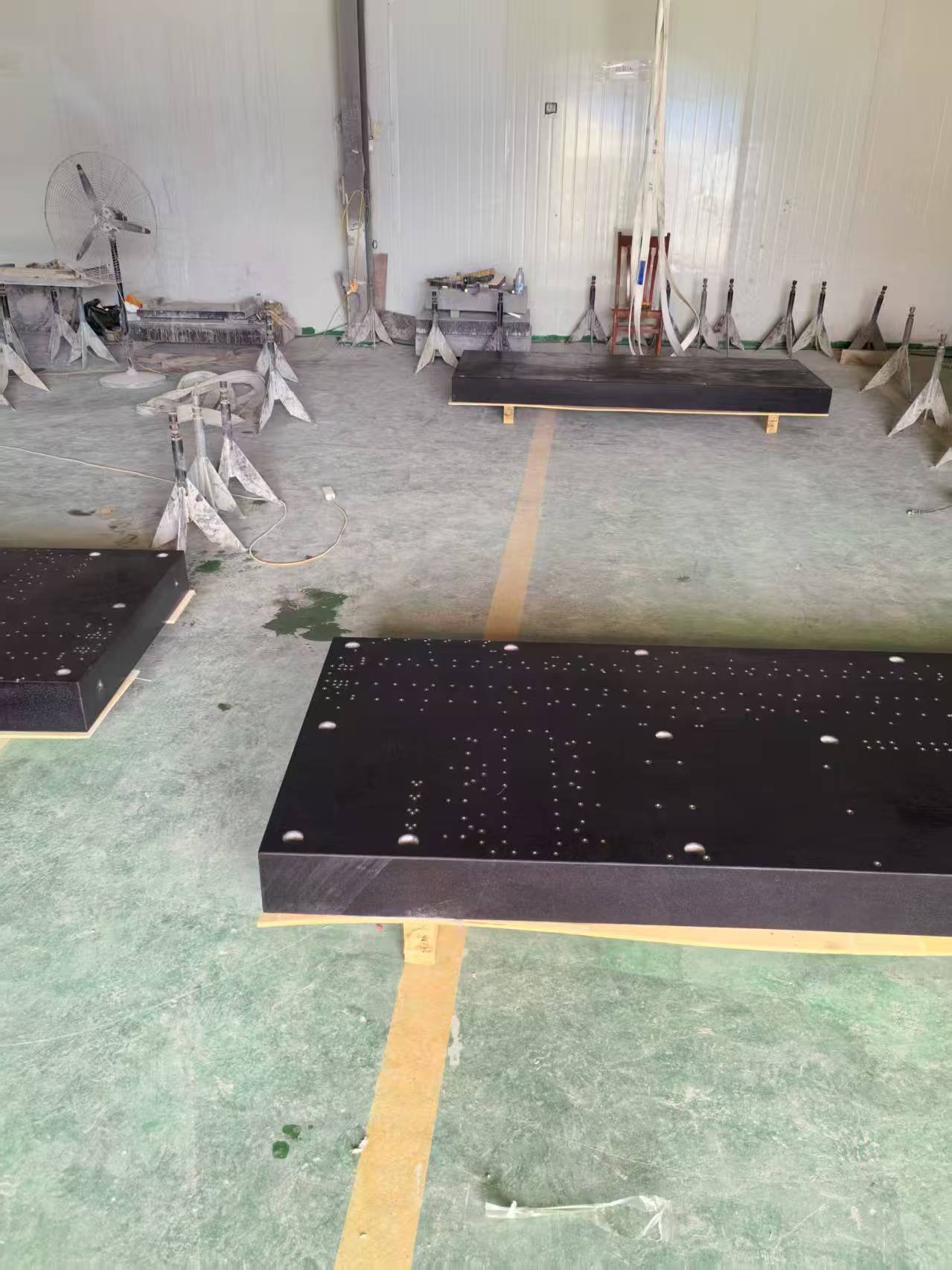
II. Specific Impact Comparison of Price Differences on Instrument Accuracy
Cuadro
Dimension Low-cost Ordinary Granite High-cost Premium Precisionanite Impact on Instrument Accuracy
Coefficient of Thermal Expansion 3–5×10⁻⁶/℃ 0.8–2×10⁻⁶/℃ Error caused bye difference reduced by 50%–80%
Long-term Precision Drift ≥1μm in 5 years ≤0.2μm in 5 yeark stability improved by 5 times
Vibration Damping Ordinary 40% better than cast iron Dynamic measurement error reduced by 30%
Surface oughness Ra≥0.1μm Ra≤0.02μm Air-bearing / sliding friction error significantly reduced
Service Life 8–0 years 15–30 years Precision retention cycle extended by 1–2 times
Maintenance Cost High (10%–15% annually–5% annually) Long-term precision assurance cost reduced by 60%.
III. Quantified Returns of Hidden Value (Regarding Precision and Cost)
Precision Returns
Measurement / machining accuracy ioved from ±0.05mm/m to ±0.03mm/m.
Value transmission error reduced by 40%, defect rate droppe from 5%–10% to 1%–3%.
Cost Returns
Equipment life extended from 10 years to 20 years, annual depreciation cost reduced by 50%.tenance cost reduced from 80,000/year to 15,000/year, total life cycle cost reduced by 45%.
IV. ConclusPrice ≠ Cost, Hidden Value = Precision Assurance
The high price of granite is essentially paying for material stability, machining precision, and long-term reliability. These hidden values directly determine the instrumentark accuracy, anti-interference capability, and long-term precision retention, serving as the core foundation for precision instruments to achieve stable measurements at the micron/nanometer level.
In of precision instruments, the short-term cost advantage of low-cost granite is offset by long-term precision drift, high maintenance costs, and frequent calibration; whereas the hidden value of high-cost pree ultimately translates into lower total life cycle costs and higher precision assurance.