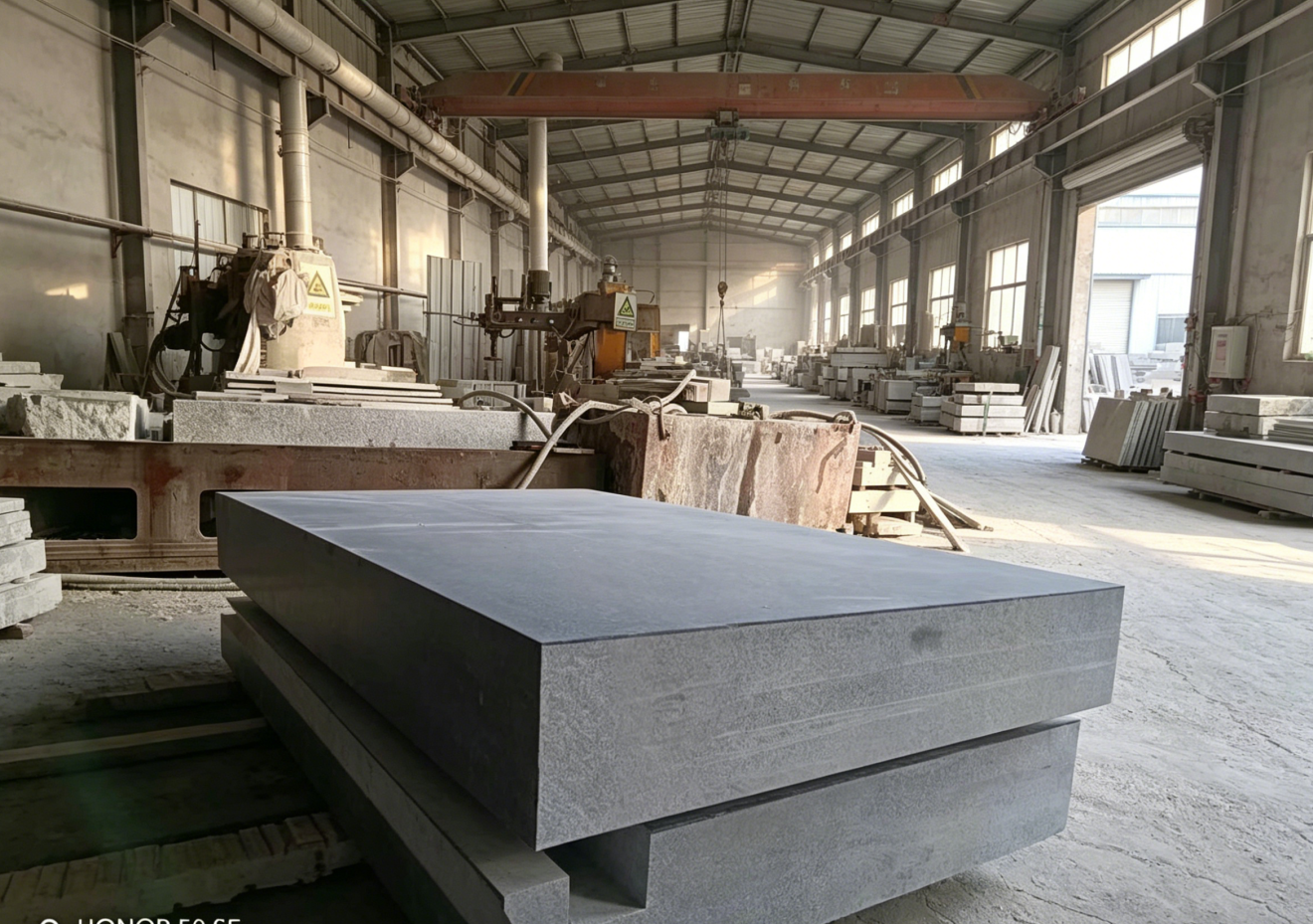
Granite is an acidic plutonic intrusive igneous rock. The magma cools and crystallizes slowly deep in the Earth’s crust, forming a holocrystalline granitic texture, which macroscopically appears as a massive structure.
I. Mineral Composition (Microscopic Framework)
Three main minerals:
- Quartz (20–40%, Mohs 7): Anhedral grains, highest hardness, the core of wear resistance;
- Potassium Feldspar Plagioclase (Total feldspar ~60%): Subhedral tabular grains, the rock framework;
- Dark Minerals (<10%): Biotite, hornblende. Platy mica is the weak phase; high content reduces stability and causes water absorption creep. For high-precision platforms, mica content must be strictly controlled.
Accessory minerals: Apatite, zircon, magnetite, etc. (trace amounts).
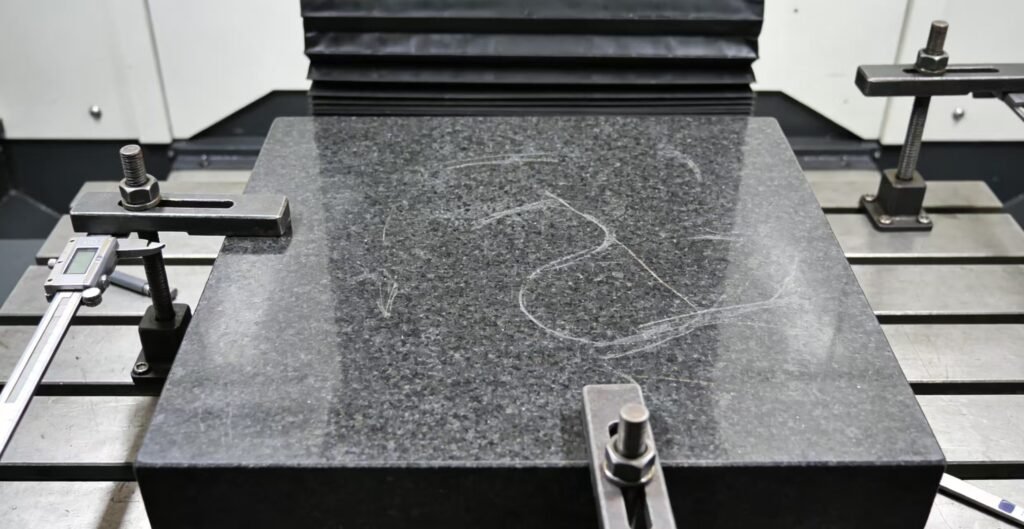
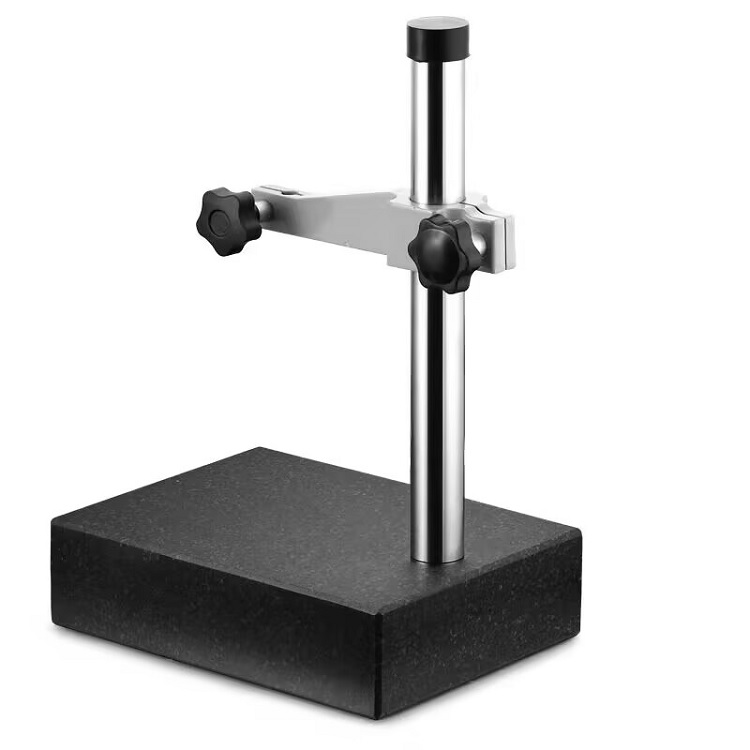
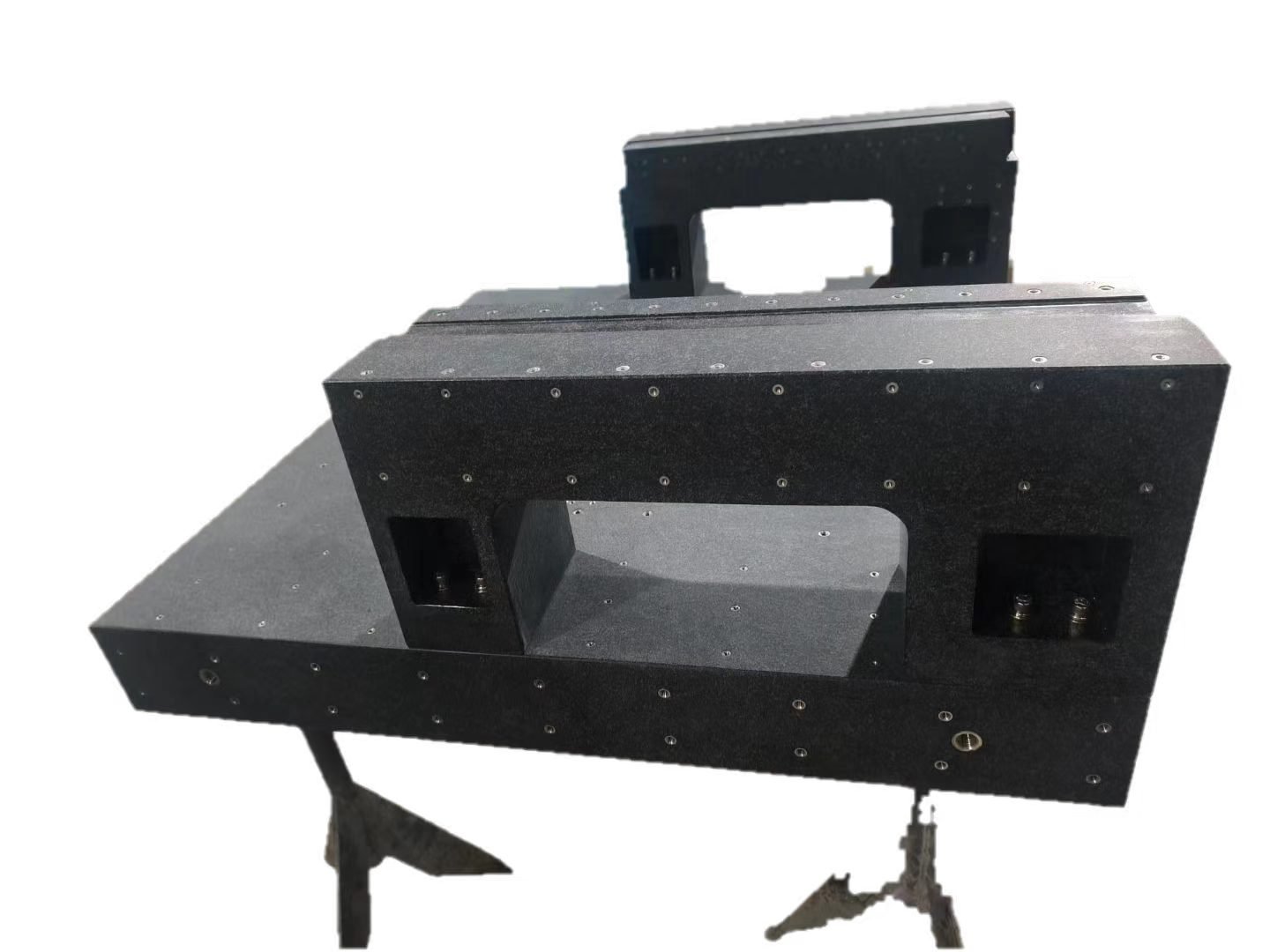
Jinan Blue (material for precision 000-grade platforms) strictly belongs to gabbro (commonly called black granite). Its minerals are pyroxene basic plagioclase, extremely fine-grained, dense and uniform, almost free of platy mica, with extremely low internal stress and thermal stability far superior to ordinary granite.
II. Rock Structure (Microscopic structure, Granite texture)
Granitic texture (subhedral granular mosaic structure) — the signature structure of granite:
- Crystallization sequence: Accessory minerals → Dark minerals → Plagioclase → Potassium feldspar → Quartz;
- Dark minerals and plagioclase crystals are relatively complete (subhedral); quartz crystallizes last, filling the gaps, appearing as irregular anhedral grains;
- All mineral grains are tightly interlocked, locked together by crystallization forces rather than simple cementation. This is the root cause of granite’s high compressive strength and good rigidity…
Subtypes:
- Equigranular structure: Uniform grain size. Fine-grained / medium-grained equigranular granite is most suitable for precision bases, offering uniform material and good deformation consistency;
- Porphyritic-like structure: Large feldspar grains (phenocrysts) embedded in a fine-grained matrix; large thermal expansion difference between phenocrysts and matrix makes it unsuitable for 00/000-grade high-precision platforms, as microcracks easily form under temperature differences;
- Secondary microscopic structures: Striated feldspar structure, worm structure (intergrowth of quartz and feldspar).
III. Texture (Macroscopic organization)
- Massive structure (Most common): Minerals are randomly arranged, uniformly isotropic, the first choice for precision platforms;
- Gneissose structure: Minerals are oriented, anisotropic in mechanical and thermal properties, cannot be used for high-precision reference platforms;
- Flow structure: Rare, caused by magma flow.
IV. Internal Defects (Key focus for precision parts)
Natural granite contains:
Intercrystalline microcracks: Tiny gaps at mineral grain boundaries, the source of water absorption and micro-deformation; high-quality materials must have minimal microcracks;
Primary pores;
Alteration zones: Feldspar alters into clay, drastically reducing strength and stability;
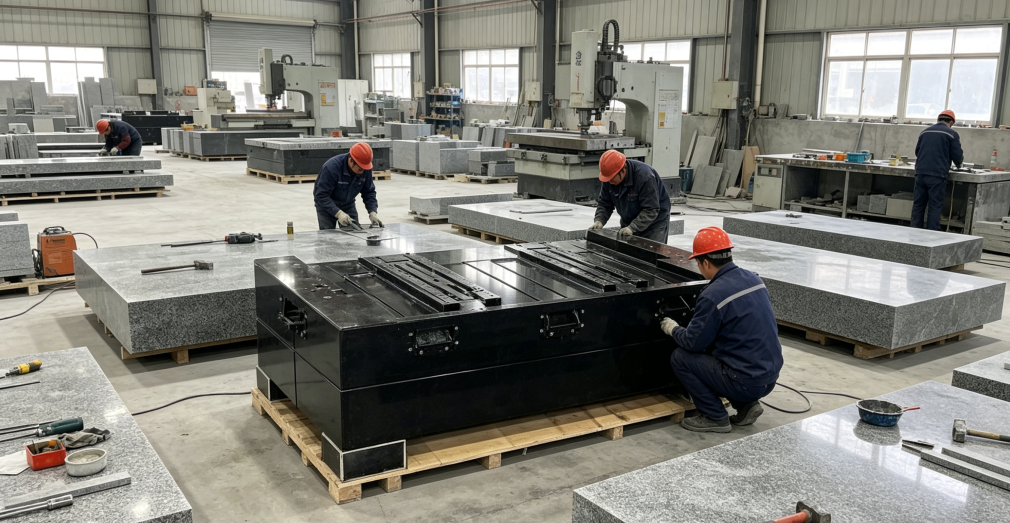
The core of selecting high-end granite platforms is to filter out materials with many phenocrysts, mica enrichment, alteration, and dense microcracks. After machining, pore sealing and impregnation are performed to seal intercrystalline micropores, reduce water absorption, and minimize moisture-induced deformation.
V. Engineering Characteristics Derived from Structure (Useful for foreign trade / technical communication)
✅ Advantages: Interlocked minerals → high rigidity, high compressive strength; fine-grained and dense → low coefficient of linear expansion; no plastic deformation, non-magnetic, corrosion-resistant.
⚠oarse-grained structure; rapid cooling or magma mixing can lead to