In high-end fields such as semiconductors, precision inspection, and micro/nano manufacturing, sub-nanometer precision is a core requirement for equipment operation, while the long-term stability of ision is the key determinant of product yield and equipment service life. The reason air bearing platforms can break through the limitations of traditional platforms and achieve non-decaying sub-nanometer preciies in their unique structural design and transmission logic. By operating in a zero-contact, zero-friction mode, they avoid the primary causes of precision loss at the source, making them a cocomponent of high-end precision equipment.
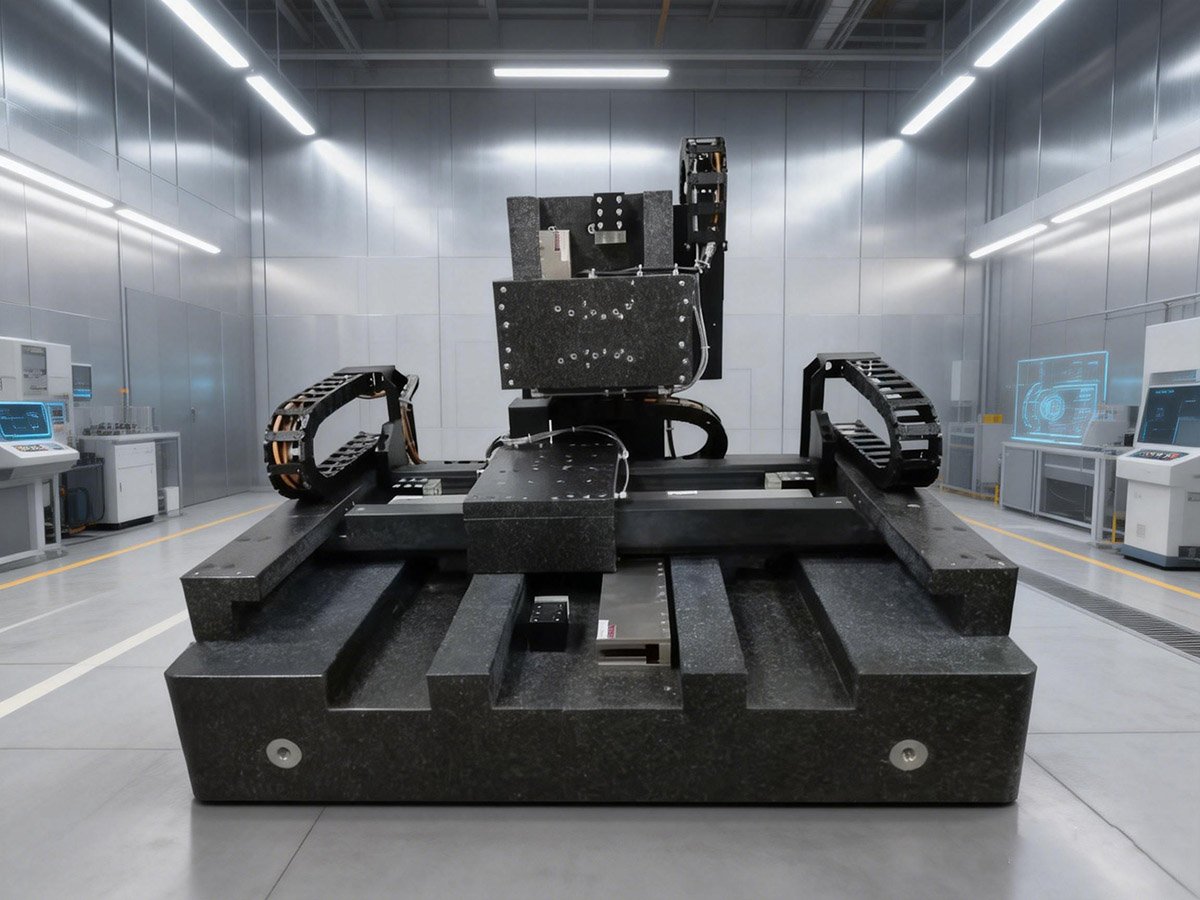
The precision stability of air bearing platforms originates primarily from their core air bearing and guide rail combination structure. Unlike traditional mechanical contact bearings, air bearings rely ompressed gas to form an extremely thin air film between the bearing and the guide rail, completely separating the platform’s moving components from the fixed guide rails to achieve contactless suppohis air film is uniformly thick and possesses good rigidity, capable of precisely bearing the platform load while completely eliminating wear, friction, and vibration caused by mechanical contact. In traditional platforms, conts experience increased clearance due to wear during long-term operation, leading to precision drift; in contrast, air bearing platforms suffer no frictional wear, ensuring the structural dimensions of the guiand bearings remain stable, providing a fundamental guarantee for sub-nanometer precision.
A precise transmission system is another crucial support for the non-decaying precision of air bearing platis typically paired with linear motors as the transmission core, forming a “air bearing support linear motor transmission” golden combination. Linear motors employ direct drive, eliminating intermediate transmission componsuch as lead screws and gears, thereby completely avoiding backlash, elastic deformation, and transmission errors in the intermediate links. Compared to traditional lead screw transmission, linear motors enable more precise motion contrombined with high-precision magnetic scale positioning feedback components, they can lock positioning accuracy at the sub-nanometer level. At the same time, the zero-contact characteristic of linear motorslements that of air bearing platforms. There is no additional friction resistance during transmission, and precision will not degrade due to wear of transmission components, ensuring that transmission precision remains stable durirm operation.
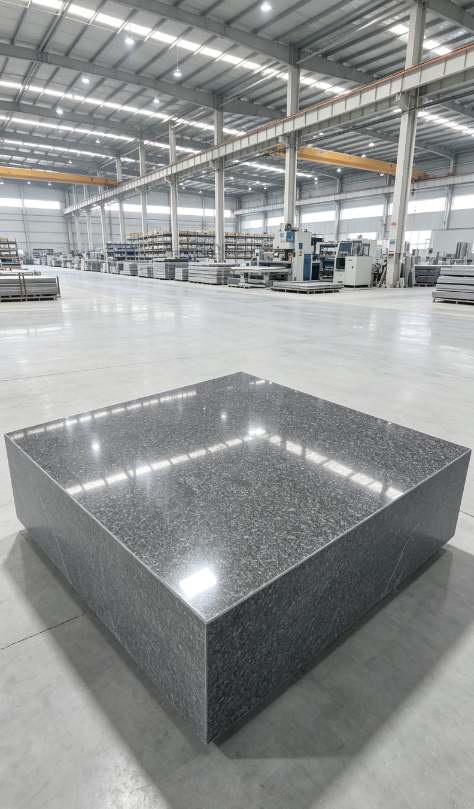
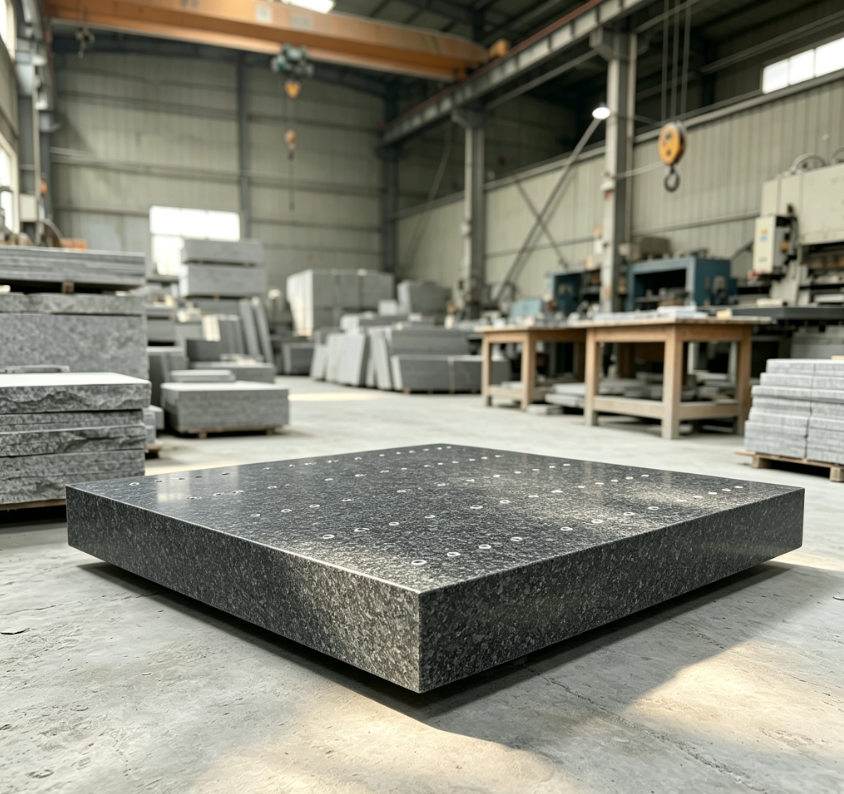
The structural design of air-bearing platforms also fully considers the avoidance of external disturbances, further reinforcing precision stability. Th guide rails of the platform are mostly made of high-quality materials with high strength and rigidity, which undergo precision machining and aging treatment to effectively reduce the impact of temperature changes and load ctuations on structural deformation, avoiding precision deviations caused by rail deformation. Some high-end air-bearing platforms are also equipped with closed-loop control and vibration damping designs; by real-time monitoring of e platform’s motion posture, they dynamically adjust the air film pressure and motor operating parameters to counteract interference factors such as external vibrations and temperature fluctuations, ensuring the consistency of sub-nanometprecision.
In practical application scenarios, the precision stability of air-bearing platforms has been fully verified. In semiconductor wafer processing, it can stably achieve wafer handling and positig at the sub-nanometer level for long periods, avoiding issues like wafer scratching and lithography deviations caused by precision degradation; in precision inspection equipment, it provides a stable motion reference foction probes, ensuring the accuracy of defect detection at the micron and sub-nanometer levels; in micro/nano manufacturing, it precisely drives processing components to perform fine operations, guare processing precision and consistency of micro-devices. The stringent requirements for precision stability in these scenarios are the best embodiment of the advantages of the air-bearing platform’s zero-contact desigompared with traditional precision platforms, air-bearing platforms do not require frequent maintenance or replacement of worn parts, which not only reduces maintenance costs but also avoids precision deviations caused by disassembly agging during maintenance. Their service life far exceeds that of contact-type platforms, and they maintain sub-nanometer precision throughout their entire lifecycle; this is the core reason why they are gradual traditional platforms in high-end equipment. As the precision requirements of the precision manufacturing industry continue to rise, the design and technology of air-bearing platforms are continuously optimized. While maintaining precisiobility, they further expand load capacity and operating speed, providing solid support for the development of high-end manufacturing.
The core of the air-bearing platform’s non-decaying ser precision lies in achieving zero-friction support through air-bearing bearings, combined with zero-backlash transmission via linear motors, and further integrated with high-rigidity structures and anti-interfere designs to eliminate various factors causing precision loss at the source. This design philosophy not only meets the stringent demands for precision stability in high-end equipment but also provides the core driving force for technologi upgrades in the precision manufacturing industry, making it an indispensable key component in high-end precision equipment.