Precision Equipment: Material Selection Comparison of Ceramics, Metals, and Granite Complete Selection Logic
I. Overview of Core Characteristics (Quick Differentiation)
- Granite (Natural Stone)
Pros: Excellent vibration damping, extremely low thermal expansion, non-magnetic insulation, low cost, mature large-area base technology;
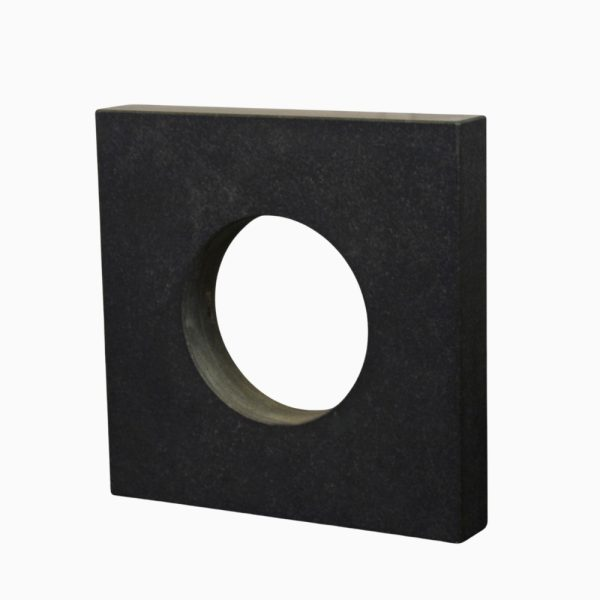
Cons: Natural texture and impurities, prone to chipping at small holes/thin walls, cannot be made into complex irregular shapes, very heavy, absorbs water and oil stains, slight creep under long-term heavy pressure. - Metal (Aluminum / Steel / Cast Iron)
Pros: Easy to machine, supports complex structures, lightweight thin walls, no chipping when drilling/tapping, flexible assembly, fast delivery;
Cons: Significant thermal expansion/contraction, prone to vibration resonance, steel rusts, conductive and magnetic, creep under long-term stress, poor precision stability. - Precision Ceramics (Silicon Carbide / Alumina Ceramics)
Combines the strengths of both and compensates for their weaknesses
Inherits from stone: Low thermal expansion, high vibration damping, non-magnetic insulation, corrosion resistance, ultra-high hardness and wear resistance;
Inherits from metal: Precision machining of small holes, through holes, embedded threads, irregular thin walls, and integrated structures;
Unique advantages: Uniform material without natural defects, non-absorbent to oil/stains, zero creep, high-temperature stability, lighter weight with the same rigidity.
II. Scenario-Based Selection Criteria (Directly match your equipment)
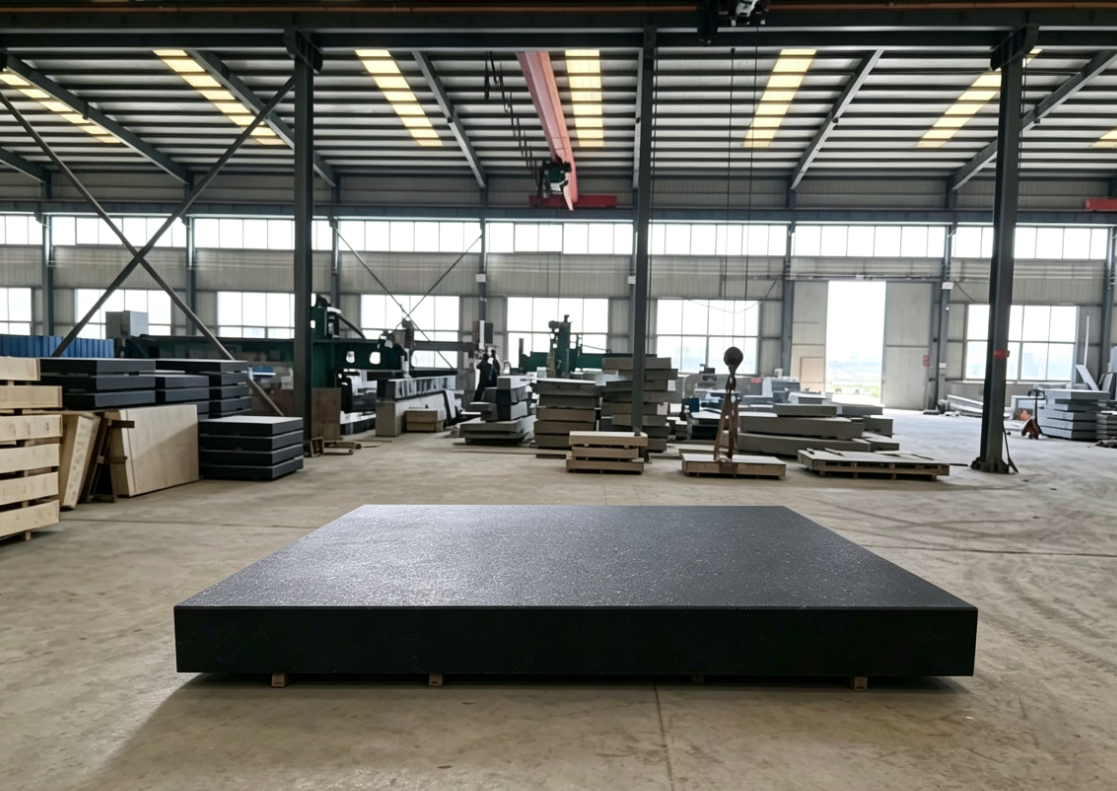
Scenario 1: Large fixed inspection platforms, CMM machine bases → Prioritize Granite
Suitable for: Large dimensions, stationary, limited budget, no need for dense small holes / complex slots
Disadvantages: Not recommended if dense bolt holes, ultra-thin structures, or high-speed movement are required.
Scenario 2: High-speed motion modules, lightweight motion brackets, small precision tooling → Prioritize Metal (Aluminum Alloy / Steel)
Suitable for: Complex structures, low-cost mass production, minimal temperature changes, short-term use, no strict requirements for long-term precision
Disadvantages: Not suitable for hot/cold environments or high-precision optical / semiconductor equipment, as precision will drift.
Scenario 3: High-precision optics, semiconductors, laser equipment, high-speed precision moving parts, small high-precision bases → Prioritize Ceramics
Ceramics are the optimal solution if any of the following apply:
Need for dense small holes, through holes, or bottom-mounted isolation pillars (like the customer’s previous 4-inch plate with dense bolt structure);
Equipment requires high-speed reciprocating motion, needing both vibration damping lightweight;
Strict temperature-variable environment, where micron-level precision must not drift during long-term operation;
Non-magnetic insulation required to avoid electromagnetic interference with optics / chips;
Contact with acid/alkaline cutting fluids, requiring never to rust and not absorb oil stains;
Thin-walled, irregular integrated structures where natural stone is prone to shattering.
III. Key Indicator Comparison Decision Table
| Performance Requirement | Granite | Metal | Precision Ceramic |
| Large stationary base, cost-sensitive | ✅ First choice | ❌ Not recommended | Alternative (higher cost) |
| Lightweight high-speed moving components | ❌ Excessively heavy | ✅ Top pick for standard precision | ✅ Top pick for ultra-high precision |
| Dense small holes, through holes & thin-wall structures | ❌ Prone to edge chipping | ✅ Machinable | ✅ Stable machining without chipping |
| Wide temperature variation & long-term ultra-precision | ⭕ Acceptable | ❌ Severe thermal expansion error | ✅ Optimal solution |
| Non-magnetic, insulating, anti-electromagnetic interference | ⭕ Acceptable | ❌ Conductive & magnetic | ✅ Optimal solution |
| Acid & alkali resistance, anti-oil absorption | ⭕ Usable but absorbs oil & hard to clean | ❌ Prone to corrosion & rust | ✅ Dense non-absorbent surface |
| No slow deformation under long-term load (zero creep) | ⭕ Slight creep exists | ❌ Obvious creep | ✅ Near-zero creep |
| Complex integrated special-shaped parts | ❌ Limited machining capability | ✅ Easy forming | ✅ High-precision forming |