Does the color of granite affect its physical properties?
Conclusion: Yes, and the impact is significant.
The color of granite is not merely superficial; it is the direct external manifestation of internal mineral composition, grain structure, and impurity content, which precisely determine all of its physical properties.
I. What Determines the Color
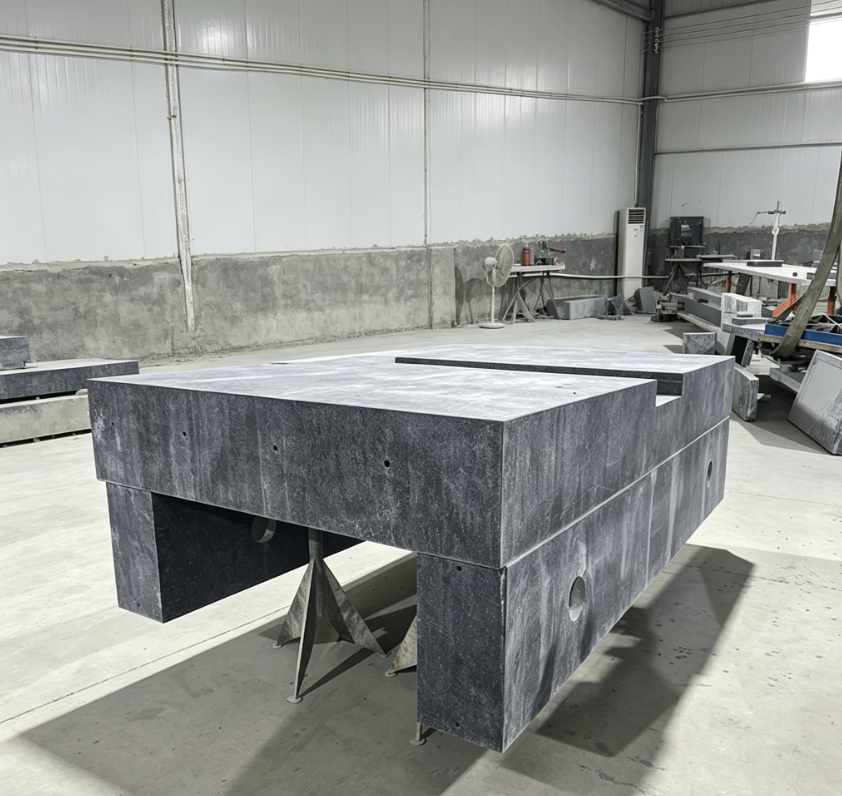
Black / Dark Gray: Rich in pyroxene, amphibole, and dark feldspar; moderate quartz content; low mica content.
White / Light Gray: Rich in quartz and light feldspar; high mica content.
Red / Flesh Red: Contains potassium feldspar and iron oxide.
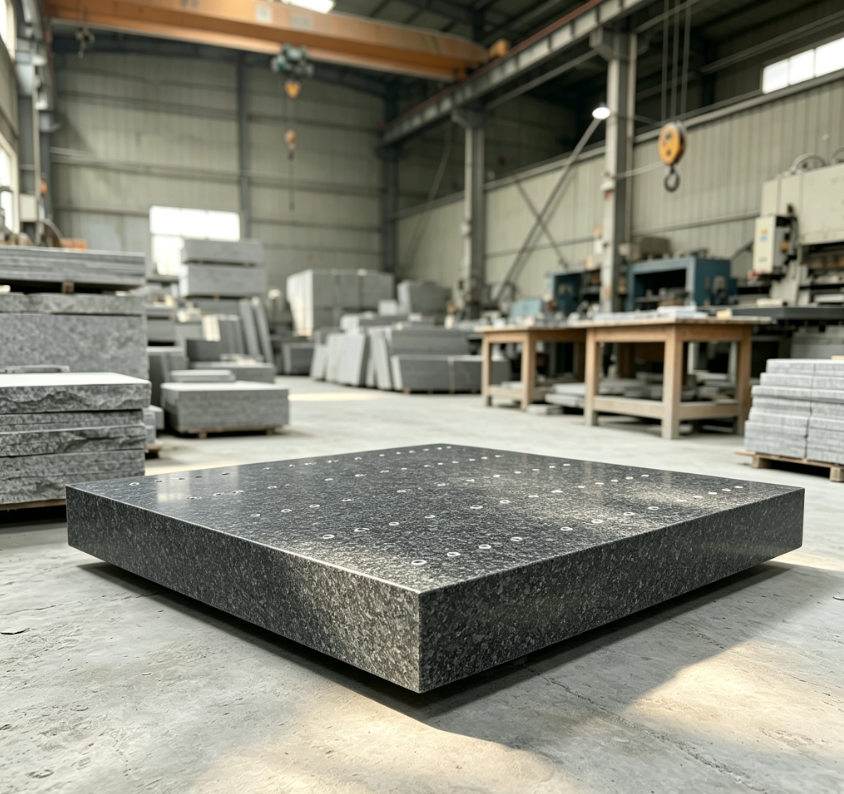
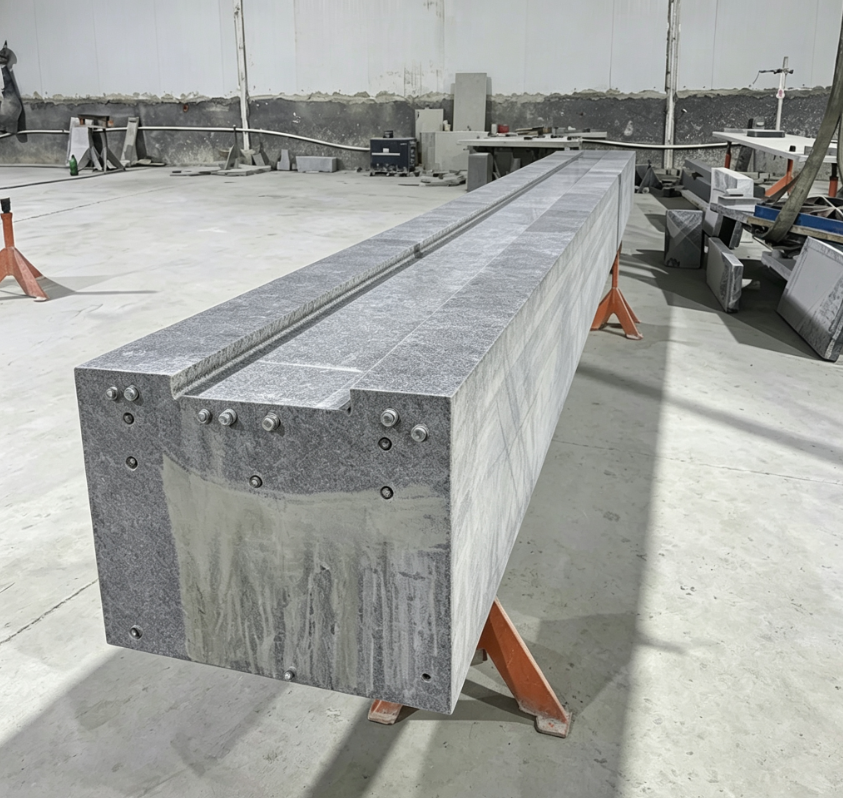
With mottling, white veins, or black spots: Mineral mixing, late-stage vein intrusion, local looseness, or micro-fractures.
II. Which Key Physical Properties Are Affected by Color
- Density, Hardness
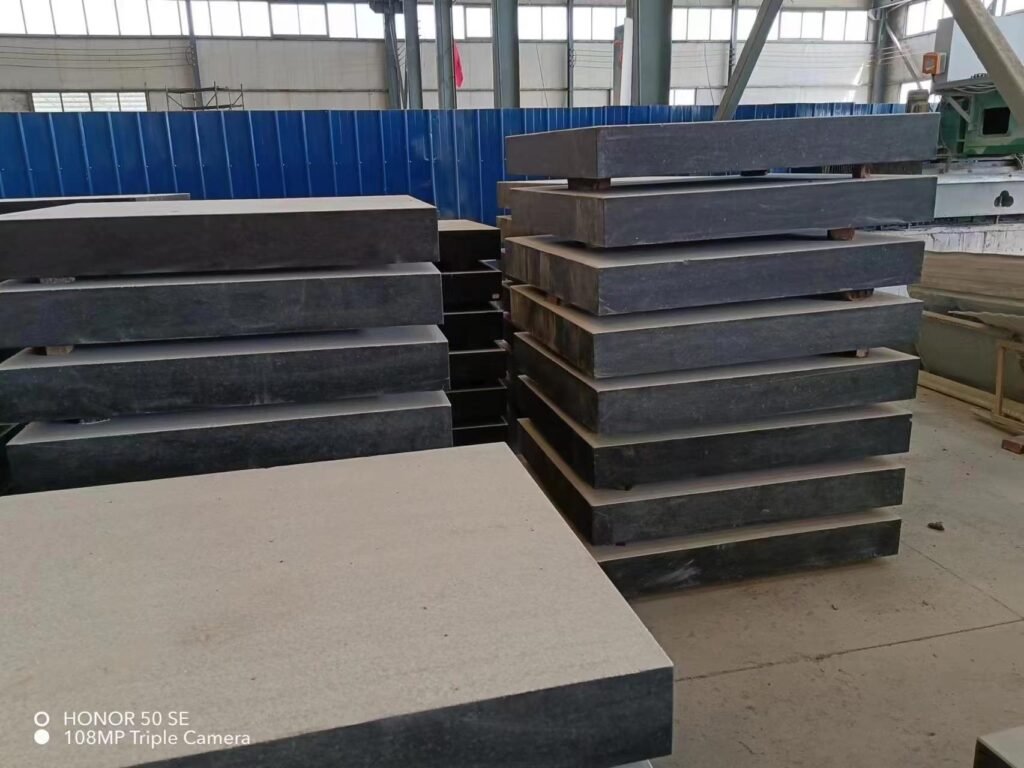
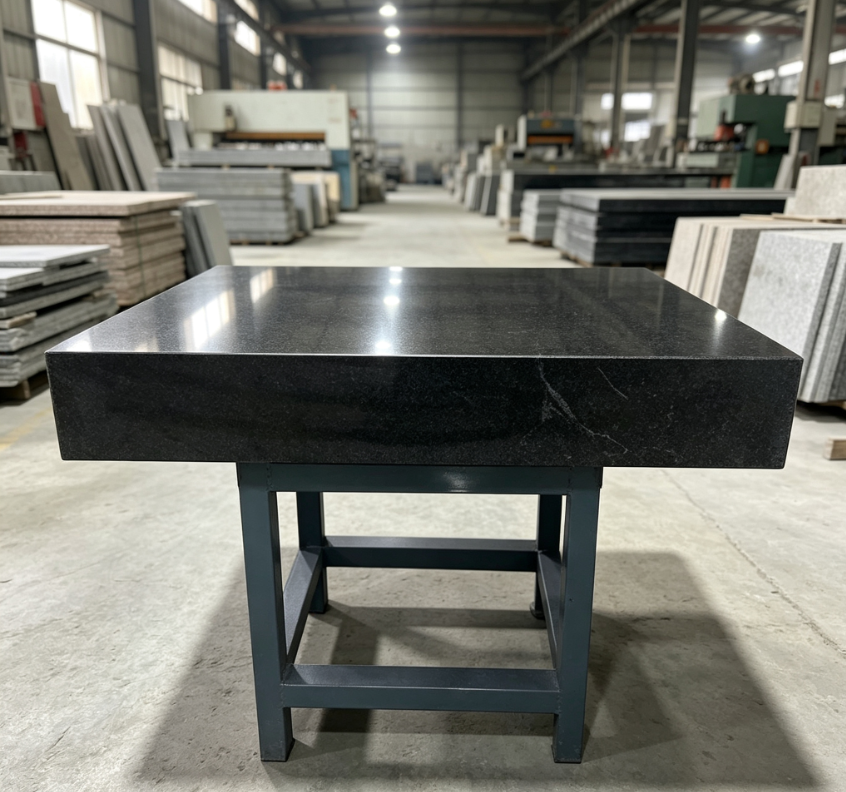
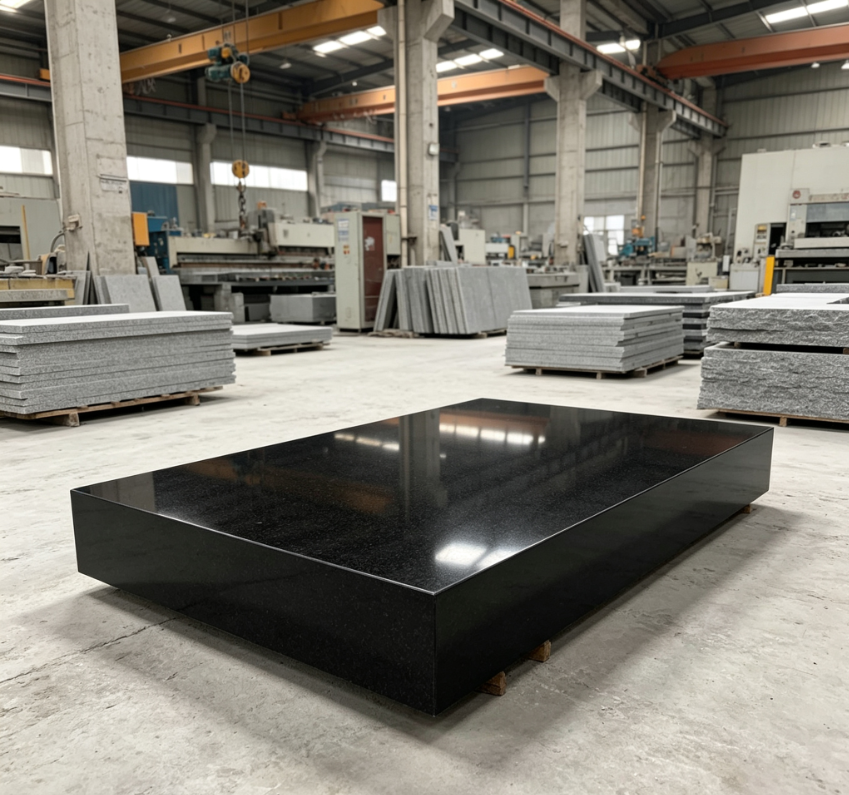
Dark fine-grained granite (Jinan Black, Pure Black): Most compact structure, high density, high hardness, and wear-resistant.
Light-colored white speckled types: Often contain high levels of flaky mica, resulting in lower overall hardness and poorer wear resistance. - Coefficient of Thermal Expansion (Most critical, related to CMM accuracy)
Dark solid-color granite: Uniform mineral composition, low coefficient of thermal expansion, minimal thermal deformation, and resistance to deformation under temperature changes.
Variegated colors with alternating light and dark: Different minerals have different expansion coefficients; heating causes localized deformation, resulting in poor dimensional stability. - Rigidity, Vibration Damping
Dark homogeneous material: Tight crystal interlocking, high rigidity, and good vibration absorption.
Variegated or coarse-grained material: Inhomogeneous structure and local looseness, leading to a significant decrease in vibration damping and rigidity. - Water Absorption, Corrosion Resistance
The more uniform and deep the color, the denser the crystallization and fewer the pores, resulting in extremely low water absorption and high resistance to corrosion and oil.
Areas that appear white or mottled often have loose micro-pores, making them prone to water and oil penetration and weathering. - Internal Stress and Deformation Tendency
Uniform color with no mottling: Uniform rock crystallization, low internal stress, and long-term resistance to deformation.
With white veins, black streaks, or color block boundaries: Internal structural boundaries and micro-cracks exist, making it prone to stress release and gradual warping.
III. The Simplest Rule to Remember
The more uniform, pure, and dark the color → The more stable the physical properties: high hardness, minimal deformation, low thermal drift, and good rigidity.
The more chaotic the pattern, the more mixed the colors, and the more complex the grain → The poorer the physical properties: inhomogeneous structure, prone to deformation, and unable to maintain precision.
Light-colored granite may look aesthetically pleasing, but its physical stability generally does not match that of dark industrial-grade granite.
IV. A Key Takeaway for Your Industry
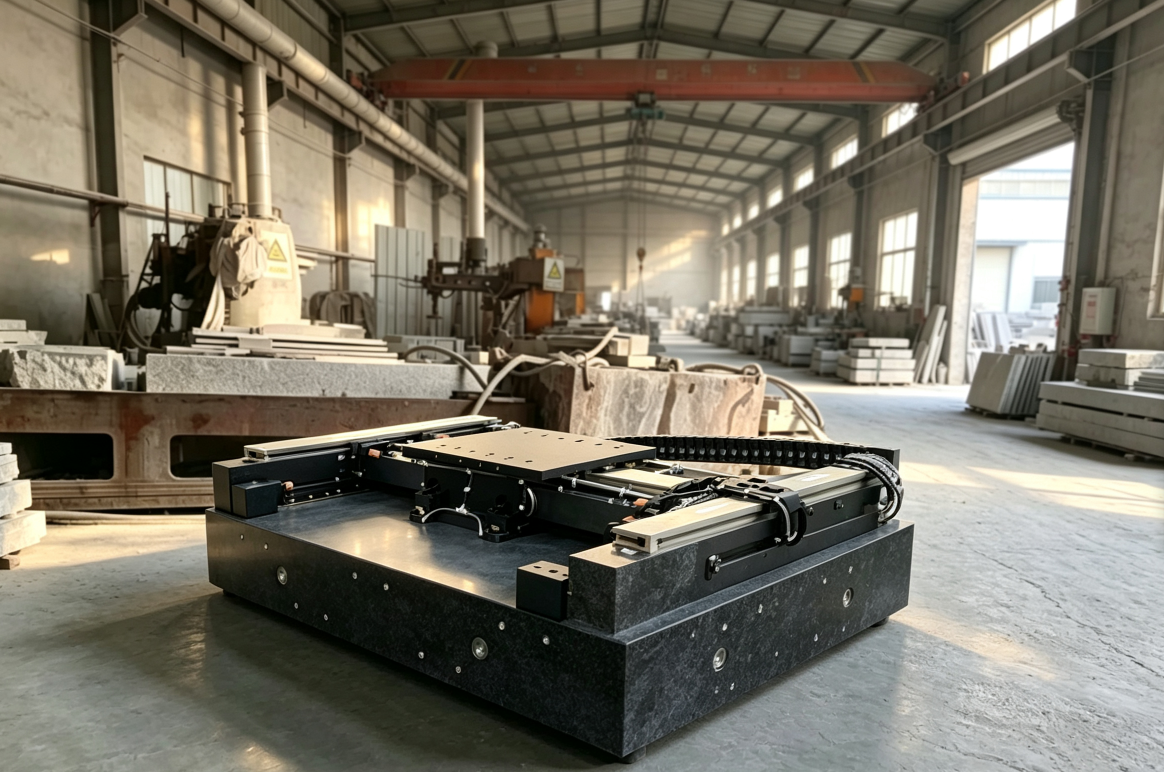
For CMMs, precision platforms, and machine tool bases:
Don’t judge by aesthetics, judge by color uniformity; the deeper and more uniform the color, the more stable the physical performance, and the more reliable the precision.