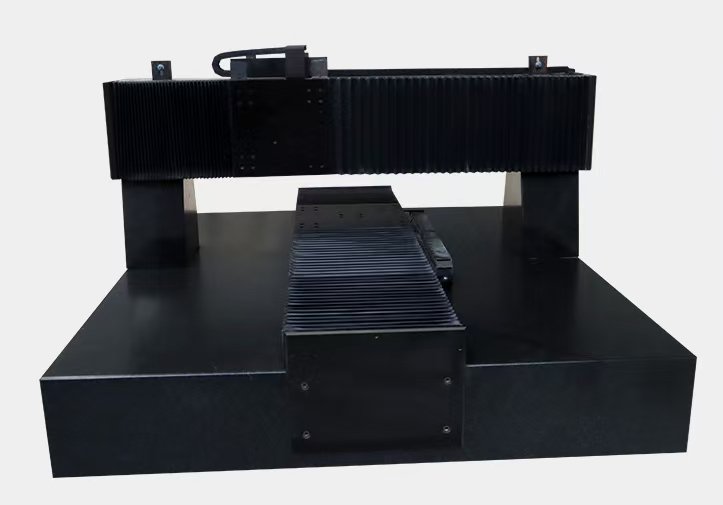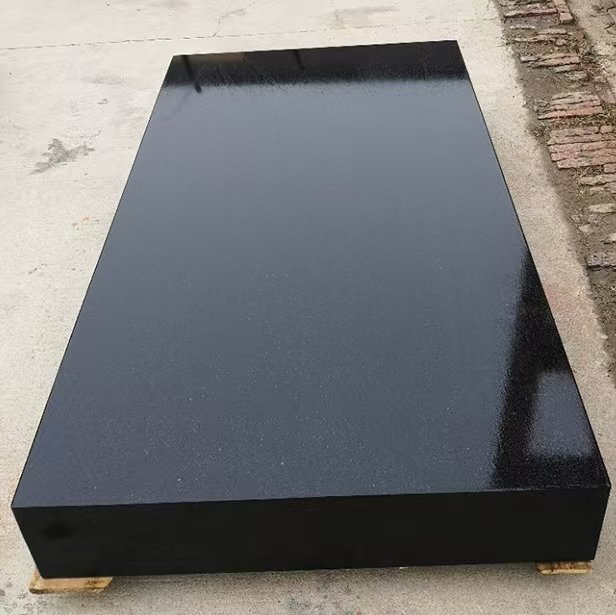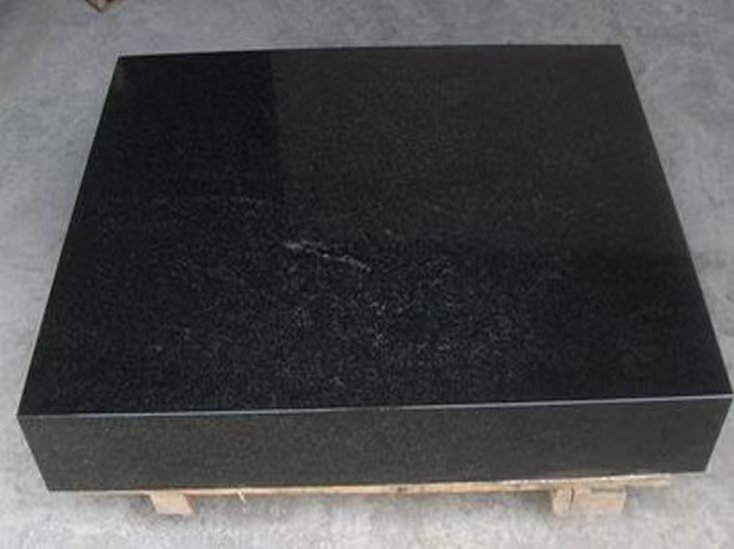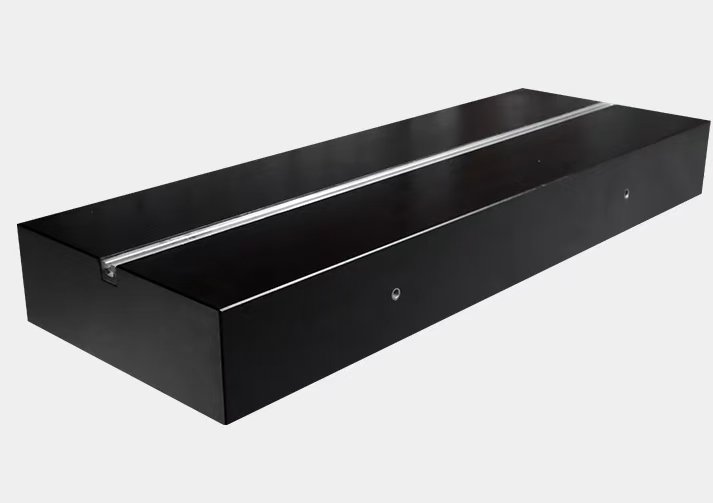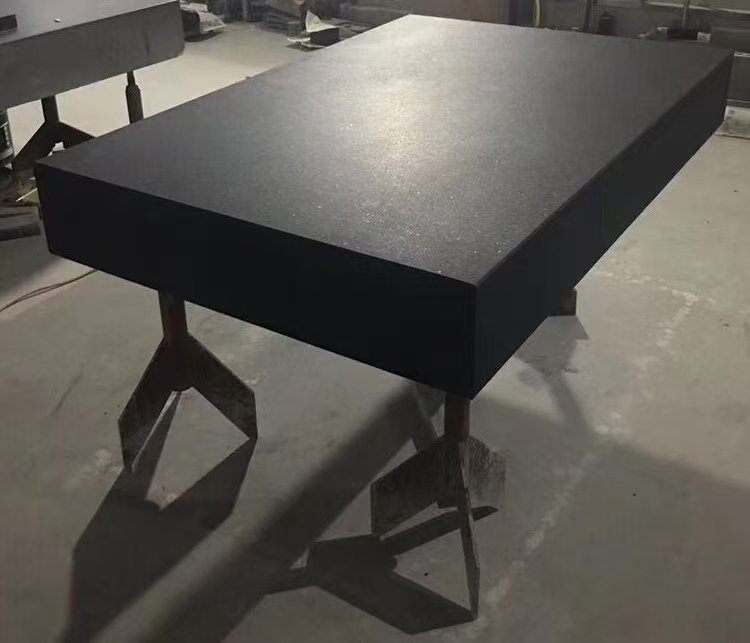
In precision granite components, surface grinding is not merely about “smoothing”; it is the core process that determines precision, lifespan, stability, and perform, and it can be said that 80% of the value of granite components lies in the quality of the grinding.
- Only grinding can truly achieve high-precision flatness
Granite is a natural stone; even a cutting and rough machining, the surface still has:
Microscopic unevenness
Height differences at crystal boundaries
Machining tool marks and ripples
These errors invisible to the naill directly lead to:
Failure to meet flatness standards
Exceeding tolerances for perpendicularity and parallelism
Total measurement distortion when used as a reference platform
Only through mulle stages of fine grinding (rough grinding → semi-fine grinding → fine grinding → polishing) can flatness be controlled to the micron level, achieving Grade 00 nd Grade 000 precision.
Without grinding, granite is just a stone, not a precision measuring tool. - Eliminate internal stress to ensure long-term dimensional stability
Although granite itable, it is true that:
Cutting generates stress
Rough machining causes local stress concentration
Internal micro-cracks are unreleased
The grinding process involves slow, uniform material removal, whilly releases residual stress and allows the component to reach a truly naturally stable state.
If fine grinding is skipped and the stone is used directly:
Slow deformation will occur over time
Prn will drift year by year
The reference will fail
This is a fatal issue for precision platforms, square rulers, straight edges, and guides. - Form a dense, weasistant, low-roughness working surface
After grinding, the granite surface:
Grains are compacted and densified
Roughness Ra ≤ 0.2μm o even lower
Hardness is higher, and wear resistance is significantly improved
The benefits include:
Smooth, obstruction-free movement of slides, gauge holders, and workpieces
Resistant to shes and wear
Resistant to dust accumulation and chip jamming
No false readings during measurement
Conversely, surfaces not finely ground:
Are rough and fuzzy
Have high movementsistance
Are prone to wear, powdering, and sand shedding
Affect measurement precision and instrument lifespan - Avoid scratching precision workpieces and measuring instruments
Precision inspection often involves ntact with:
Gauges, dial indicators
Marble right angle rulers
Optical instruments and lens assemblies
Molds and precision parts
If granite is not ground properly,o-protruding grains on the surface will directly scratch workpieces or gauges, causing irreversible damage.
Fine grinding allows the surface to reach a “mirror finish,” protecting both the workpthe platform itself. - Enhance stain resistance, moisture resistance, and ease of cleaning
After being ground to a dense state, granite:
Has closed pores
Is resistanil and water absorption
Is resistant to rust, mold, and efflorescence
Oil stains and dust are wiped clean instantly
It is very friendly to workshop and metrology room envronments. - Determine final grade and service life
There is a truth in the industry:
Granite components are expensive not because of the stone, but because of the grinding.
For the same piece of material:
Rough machining: Can only be used for ordinary countertops
Fine grinding: Can be used for Grade 00 metrology platforms
Ultra-firinding: Can be used for semiconductor and optical-grade reference surfaces
Precision grade, service life, and value retention are completely determined by the grinding process.
In summary
Grinding is crucial countertops because:
It transforms natural stone into a stable, high-precision, wear-resistant, durable precision component suitable as a measurement reference.
Without grinding, granite has no precision; wiper grinding, granite has no value.