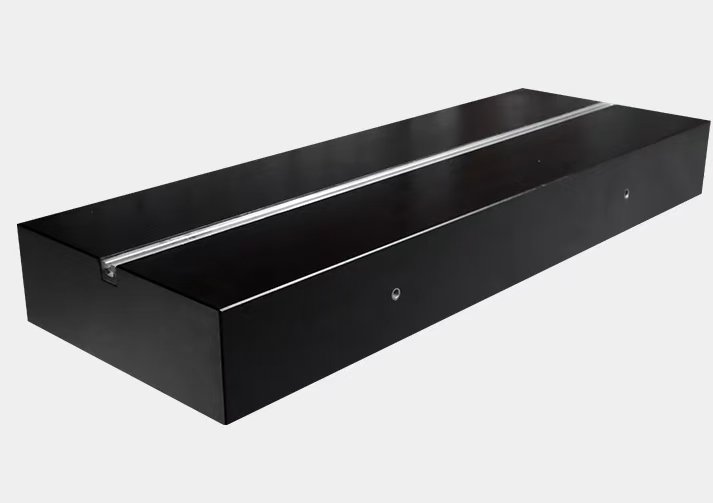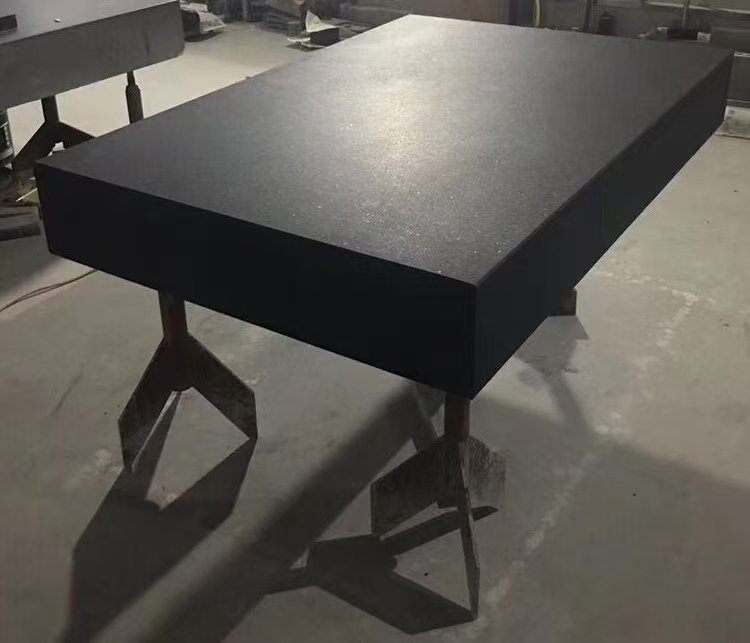
I. Material Selection (Determines whether it will crack and stability)
Material Types
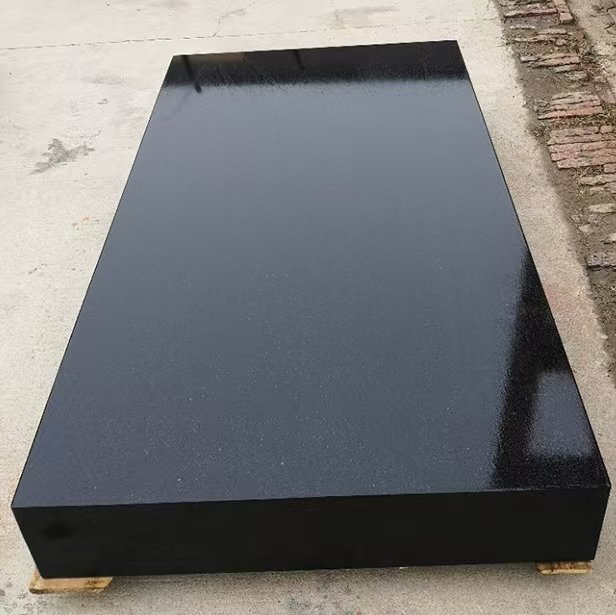
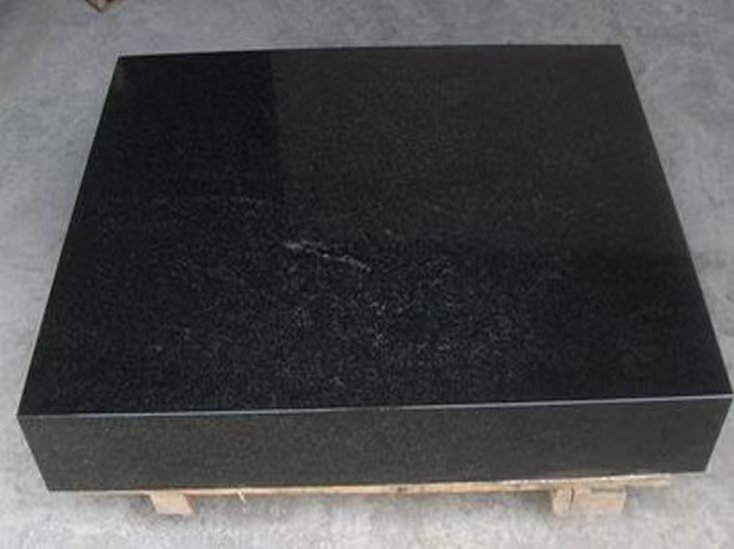
Priority:Jinan Green, Zhangqiu Black (fine-grained, uniform, best stability)
Acceptance Key Points (Must-read for procurement)
No cracks, no laminations, no bla, no weathered layers
Uniform crystal grains, no obvious color bands
Must be solid material; splicing and patching prohibited
Critical Note
Poor raw material → No matter how muct processing is done, precision will drift, it will crack easily, and scrap rate will be high
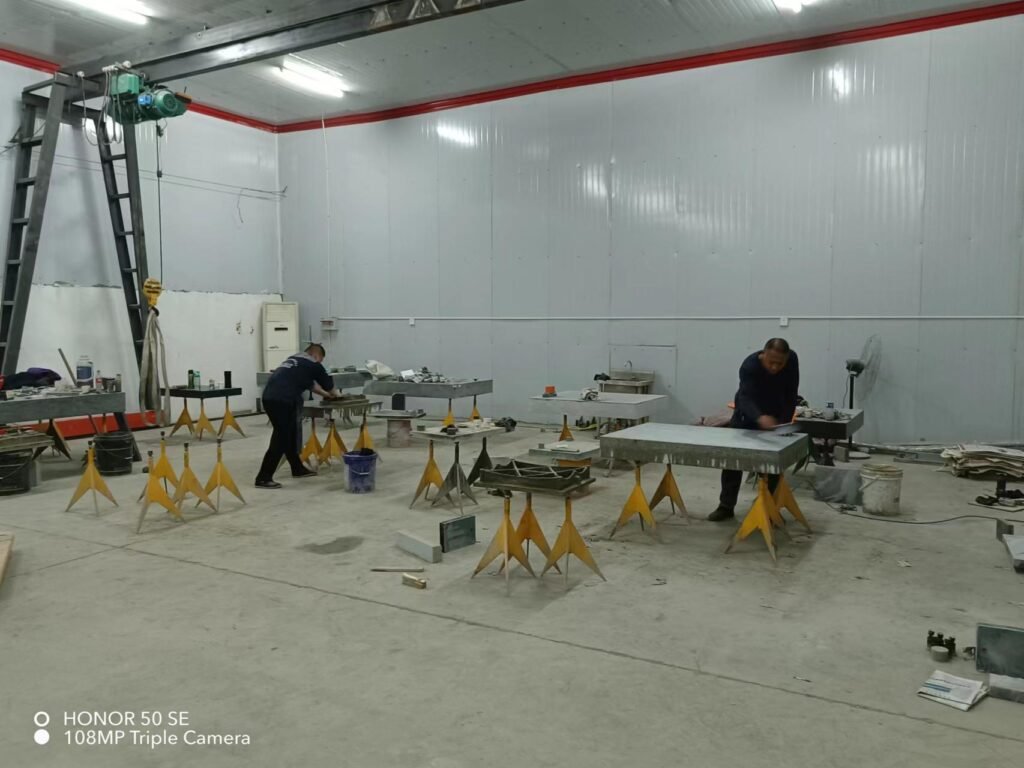
II. Rough Cutting and Rough Machining
Diamond circular saw / Gantrysaw cutting
Cut out rough shape, leaving machining allowance
Rough grinding / Rough milling
Remove surface skin, preliminary leveling
Procurement Focus
No chipped edges, vibrati or internal damage
For irregular parts, uniform allowance must be left after rough machining to prevent deformation
III. Stress Relief (Determines whether it will shatter or deform) the easiest step for procurement to overlook, but the most fatal.
Natural Aging
Stored for several months to release internal stress
Artificial Aging
Heating and cycling treatment to furthr stabilize
Consequences
No aging → Cracks naturally after half a year to one year, precision drifts
Precision components must undergo an aging process
IV. Semi-precisioding / Rough Lapping (Establishes flatness, parallelism, and perpendicularity)
Equipment: Gantry grinder, precision surface grinder
Processing Content:
Flatness
Parallelism
Pendicularity
Rough forming of V-guides, dovetail guides, and rectangular guides
Procurement Key Points
Uniform texture, no obvious waviness
Uniform allowance on as, preparing for precision grinding
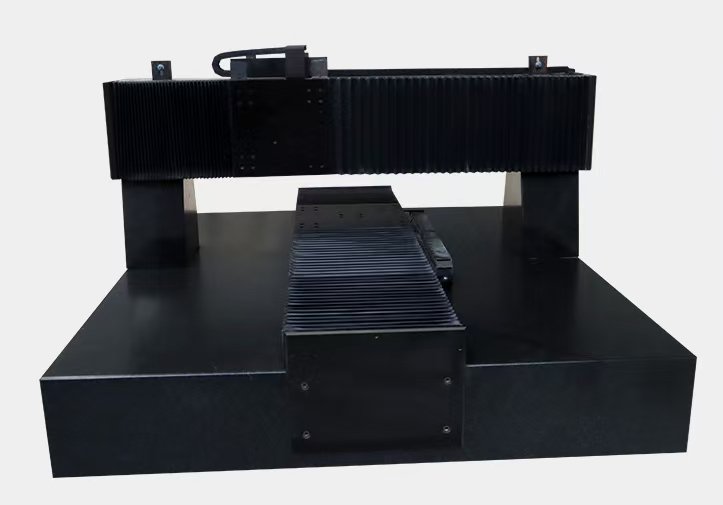
V. Drilling, Slotting, Threading, and Irregular Structure Machining
The core difference between guides, structural parts, and irregular plies in this step.
Processing Content
Through holes, counterbores, stepped holes
T-slots, dovetail slots, V-guide surfaces
Positioning slots, insert slots, irreved surfaces
Process
Diamond tools, CNC milling / grinding
Must use water cooling and slow feed
Procurement Must-Check
Corners must be R-rounded to prevent stres cracking
Hole position tolerance, slot symmetry, uniform depth
No chipped edges, no cracks
VI. Precision Grinding Super Precision Lapping (Core of Precision Grade Accuracy)
Fcision grade granite, accuracy depends entirely on this process.
Process:
Precision grinding → Fine grinding → Super precision lapping
Grind step by step using silicon carbide, bron carbide, and diamond powder
Can achieve (Precision Grade):
Flatness: 0.5–2 μm/m
Parallelism, Perpendicularity: μm levtremely high straightness and symmetry for guides
Procurement Judgment
Fine surface, no grinding marks, no scratches
Smooth to the touch, no unevenness, no bright spotsocal over-grinding)
VII. Scraping / Manual Precision Finishing (Only for High-end Precision Parts)
Used for guide surfaces, mating surfaces, and positioning datum surfaces
Manuang → Contact spots ≥ 80%
Only suppliers who truly manufacture precision equipment know this process
VIII. Cleaning, Impregnation, and Surface Treatment
High-pressure cleaningnic cleaning
Impregnation:
Oil-proof, water-proof, stain-proof, rust-proof
Does not alter precision, does not add thickness
Appearance:
Uniform color, no er marks, no oil stains
IX. Full Dimensional Inspection (Most Critical for Procurement Acceptance)
Must issue inspection report, including:
Flatness
Straightness
Parallelism
Pendicularity
Symmetry (guides)
Hole and slot dimensions
Surface roughness
Appearance, presence of cracks
Inspection Equipment:
Laser interferometer
Level
Lengg instrument
CMM
Optical flat, gauge blocks
X. Packaging, Protection, and Shipping
Foam Wooden crate Corner protectors
Guide surfaces and datum sces must not be in direct contact
Irregular parts must be positioned and secured to prevent chipped edges during