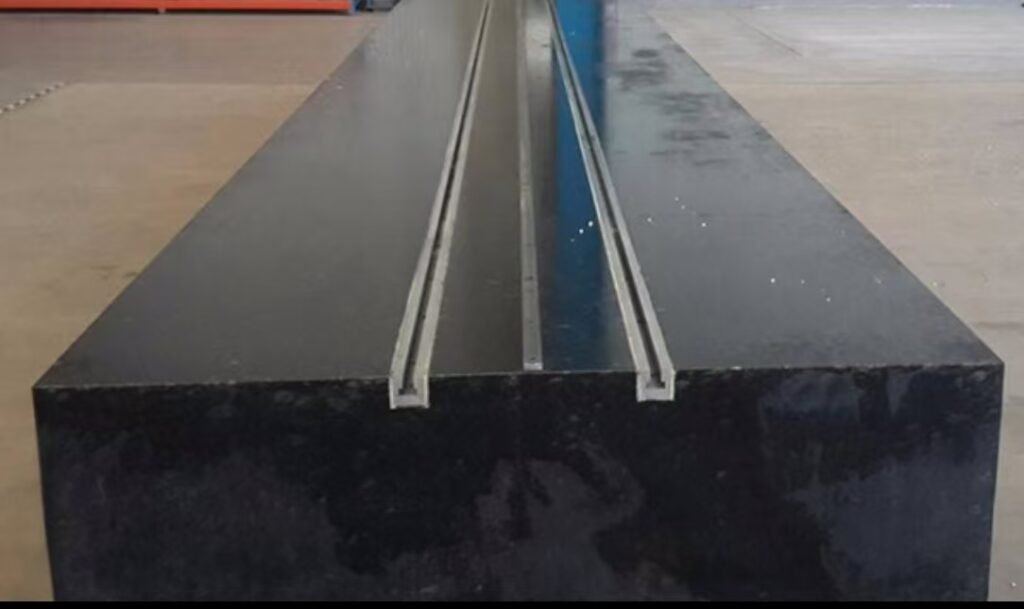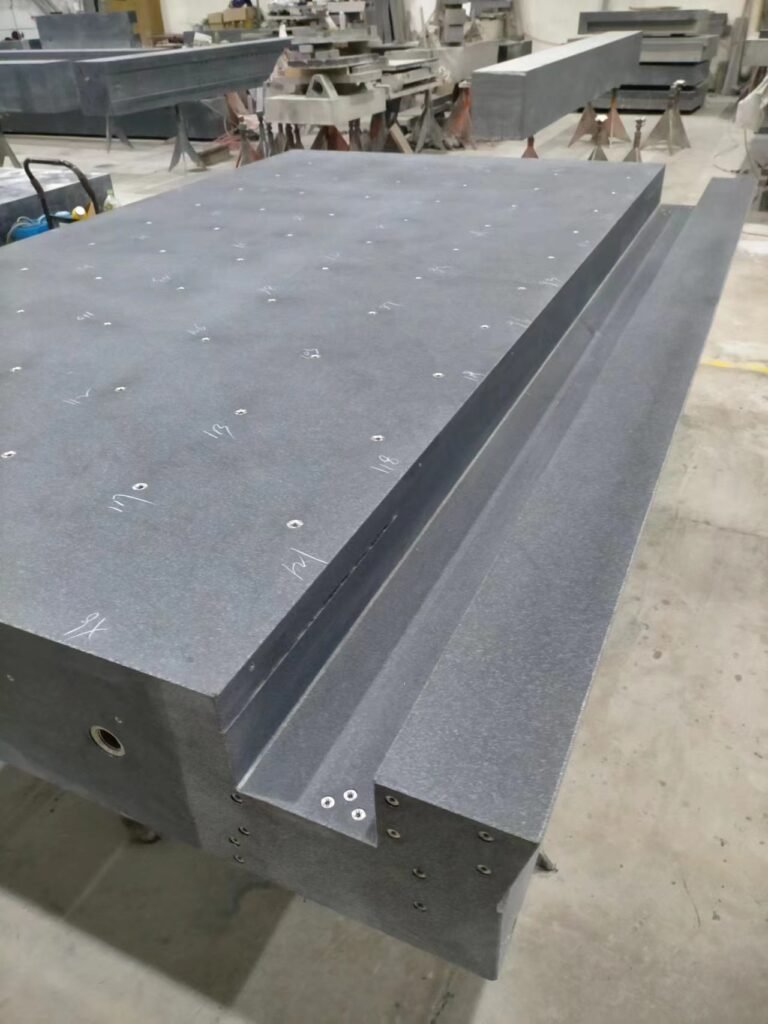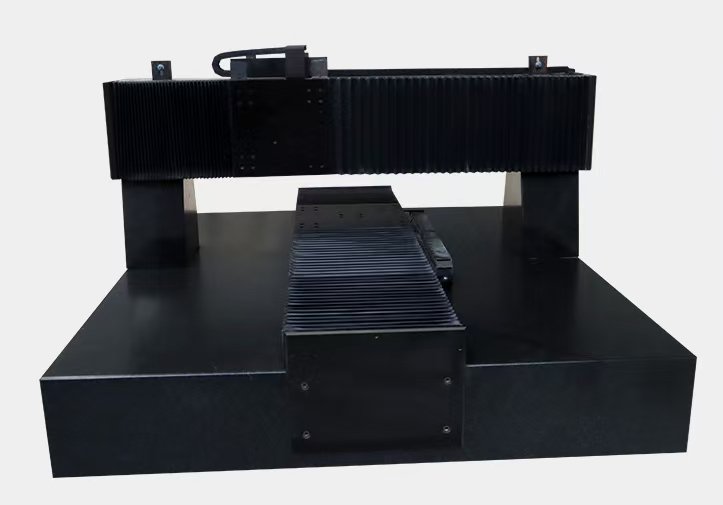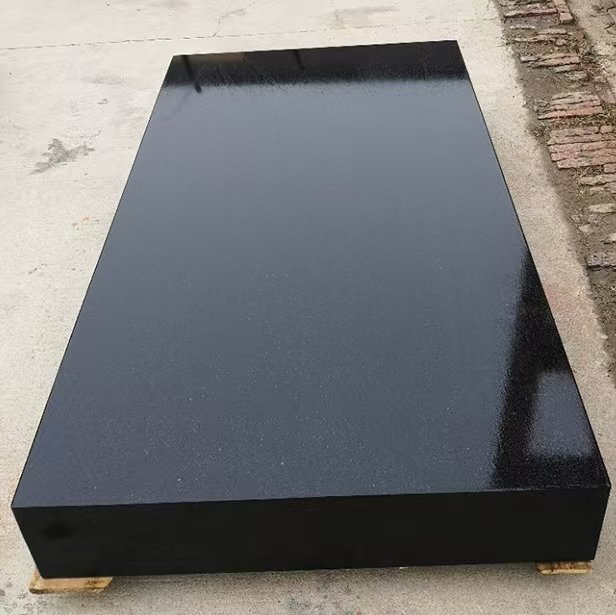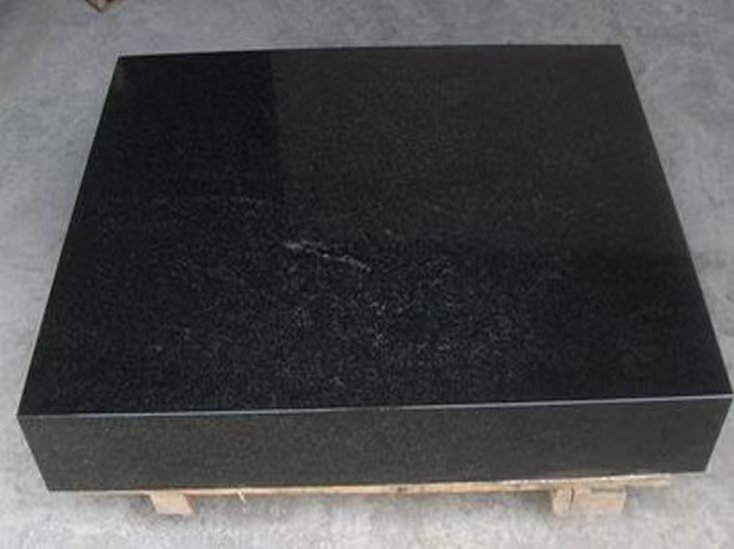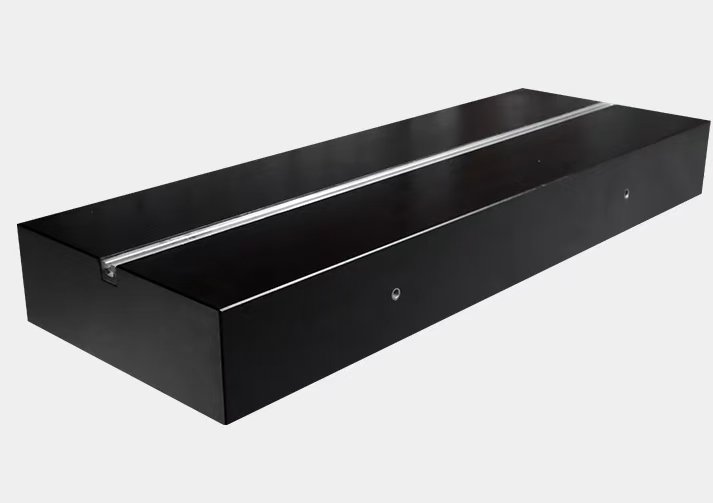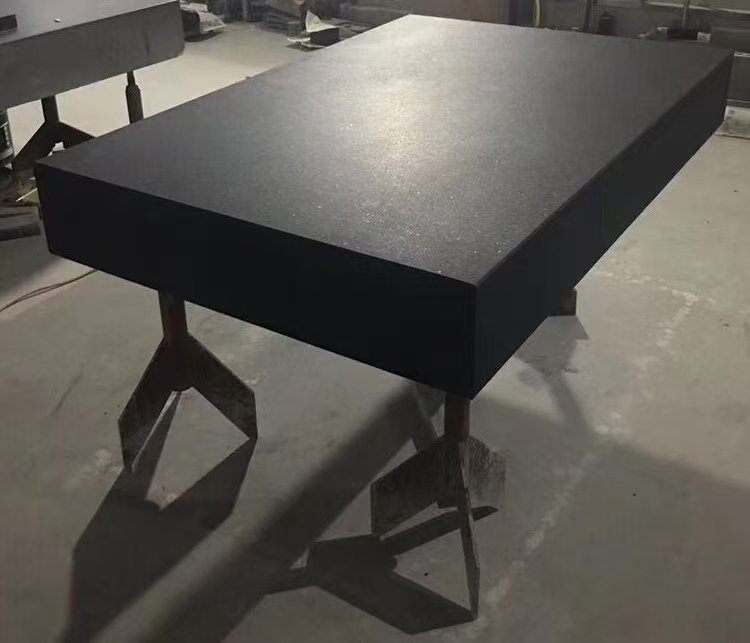
Precision granite platforms and components are upgrading in five major directions: high precision, integration, intelligence, greenness, and servitization. The core driving force is the rigid demand of high-end manufacturing sectors such as semiconductors, new energy, and aerospace for “extremeility data perception green compliance.”
I. Materials and Performance: Extreme Stability and Composite Innovation
Breakthroughs in precision limits: Flatness advances from the micron level tsub-micron/nano levels; for large-area platforms (5–9m), flatness is controlled within ±0.8–1.2μm/m², and the cot of thermal expansion approaches ≤5×10⁻⁶/℃ to adapt to lithography machines and quantum devices.
Integration and Modification
Carbon fiber reinforced granite: Strength inreases by ~80%, weight reduces by ~65%, used for lightweight precision equipment bases.
Bionic/Layered composites: Drawing inspiration from nacre structure, 3D printin alternating granite/polymer layers to balance high rigidity with controllable damping.
Low/Zero expansion composites: Embedding negative thermal expansion materials like CFRP reduces thermal dift by over 70% in variable temperature environments.
Geopolymer substitution: Alkali-activated geopolymers partially replace natural granite, reducing production energy consumption h adjustable thermal expansion coefficients.
Surface functionalization: Nano-coatings (hydrophobic, anti-static, low outgassing), vacuum impregnation sealing; water absorpton rate ≤0.04%, suitable for semiconductor cleanrooms and harsh aerospace environments.
II. Processing and Manufacturing: Digitally Driven and Efficiency Revolution
Upgrading ultra-precision processes: Threestage ultra-precision grinding AI vision digital twin; yield rate for 5m² platforms reaches 96.5%; laser interferometry closed-loop correction achieves sub-level online compensation.
Widespread intelligent inspection: Terahertz time-domain spectroscopy (THz-TDS) penetrates to detect internal defects, efficiency improves by ~8 times traditional ultrasound; full-process non-destructive testing and stress pre-treatment become standard.
Deepening green manufacturing: Water jet cutting increases stone utilization fom 48% to 92%; dry grinding dust recycling, low VOC sealing, meet environmental and carbon footprint requirements.
Large-scale and customization: Single platform length reaches 9, width 3.5m; multi-variety, small-batch, integrated components (including guides, mounting surfaces) become mainstream, with lead times continuously compressed.
III. Function and Applicam “Reference Platform” to “Intelligent Sensing Unit”
Intelligence and self-perception: Embedded fiber Bragg gratings and piezoelectric ceramic sensors monitor deformation, tempnd vibration in real-time; data is uploaded to equipment health management systems for predictive maintenance.
High-end application scenarios
Semiconductors: Wafer carriers, lithography machine baseson platforms; require ultra-flatness, low outgassing, and cleanroom compatibility.
New Energy: Battery module inspection, motor stator/rotor measurement; emphasize largze, high rigidity, and magnetic resistance.
Aerospace: Component measurement, wind tunnel model references; pursue extreme stability, light weight, and environmental resistance.
Cross-sector integration: Exng from pure gauges to precision mechanical structural components, such as CMM beds, linear motor bases, and optical vibration isolation platforms, replacing traditional cast.
IV. Industry and Ecology: Collaborative Innovation and Service Value-added
Stricter Standards and Domestic Substitution: ISO/GB standards are movingtowards the 0.05μm/m² level; domestically, the “ore source — manufacturing — complete machine — verification” synergy accelerates the substitution of imported high-end productsstrial Chain Integration: Establishing innovation consortia focusing on common technologies (such as low-expansion composite granite) and joint standard development, shifting competition from individual enterprises to the ecosyervitization Transformation: Transitioning from selling products to “precision insurance full lifecycle services,” offering free rework for precision deviations to enhance customer stickiness.
Regional Restructuringizing supply chains and setting up factories near consumption centers; China accounts for approximately 27.9% of global capacity, with the high-end market growing at over annually.
V. Key Trends for the Next Five Years (2026–2030)
Material Revolution: Composite, biomimetic, and geopolymer substitution becom mainstream, with thermal expansion coefficients breaking through 0.4×10⁻⁶/℃.
Smart Proliferation: Market share of self-sensing components riss from **<5%→20% **, enabling data-driven precision compensation and health management.
Green Compliance: Full lifecycle carbon footprint certification and zero-waste processing become industry entry barriers.
Applicatin Explosion: Semiconductors, quantum computing, and new energy vehicles drive the high-precision market to grow 12%–15% annually, reaching a scale of over 8 billion yuan by 2030.