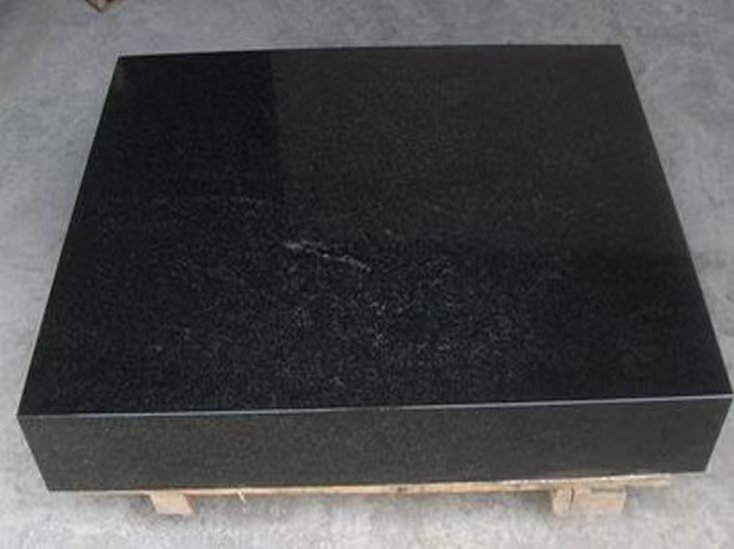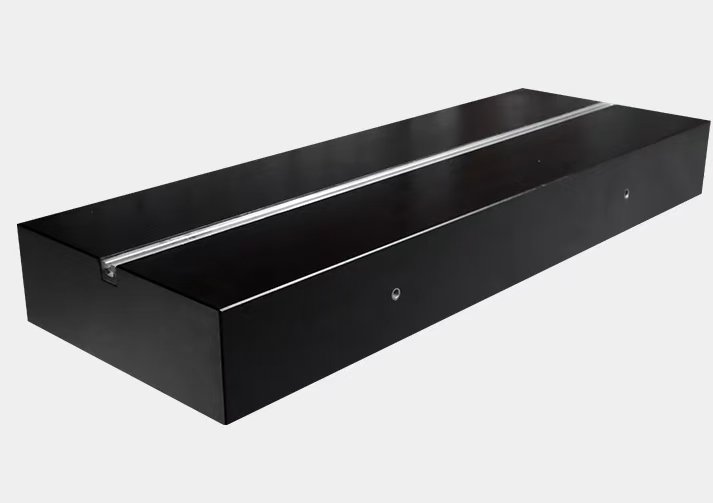
Aerospace component inspection imposes extremely stringent accuracy demands on high-precision granite surface plates, as dimensional and geometric errors directly affect assembly fit, structural strength, flight safety and service life of aero-engines, turbine blades, fuselage frames, control components and other critical parts. To meet micron and sub-micron level measurement requirements, granite platforms must comply with top-tier specifications in flatness, dimensional stability, surface quality, rigidity and long-term precision retention, in accordance with ISO 8512-2, ASME B89.3.7 and aerospace quality systems. First, flatness grade and tolerance represent the core accuracy indicator. Aerospace inspection universally requires Grade 00 (ISO) or Grade AA (ASME), the highest standard for metrology platforms. Flatness tolerance is calculated based on the diagonal length of the working surface, typically controlled within 2–5 μm for conventional working areas and within ≤5 μm/m for large platforms. Under constant-temperature laboratory conditions, full-surface flatness deviation must be held to sub-micron levels to ensure reliable reference for coordinate measuring machines (CMMs), laser interferometers and profile detectors. Second, extremely low thermal expansion and dimensional stability are mandatory. The linear expansion coefficient of the granite material must be ≤6.0×10⁻⁶ /℃, far lower than that of cast iron and steel. This minimizes thermal deformation under slight temperature fluctuations in workshops and laboratories, ensuring measurement consistency and repeatability for high-value aerospace components. Third, ultra-fine surface roughness and integrity are essential to prevent part damage and measurement interference. The working surface must be precision lapped and polished to Ra 0.02–0.05 μm, free of pores, scratches, inclusions or edge chipping. Such a surface ensures smooth movement of probes and fixtures, avoids abrasion to precision components, and maintains stable optical and contact measurement performance. Fourth, high rigidity, load resistance and non-deformation stability are required for large and heavy structural parts. Granite must feature high elastic modulus and compressive strength, with no plastic deformation under rated loading. The material must be fully stress-relieved through natural aging and precision processing to eliminate internal stress, ensuring long-term geometric stability without warping or twisting. In addition, non-magnetic, corrosion-resistant and low-damping characteristics support reliable operation in sophisticated aerospace testing environments. Granite does not interfere with sensors and optical systems, resists industrial corrosion, requires minimal maintenance, and sustains consistent metrological performance over long service life. In summary, accuracy specifications for granite surface plates in aerospace inspection are defined by ultra-high flatness, extreme thermal stability, fine surface quality, high rigidity and long-term dimensional stability. These requirements make precision granite platforms irreplaceable core reference components in aerospace manufacturing, quality control and metrological calibration.Accuracy Requirements for Granite Surface Plates in Aerospace Component Inspection
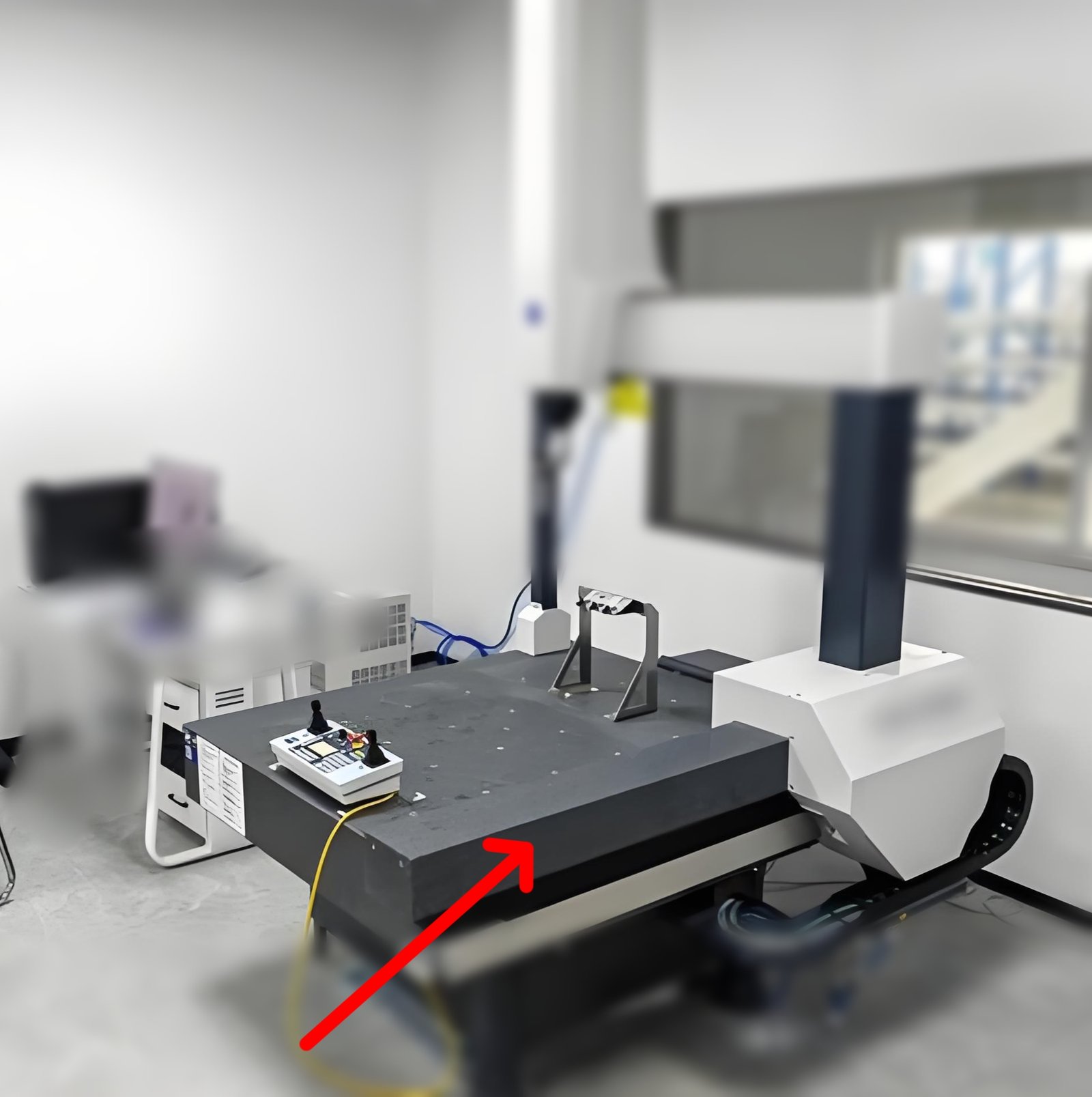
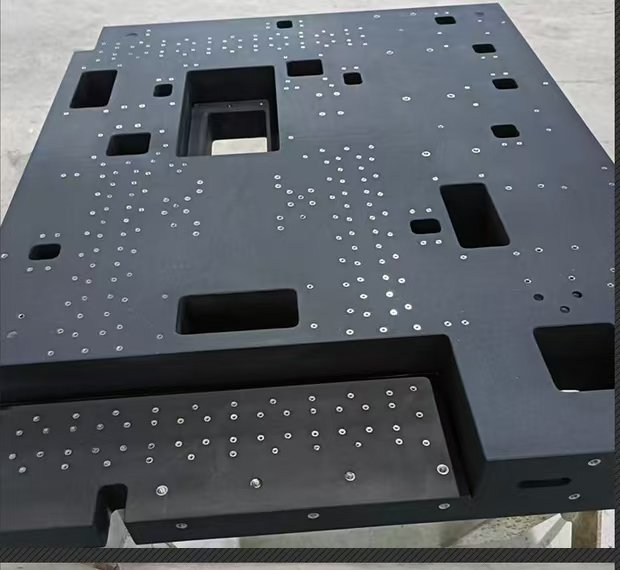
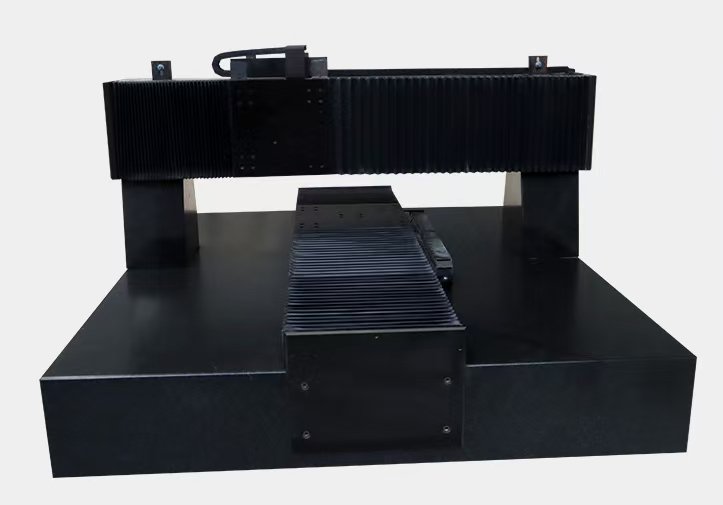
Aerospace component inspection imposes extremely stringent accuracy demands on high-precision granite surface plates, as dimensional and geometric errors directly affect assembly fit, structural strength, flight safety and service life of aero-engines, turbine blades, fuselage frames, control components and other critical parts. To meet micron and sub-micron level measurement requirements, granite platforms must comply with top-tier specifications in flatness, dimensional stability, surface quality, rigidity and long-term precision retention, in accordance with ISO 8512-2, ASME B89.3.7 and aerospace quality systems.
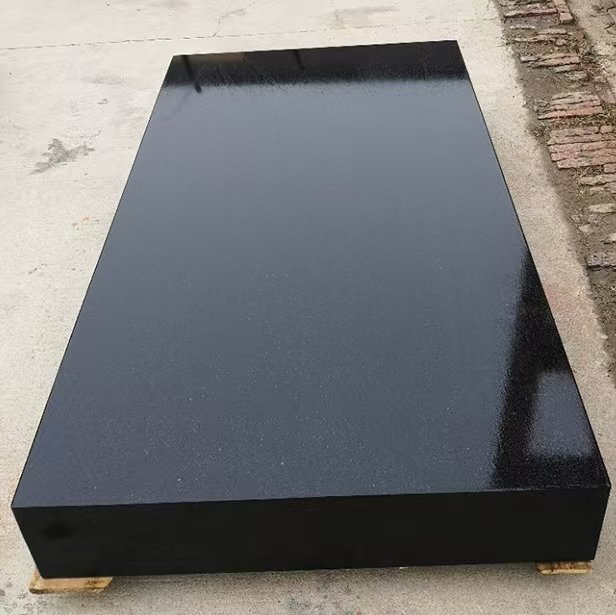
First, flatness grade and tolerance represent the core accuracy indicator. Aerospace inspection universally requires Grade 00 (ISO) or Grade AA (ASME), the highest standard for metrology platforms. Flatness tolerance is calculated based on the diagonal length of the working surface, typically controlled within 2–5 μm for conventional working areas and within ≤5 μm/m for large platforms. Under constant-temperature laboratory conditions, full-surface flatness deviation must be held to sub-micron levels to ensure reliable reference for coordinate measuring machines (CMMs), laser interferometers and profile detectors.
Second, extremely low thermal expansion and dimensional stability are mandatory. The linear expansion coefficient of the granite material must be ≤6.0×10⁻⁶ /℃, far lower than that of cast iron and steel. This minimizes thermal deformation under slight temperature fluctuations in workshops and laboratories, ensuring measurement consistency and repeatability for high-value aerospace components.
Third, ultra-fine surface roughness and integrity are essential to prevent part damage and measurement interference. The working surface must be precision lapped and polished to Ra 0.02–0.05 μm, free of pores, scratches, inclusions or edge chipping. Such a surface ensures smooth movement of probes and fixtures, avoids abrasion to precision components, and maintains stable optical and contact measurement performance.
Fourth, high rigidity, load resistance and non-deformation stability are required for large and heavy structural parts. Granite must feature high elastic modulus and compressive strength, with no plastic deformation under rated loading. The material must be fully stress-relieved through natural aging and precision processing to eliminate internal stress, ensuring long-term geometric stability without warping or twisting.
In addition, non-magnetic, corrosion-resistant and low-damping characteristics support reliable operation in sophisticated aerospace testing environments. Granite does not interfere with sensors and optical systems, resists industrial corrosion, requires minimal maintenance, and sustains consistent metrological performance over long service life.
In summary, accuracy specifications for granite surface plates in aerospace inspection are defined by ultra-high flatness, extreme thermal stability, fine surface quality, high rigidity and long-term dimensional stability. These requirements make precision granite platforms irreplaceable core reference components in aerospace manufacturing, quality control and metrological calibration.